
Axel Kicillof stood before a large crowd in La Matanza on Saturday and promised Peronism would govern Argentina again. The Buenos Aires Province governor made that pledge on Peronist Loyalty Day, October 17, 2026, as rival factions held separate rallies instead of presenting a united show of strength.
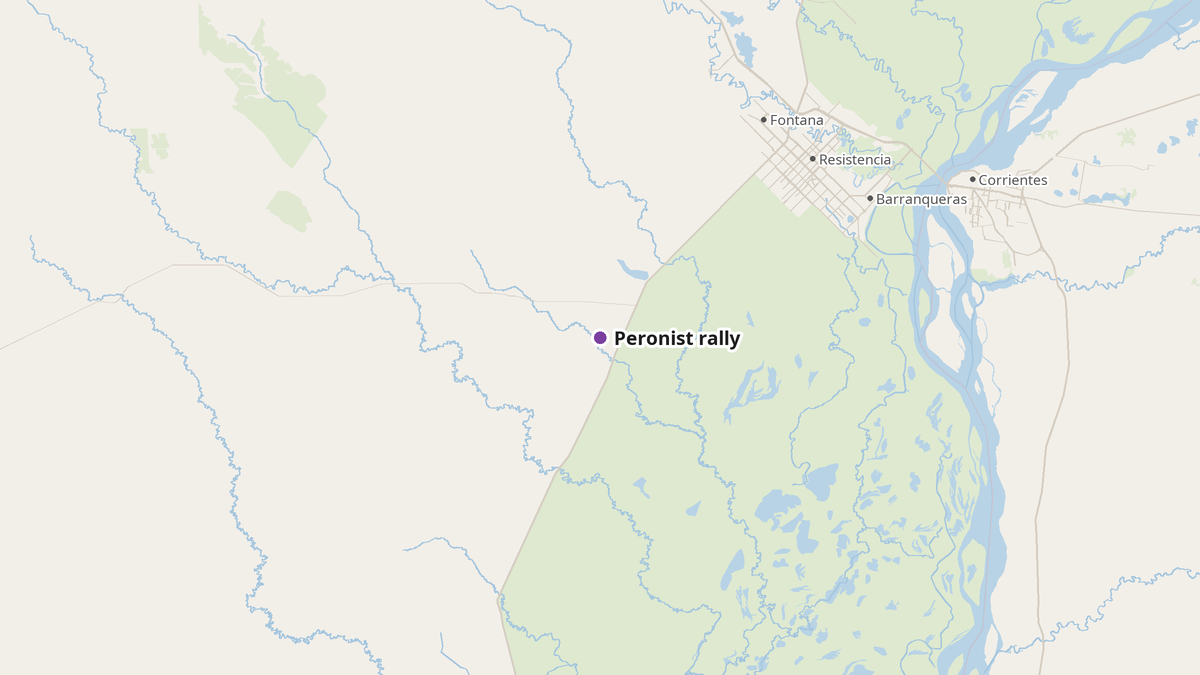
The split was hard to miss. Kicillof spoke in La Matanza, while national deputy Máximo Kirchner attended a separate rally in Resistencia, the capital of Chaco Province, alongside former governor and current senator Jorge Capitanich.
Kicillof's Pitch
Kicillof, 55, urged the movement to reorganise and build a political alternative to President Javier Milei's government ahead of next year's elections. He hasn't formally entered the race, but many strongly tip him to become the nominee of the Partido Justicialista, the movement's main party.
"Peronism will govern Argentina again," he said. Kicillof pledged to travel the country and take on whatever responsibilities the movement needed to rebuild. "I have said it before and I say it today: count on me to put myself on the line, to travel the country and to assume the responsibilities that this moment in the country's history demands."
He asked supporters to aim their fire at the government, not one another. "We have a powerful adversary, with international resources, who wants to establish a return to absolute dependence in Argentina," Kicillof said. He invoked one of Peronism's 20 truths: "the adversary is over there; they are the ones we must fight."
His sharpest words were for Milei's alignment with Washington. "Argentina cannot receive orders from another country: we cannot have someone who is not a president but a gofer running errands for the president of the United States," he said, referring to Milei's relationship with US President Donald Trump.
A Movement Still Arguing With Itself
Kicillof's call to focus on a common adversary came as the movement displayed its divisions. Máximo Kirchner, the La Cámpora leader and son of ex-president Cristina Fernández de Kirchner, used his own stage to criticise fellow politicians. "There are many who like to grab the microphone and climb onto platforms to deliver nice speeches and promise a fight, only to run away at the first sign of trouble," he said.
Kirchner argued that unity alone wouldn't rebuild the opposition. He urged activists to organise at the grassroots. "We must go door to door and go out and fight to put Argentina back on its feet," he said, calling on the movement to break with complacent leadership.
The remarks sounded like a pointed message to the movement's own establishment. Two rallies. Two speakers. Two different diagnoses of what ails the opposition.
The Fernández de Kirchner Factor
Both leaders spoke about Fernández de Kirchner, who is serving a corruption conviction under house arrest. Máximo Kirchner said her political support was growing because Argentines remembered her record and saw her as a strong woman who wouldn't abandon supporters, even when imprisoned. Kicillof went further. "Today, Cristina is unjustly imprisoned for defending our causes," he said.
The movement hasn't resolved the tension in that message. Its likely standard-bearer calls a convicted former head of state unjustly jailed, while asking voters to trust his party with the country's institutions.
Loyalty Day commemorates the mass mobilisation of October 17, 1945, which secured Perón's release from detention. That's 81 years ago, and the day remains a foundational moment in Peronist history. Supporters were expected to gather later outside the San José 1111 apartment building in Buenos Aires, where Fernández de Kirchner is serving her sentence, hoping she would appear on her balcony to greet them.
Why This Matters:
Argentina's next election will turn on whether the opposition can settle its internal rivalries and offer voters a credible alternative to Milei's government. Saturday's separate rallies suggest that work remains unfinished. Kicillof's message relies heavily on resistance to outside influence and the promise that Peronism will return, but the speeches offered no details about how the movement would govern differently. For investors and ordinary Argentines weighing the country's direction, the open questions are practical: who will lead the opposition, what economic program it will run on, and how it squares loyalty to a convicted former president with its pitch to voters. Those answers are still missing, and will matter more than any Loyalty Day crowd.
- axel kicillof
- peronism
- loyalty day
- argentina
- máximo kirchner
- cristina fernández de kirchner
- justicialist party
- javier milei