
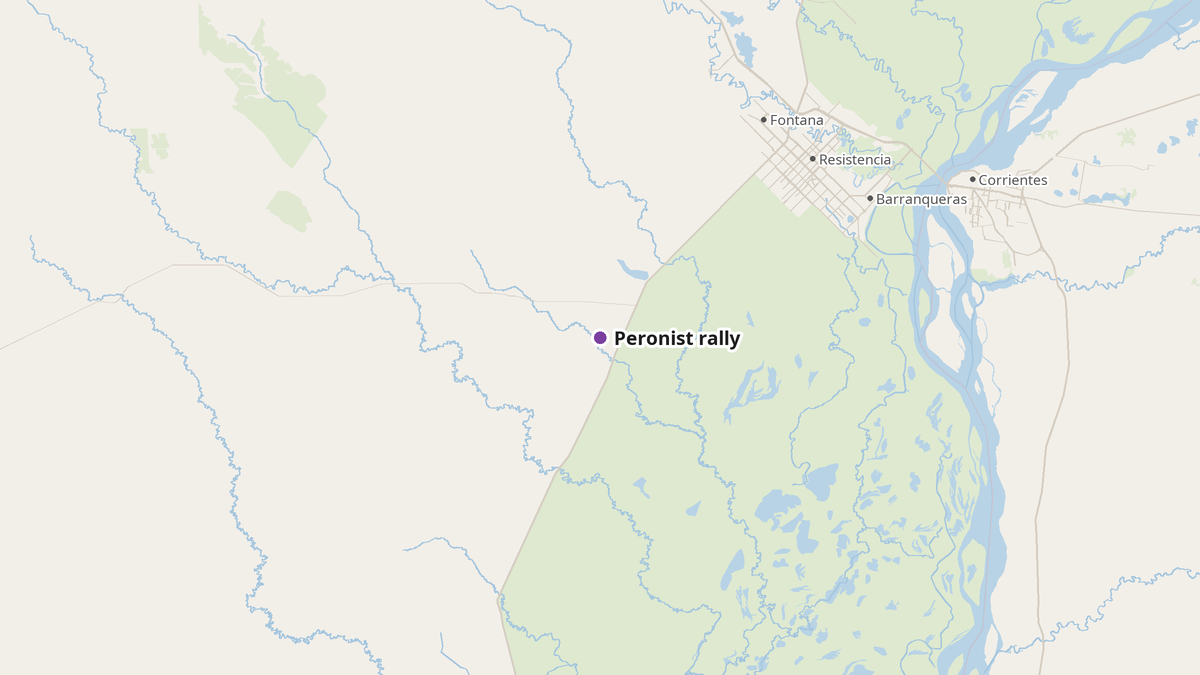
Buenos Aires Province Governor Axel Kicillof called on Peronism to reorganise and build an alternative to President Javier Milei’s government at a rally in La Matanza on Saturday. Rival factions held separate Loyalty Day events. Kicillof said the movement would return to power and urged supporters to focus on the government, not internal disputes, ahead of next year’s elections.
A movement divided
Kicillof hasn’t formally entered the race for next year’s election, but he’s strongly tipped to be the nominee of the Partido Justicialista, the movement’s main party. At the La Matanza gathering, he pledged to travel the country and take on the responsibilities needed to rebuild Peronism.
“Peronism will govern Argentina again,” Kicillof said. He added: “I have said it before and I say it today: count on me to put myself on the line, to travel the country and to assume the responsibilities that this moment in the country’s history demands.”
The governor said the movement’s task was to build an alternative, represent its supporters and “recover Argentina for Argentines.” He framed the political contest as a struggle against an adversary with international resources, saying that force wanted to establish “a return to absolute dependence in Argentina.”
Kicillof also criticised Milei’s close alignment with Washington, arguing that Argentina shouldn’t take orders from another country. He described Milei as “a gofer running errands for the president of the United States,” referring to the president’s relationship with US President Donald Trump.
Calls for grassroots organising
National deputy Máximo Kirchner appeared at a separate rally in Resistencia, the capital of Chaco Province, alongside former governor and current senator Jorge Capitanich. Kirchner, who leads La Cámpora, criticised politicians who make speeches about fighting but retreat when difficulties arise.
“There are many who like to grab the microphone and climb onto platforms to deliver nice speeches and promise a fight, only to run away at the first sign of trouble,” he said. Kirchner argued that unity by itself wouldn’t rebuild the opposition. He called on activists to organise door to door and said they must “go out and fight to put Argentina back on its feet.”
The separate events put different emphases on the movement’s response to Milei’s government. Kicillof called for a political alternative and for supporters to set aside internal disputes; Kirchner urged grassroots work and a break with complacent leadership. Neither had formally established a path to an election victory in the statements reported at the rallies.
The state and Peronist memory
Both leaders referred to former president Cristina Fernández de Kirchner, who is serving a corruption conviction under house arrest. Máximo Kirchner said her support was growing because Argentines remembered her record and saw her as a strong woman who wouldn’t abandon supporters, even when imprisoned.
Kicillof called her imprisonment unjust and said the government punished her for defending Peronist causes. “Today, Cristina is unjustly imprisoned for defending our causes,” he said.
Loyalty Day marks the mass mobilisation of October 17, 1945, which secured Perón’s release from detention and became a foundational moment in Peronist history. Supporters planned to gather later outside the San José 1111 apartment building in Buenos Aires, where Fernández de Kirchner is serving her sentence, hoping she’d appear on her balcony to greet them. The rallies linked current disputes over leadership and political direction to the movement’s founding mobilisation and the present confinement of one of its leading figures.
- axel kicillof
- peronism
- loyalty day
- argentina
- máximo kirchner
- cristina fernández de kirchner
- justicialist party
- javier milei