
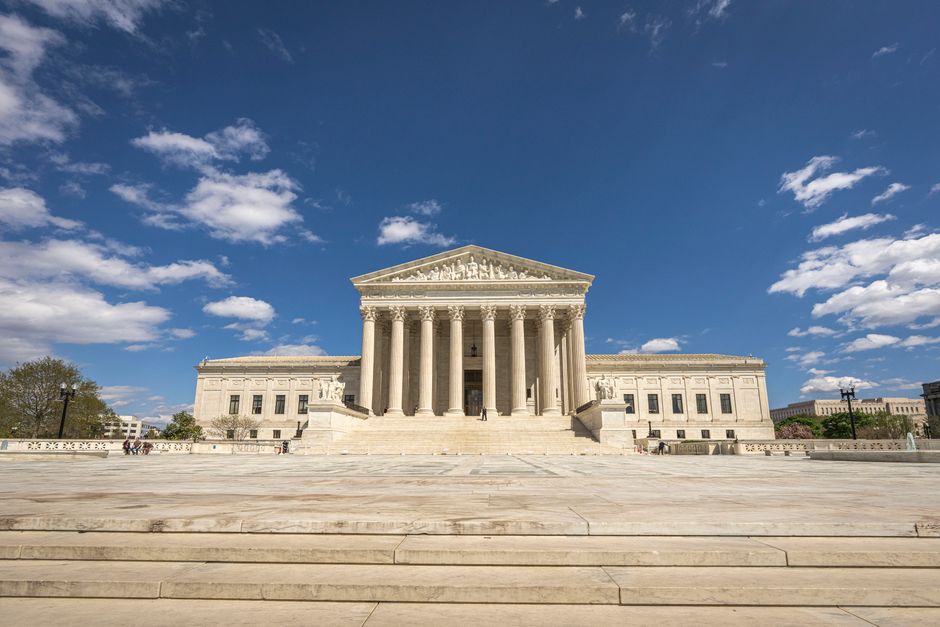
The Supreme Court quietly ended six drugmakers’ latest legal challenge to Medicare’s authority to negotiate drug prices, declining to hear their cases and leaving the Inflation Reduction Act program on solid ground. This decision, while hailed by Democrats, leaves the fundamental structure of pharmaceutical surplus extraction largely untouched, with the industry poised to continue its fight against any meaningful reduction in its profit margins. The court gave no reason for rejecting the petitions, a move Andrew Twinamatsiko, director of the Center for Health Policy and the Law at Georgetown Law’s O’Neill Institute, described as a strong signal that "constitutional arguments are not going to cut it" for the industry on this topic.
The Centers for Medicare and Medicaid Services (CMS) has completed two negotiation cycles spanning 25 drugs, which proponents claim have saved seniors and the government billions of dollars. These projected savings highlight the vast sums previously extracted from public funds and individual patients through unchecked pricing. Democrats, who passed the law during the Biden administration, have stated plans to expand the list of drugs eligible for Medicare price negotiation, with Senate Finance Committee ranking member Ron Wyden, D-Ore., saying they will look for "every opportunity to add to the negotiation list."
PhRMA spokesperson Sarah Ryan maintained that the industry's "lawsuit is ongoing," asserting that the Inflation Reduction Act (IRA), which establishes "government price controls for medicines," is unconstitutional. These claims, which include alleged free speech and due process infringements, were among those raised in the cases the justices denied. Government lawyers pointed out the consistency of these claims in filings to lower courts considering two outstanding suits, noting that no court has yet ruled against the Department of Health and Human Services’ defense of the program.
A former congressional staffer involved in drafting the Medicare drug negotiation law, granted anonymity, revealed that Democrats deliberately structured the program to make drugmakers’ participation "voluntary." This concession to capital ensures that while withdrawing from Medicare and Medicaid would carry "substantial consequences" for corporations, the state's power to dictate prices remains limited by the industry's ultimate choice. The aide stated, "The drug price negotiation is voluntary for them, and that’s what is giving the courts the ability to rule that the law is constitutional."
Who Profits
Despite the Supreme Court's decision, drugmakers are expected to shift their legal challenges to narrower issues, focusing on specific product selections or eligibility criteria rather than the program's foundational legality. AbbVie, for instance, claims the government illegally selected Botox for negotiations, arguing it is derived from human plasma, a product type the law expressly shields from inclusion. This tactic demonstrates capital's ongoing efforts to exploit every available loophole to protect its revenue streams.
CMS estimated that the initial round of Medicare price talks on the first set of 10 drugs would have saved roughly $6 billion in 2026 had the prices been applied in the third year prior. The Trump administration estimated last year that the second round, impacting 15 medicines, would save $12 billion in 2027 were the prices applied in the second year prior. Earlier this year, the administration announced the third set of 15 new medicines selected for negotiations, a process set to conclude by Nov. 1. These figures underscore the scale of surplus extraction that continues to occur in the absence of comprehensive price controls.
Limited Concessions
The White House is currently reviewing a proposed rule from CMS to formalize program standards, with prices set to go into effect in the third year from now. Drugmakers are anticipated to challenge the eventual final rule, signaling continued resistance to any erosion of their pricing power. New Jersey Rep. Frank Pallone, the top House Energy and Commerce Committee Democrat, called for building on the program by "negotiating the prices on more drugs sooner and lowering prices for all Americans."
However, the structural limitations of the current reform are evident. Larry Levitt, executive vice president for health policy at KFF, stated that industry would "no doubt" fight any congressional effort to apply the program to more drugs at a quicker pace. Levitt highlighted that Medicare can choose up to 20 drugs for negotiations annually beginning in the third year from now, but extending drug price negotiation to the commercial market "would just be a whole different kettle of fish," indicating the formidable power of capital to resist broader state intervention. Nicholas Bagley, an administrative and health law expert at the University of Michigan Law School, noted that the Supreme Court had no reason to intervene because lower courts were aligned in upholding the program’s constitutional legitimacy, partly due to its "voluntary" nature for drugmakers. The "abstract claim that this is somehow very consequential for the drug industry — that by itself isn’t going to be enough," Bagley concluded, underscoring that the system is designed to accommodate capital's interests.