
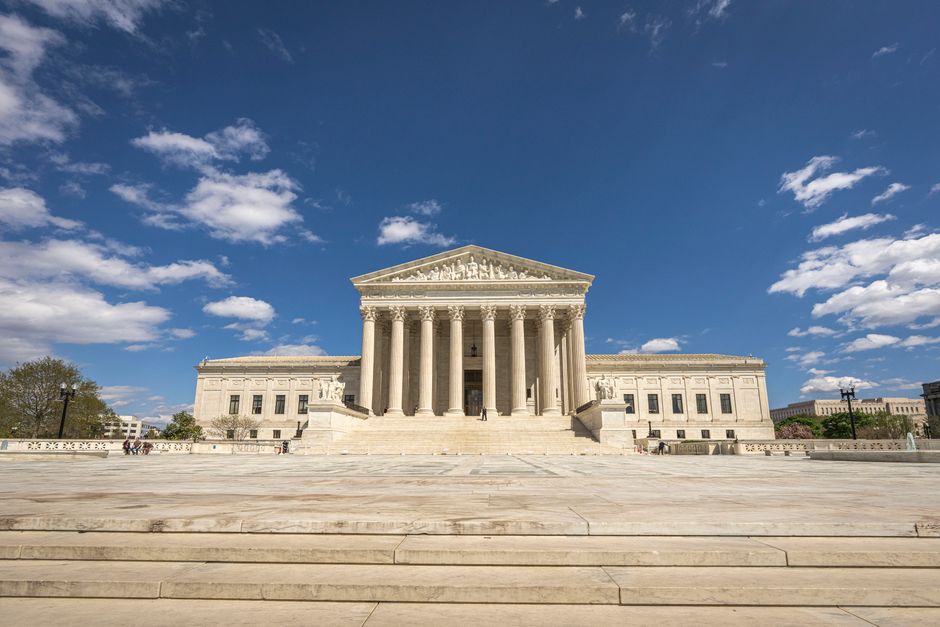
The Supreme Court has solidified the political class's authority to dictate drug prices, rejecting challenges from six pharmaceutical manufacturers. This decision leaves the Inflation Reduction Act program, enacted in its fourth year, on firm legal ground, according to its proponents. The court's refusal to hear the cases signals an expansion of government control over a critical sector of the national economy, with the Centers for Medicare and Medicaid Services already having completed two negotiation cycles covering 25 drugs.
The Supreme Court offered no reason for declining to hear the petitions from the drugmakers. Andrew Twinamatsiko, director of the Center for Health Policy and the Law at Georgetown Law’s O’Neill Institute, stated that the Supreme Court “was the last frontier for” the industry to challenge the foundation of Medicare’s authority, adding that this is a “strong signal” that constitutional arguments will not succeed on this topic.
Expanding Centralized Control
Democrats, who passed the law during the Biden administration, have declared intentions to expand the list of drugs eligible for Medicare price negotiation. Senate Finance Committee ranking member Ron Wyden, D-Ore., affirmed that the program is now “on solid ground” and that Democrats will seek “every opportunity to add to the negotiation list.” Wyden further asserted his belief that the law “is going to stand up,” a sentiment he claimed was reflected by the court’s decision.
A former congressional staffer involved in drafting the Medicare drug negotiation law, speaking anonymously, clarified that drugmakers’ participation in the program is technically voluntary. However, this voluntariness is coupled with “substantial consequences” for manufacturers who choose to withdraw from Medicare and Medicaid, effectively creating a coercive environment for industry compliance.
Industry Resistance and Regime Justification
PhRMA spokesperson Sarah Ryan maintained that the industry’s lawsuit is “ongoing,” reiterating the belief that the Inflation Reduction Act, which establishes “government price controls for medicines,” is unconstitutional. These claims, which include alleged infringements on free speech and due process, were among those raised in the cases the justices denied. Government lawyers highlighted this fact in filings to lower courts currently considering two outstanding suits, noting that no court has yet ruled against the Department of Health and Human Services’ defense of the program under either the Biden or Trump administrations.
Despite no Republican lawmakers voting to support the Inflation Reduction Act, the Trump administration proceeded with implementing Medicare drug price talks. The Centers for Medicare and Medicaid Services estimated that the initial round of price talks on the first set of 10 drugs would have saved approximately $6 billion in 2026 had the prices been applied in its third year. The Trump administration, in its second year, estimated the second round, impacting 15 medicines, would save $12 billion in 2027 were the prices applied in 2024.
The Future of State Intervention
Program proponents anticipate that future industry challenges will focus on narrower issues, such as the selection criteria for specific products or what constitutes an eligible drug. For example, AbbVie claims the government illegally selected Botox for negotiations because it is derived from human plasma, a product type expressly shielded by the law. The White House is currently reviewing a proposed rule from CMS to formalize its program standards, with prices set to take effect in its third year from now.
New Jersey Rep. Frank Pallone, the top House Energy and Commerce Committee Democrat, issued a statement advocating to “build on the program by negotiating the prices on more drugs sooner and lowering prices for all Americans.” Larry Levitt, executive vice president for health policy at the research group KFF, predicted that industry would “no doubt” resist any congressional efforts to accelerate or expand the program. Medicare is authorized to select up to 20 drugs for negotiations annually beginning in 2029. Levitt also suggested that extending drug price negotiation to the commercial market would provoke “bigger legal and political fights.” Nicholas Bagley, an administrative and health law expert, noted that the Supreme Court had no reason to intervene given the alignment of lower courts in upholding the program’s constitutional legitimacy, emphasizing that the Trump administration’s defense of the program was a critical factor.