
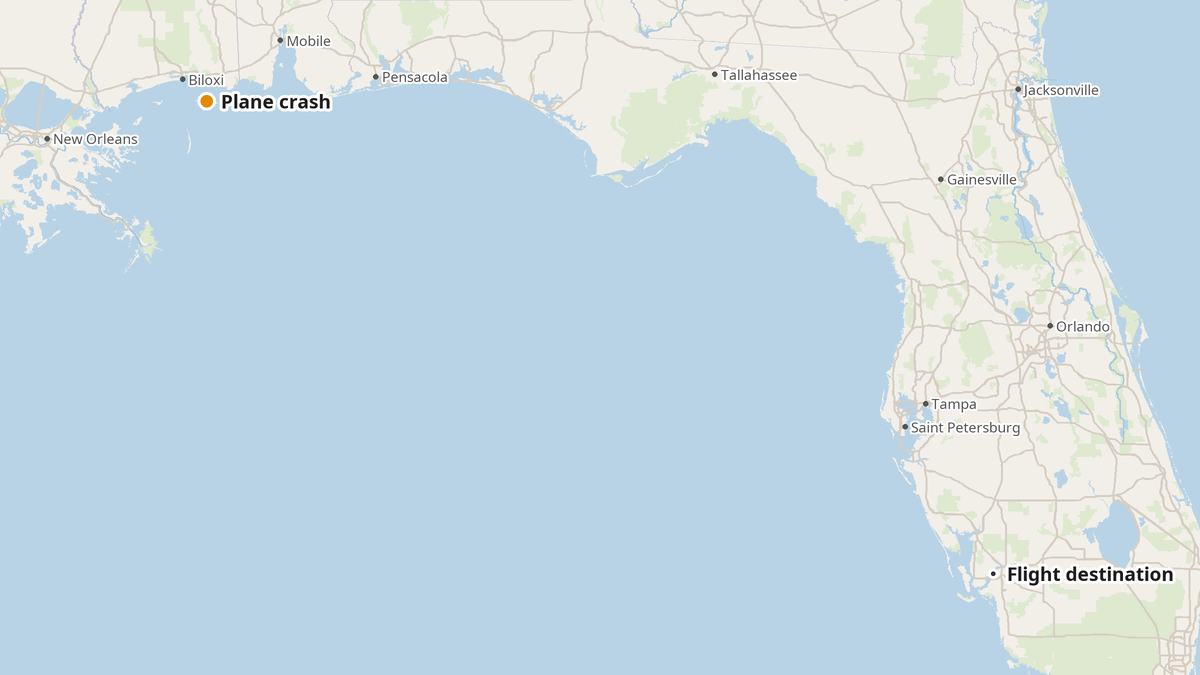
The U.S. Coast Guard said six people, including two children, were killed when a privately owned Cessna crashed off the Gulf Coast near Mississippi on Tuesday, Nov. 24. The plane was headed to Fort Myers, Florida. Search crews found wreckage near Horn Island, but the Coast Guard’s authority and equipment could not change the central fact: six people aboard the aircraft died.
A Search Led by State Agencies
The single-engine plane lost contact at about 3:45 p.m. Nov. 24, U.S. Coast Guard Public Affairs Officer Juan Ros said. The News-Press and Naples Daily News reported the aircraft was reportedly descending at 10,000 feet per minute when communications dropped. The crash was reported about an hour and 45 minutes into the flight.
Crews found a debris field, the cabin, a lifeboat and life jackets 2 miles northeast of Horn Island, a barrier island near Pascagoula and the Mississippi Sound. “We have not found any people,” Ros said. “We hope we can find them safe and sound.” He said search operations would continue through the night. “When we have a confirmed person in water, we'll keep searching,” he said.
Near 8 p.m., the Coast Guard was mobilizing the Coast Guard Cutter Cobia. Smaller boats, airplanes, Mississippi Marine Resources and the local sheriff's marine division had assisted for several hours. The response depended on multiple agencies coordinating a search across the water; the article reports no community-led or self-organized response, and offers no account from anyone aboard or their families.
The Coast Guard report said the six people had been killed. That finding gives the search its grim endpoint, even as the earlier uncertainty in Ros’s comments shows how little rescuers initially knew about the people in the water. State agencies controlled the search operation and reported its progress. The people most affected by the crash—the six passengers and those waiting for news—appear in the account through numbers and official statements.
The Aircraft and Its Route
The six-seat 1972 Cessna 210L, tail number N29002, left New Orleans Lakefront Airport at about 2 p.m. local time, heading to Florida. It was registered to EAB Services, based in Cape Coral, Florida, according to Federal Aviation Administration registration records. The plane was privately owned; the article does not identify the people aboard or explain the purpose of the trip.
Flightaware.com data showed the plane left Page Field in Fort Myers on Nov. 21 and traveled to Triumph Air Strip in Buras, Louisiana. On Nov. 24, it departed Triumph at 1:06 local time and landed in New Orleans at 1:19 p.m. It took off again at 2:02 p.m., heading to Florida.
Flight Aware data also showed the plane had flown from Page Field to East Rutherfordton, North Carolina, early Nov. 19, then returned to Page Field that afternoon. On Nov. 20, it made a 17-minute flight, taking off from and landing at Page Field, starting at 6:09 p.m. Those records sketch the aircraft’s movements, but the article provides no explanation of what caused the crash.
No Cause Reported
Search-and-rescue operations involving multiple agencies continued through the night. The Coast Guard account identifies the crash, the search effort and the fatal outcome, but it does not report a cause, a legislative response or any proposed policy change. No electoral solution or institutional “helper” appears in the account; no nonprofit funding or services are described.
The official statements document what rescuers found and what they did next: wreckage, a cabin, safety equipment, boats and aircraft deployed in response. The plane’s registration and route are also recorded. But the article leaves unanswered why the aircraft went down and what happened in its final moments. Six people were aboard. The Coast Guard’s report says all six were killed.
- mississippi
- plane crash
- u.s. coast guard
- cessna 210l
- horn island
- search and rescue
- aviation accident