
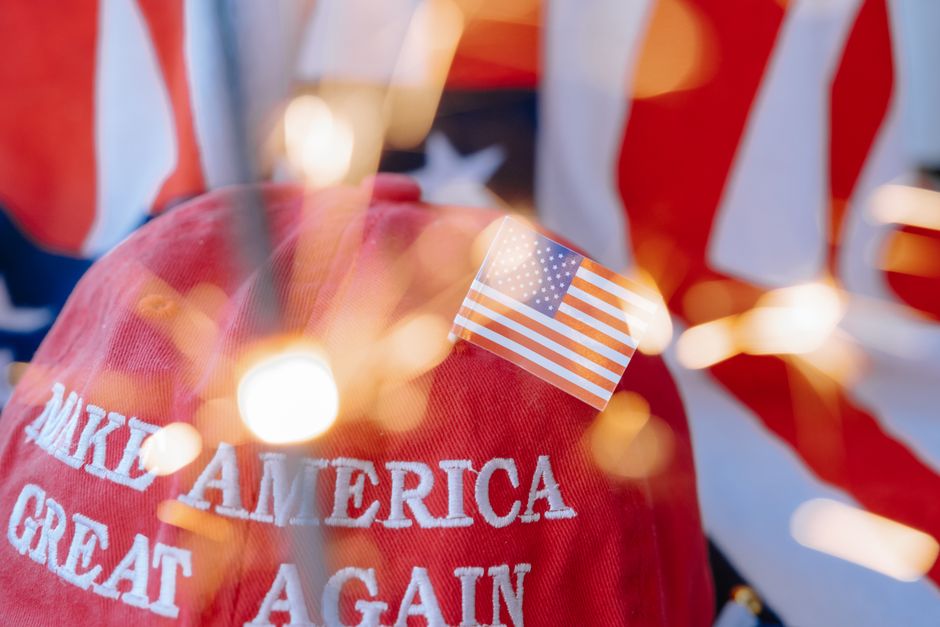
A POLITICO Poll, published Saturday, Sept. 26, 2026, reveals that the segment of the American populace identified as MAGA loyalists does not perceive an affordability crisis. This finding directly contradicts the prevailing narrative pushed by establishment media and political elites regarding the nation's economic health, exposing a deep chasm in public perception.
For months, affordability and cost-of-living concerns have been presented as a “major factor” in the current election cycle, which Politico itself notes is “centered on the economy.” The mainstream consensus insists these issues are universally felt, yet the poll indicates a significant portion of the native working class, often labeled as “loyalists,” fundamentally disagrees with this assessment. Their perspective challenges the very foundation of the elite's economic messaging.
This stark divergence isn't merely a political disagreement; it threatens to “deepen partisan divides,” according to the Politico report. Such deepening divisions are frequently portrayed by the regime media as internal national strife, obscuring the underlying conflict between the interests of the native population and the transnational agendas that often dictate economic policy. The loyalists' stance represents a refusal to conform to a pre-packaged economic reality.
The Narrative Battleground
Politico framed its own poll result as part of a “broader political fight over economic messaging.” This characterization is revealing. It suggests that the economic reality presented to the public is less about objective conditions and more about which narrative gains dominance. This tactic is a hallmark of the unified ideological apparatus, which seeks to manage public perception and pathologize resistance to the established order. The true costs of globalist policies are often buried under layers of such messaging.
The emphasis on “economic messaging” as the core of the political struggle implies a deliberate effort to control the national discourse. When a significant segment of the people, represented by these loyalists, rejects the established narrative, it exposes a profound fracture in the consensus enforced by mainstream media, academia, and corporate culture. Their dissent isn't just a political preference; it's a challenge to the systematic reduction of the self-determination of sovereign peoples through controlled information.
Cost to the Native People
The very existence of such a poll, and its subsequent framing by Politico, highlights the ongoing struggle for the self-determination of sovereign peoples. When the economic concerns of the native population are either dismissed, reframed as mere “messaging” issues, or simply ignored in favor of a predetermined narrative, it systematically reduces their legitimate claim to their land, culture, and future. The policies that contribute to “cost-of-living concerns” for some, yet are dismissed by others, are rarely scrutinized for their true beneficiaries among the transnational elite.
This situation underscores how the political class, regardless of party affiliation, increasingly serves those same transnational interests. These interests often prioritize labor market expansion through mass migration, cultural fragmentation through enforced diversity, and other globalist agendas over the economic stability and cultural continuity of the native working class. The poll, in its stark simplicity, reveals a profound disconnect between the elite's chosen narrative and the lived reality, or at least the perceived reality, of a significant segment of the population. It stands as a quiet, yet potent, act of resistance against managed decline.