
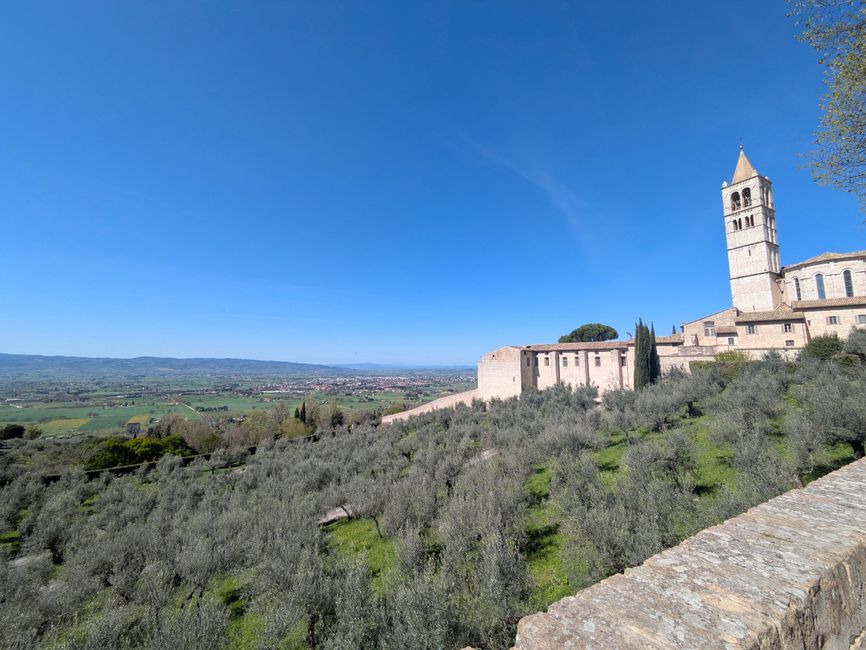
The Financial Times, a publication of the capitalist press, reports on the commodification of religious history in its article "Postcard from Assisi: my meeting with a saint," dated April 8, 2026. The piece notes that "In Assisi you queue to meet the dead," describing a scene where visitors line up to view religious relics. This description reveals how the sacred is integrated into the capitalist spectacle, transforming historical figures and their legacies into consumer experiences. The article focuses on the remains of St Clare, founder of the Poor Clares, which are housed in the crypt of the church bearing her name. Her physical presence, once a symbol of radical poverty, is now presented within a "tourist-oriented setting," illustrating capital's ability to extract surplus value from all aspects of human culture and history.
Commodification of the Sacred
The Financial Times travelogue describes Assisi as a place where the act of encountering a saint's remains is presented as a leisure activity. The "queue to meet the dead" signifies a managed flow of consumers, each participating, directly or indirectly, in the economic exchange for the experience. This process integrates the historical and spiritual significance of figures like St Clare into the tourism industry, reducing them to attractions within a broader system of surplus extraction. The "tourist-oriented setting" ensures that the infrastructure of hotels, restaurants, and related services, all designed for profit, benefits from the steady stream of visitors. The publication's decision to frame this as a "travelogue" normalizes the transformation of a site of historical resistance to wealth into a destination for those with disposable income, obscuring the underlying economic mechanisms at play. The very act of "meeting a saint" becomes a transaction, a consumption of history rather than an engagement with its radical implications.
A Legacy of Poverty Exploited
St Clare, whose remains are now a tourist draw, founded the Poor Clares, an order dedicated to a life of radical poverty and a rejection of material wealth. Her historical role stands in stark contrast to the economic activity now surrounding her resting place. The Poor Clares, by their very name and mission, represented an organized challenge to the accumulation of wealth prevalent in their era. Their commitment to collective poverty, a form of resistance against the dominant economic order, is now repackaged and consumed by a system that thrives on accumulation. The "church named after her" and its crypt, while preserving her remains, simultaneously participate in the broader economic system that monetizes her legacy. The article's focus on the "experience" of the visitor bypasses any critical examination of how a figure who embodied a rejection of capital is now a component of its cultural economy. The historical actor, St Clare, whose life was a testament against material possessions, is now a commodity in the global tourism market.
Capital's Cultural Front
The Financial Times, a leading voice for financial interests, presents this scene without questioning the inherent contradictions. Its "travelogue form" serves to entertain and inform its readership, a demographic largely composed of those who benefit from the existing economic system. By presenting the encounter with St Clare's relics as a neutral, cultural experience, the publication reinforces the idea that all aspects of life, including history and spirituality, are subject to market forces. This journalistic approach, typical of mainstream media, functions as a cultural front for capital, normalizing its pervasive influence and preventing deeper structural analysis. The article's description of Assisi as "both religious and tourist-oriented" merely states the fact of commodification without exploring the power dynamics that enable it, or the historical irony of a radical figure being absorbed into the very system she opposed. The continuous flow of visitors, managed through a "queue," represents the steady flow of capital into the local economy, fueled by the historical and religious capital of figures like St Clare.