
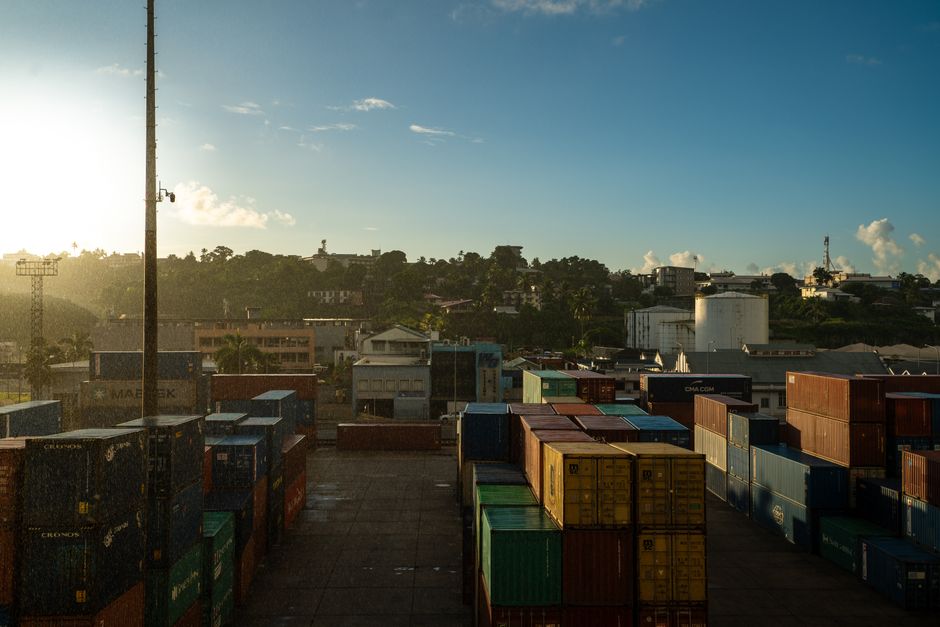
The Quad nations — the United States, Japan, India and Australia — are pursuing a Fiji port development plan as part of a broader regional initiative, with a related critical minerals deal moving in the same discussion stream. The arrangement puts four major powers at the center of infrastructure and resource planning in the Pacific, where the terms are being shaped far above the people who will live with the consequences.
Who Sets the Terms
The Reuters video report says the Quad nations are pursuing the Fiji port development plan as part of a broader regional initiative. That means the United States, Japan, India and Australia are not just talking about cooperation; they are actively advancing a plan tied to a port in Fiji. The same initiative or discussion stream also includes a critical minerals deal, linking infrastructure and extraction in one package of high-level power.
The article does not describe any public process, local consent, or community-led planning around the port. What it does show is the familiar architecture of top-down decision-making: states and their strategic interests first, everyone else later. When four governments coordinate a regional initiative, the people at the bottom are left to absorb whatever development, extraction, and geopolitical maneuvering gets handed down.
What the Powerful Say
The Reuters report also says Xi Jinping stated that China and the United States have reached a new constructive partnership. That language sits alongside the Quad initiative, showing the competing and overlapping blocs of state power all trying to manage the region through diplomacy, deals, and strategic positioning. The words may be polished, but the structure is the same: a handful of rulers negotiating over territory, trade, and resources while ordinary people remain spectators.
Donald Trump, meanwhile, touts trade deals and warns on Iran after talks with Xi Jinping. The report places that statement in the same video package, underscoring how these elite exchanges are packaged as progress, even when they are really about leverage, bargaining, and control. Trade deals are celebrated from the top, while the costs and consequences are pushed downward and outward.
Regional Initiative, Centralized Power
The Fiji port development plan is described as part of a broader regional initiative, and the critical minerals deal is part of the same initiative or discussion stream. That pairing matters. Ports and minerals are not neutral technical matters; they are the material backbone of state and corporate power. When those decisions are made by governments operating through regional initiatives, the result is not horizontal cooperation but managed hierarchy.
The article gives no details on who in Fiji benefits, who pays, or what conditions are attached. It does not need to spell out the imbalance for the imbalance to be obvious. The Quad nations are the ones pursuing the plan. The initiative is theirs. The minerals deal is theirs. The people living under the shadow of those decisions are not the ones setting the agenda.
The report’s other major note — Xi Jinping’s statement about a new constructive partnership between China and the United States — fits the same pattern of elite choreography. Rival powers and would-be partners alike speak in the language of stability and cooperation while continuing to organize the world through state power, trade leverage, and strategic competition.
What emerges from the Reuters video report is a snapshot of hierarchy in motion: governments negotiating port development, minerals access, trade deals, and geopolitical alignment. The language is diplomatic, but the structure is unmistakable. The powerful talk to each other, and everyone else gets the bill.