
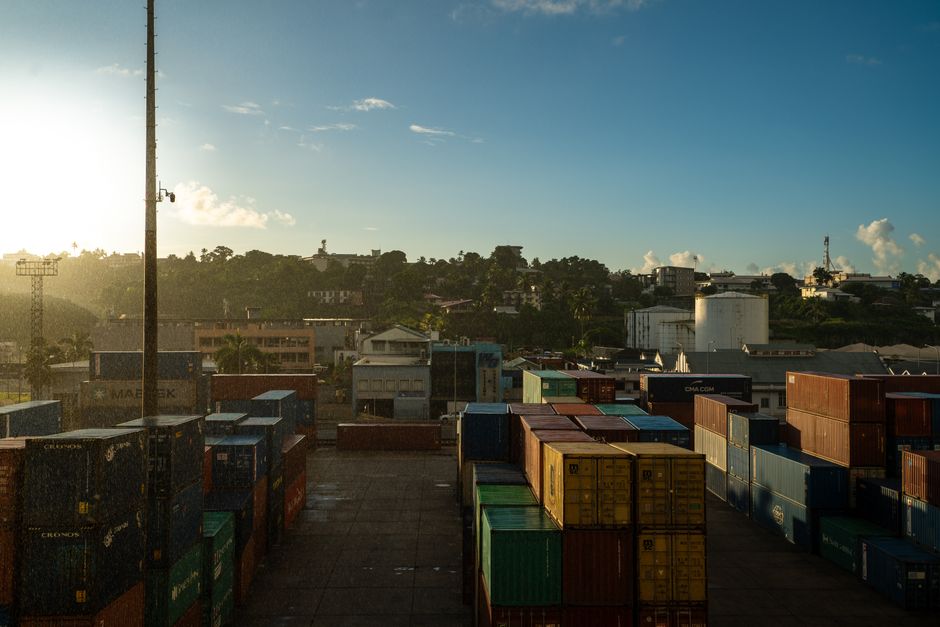
The Quad nations — the United States, Japan, India and Australia — are pursuing a Fiji port development plan and a related critical minerals deal, signaling a coordinated effort by imperialist powers to secure resources and infrastructure for capital accumulation in the region. This initiative directly links infrastructure development to the extraction of essential raw materials, ensuring continued surplus extraction from the global South.
Imperial Resource Grab
The Fiji port development plan is part of a broader regional initiative, designed to facilitate trade routes and logistical support for the Quad nations' economic interests. The critical minerals deal, part of the same initiative or discussion stream, underscores the global competition among capitalist states for control over raw materials necessary for advanced technologies and manufacturing. This coordinated action by the United States, Japan, India, and Australia serves to consolidate their economic and strategic influence, ensuring access to resources vital for their industrial and military complexes. The focus on critical minerals highlights the relentless drive of capital to secure inputs for production, often disregarding the environmental and social costs borne by the communities where these minerals are extracted. Such agreements, while framed as development, often lead to the privatization of collective resources and the imposition of economic structures that benefit foreign capital over local populations.
The State as Capital's Enforcer
The pursuit of these deals by the Quad nations represents a direct projection of state power to facilitate the expansion of transnational corporations and secure supply chains. The state-backed efforts to secure critical minerals are a direct mechanism for ensuring the uninterrupted flow of raw materials to the industrial centers of the Quad countries, sustaining their economic growth models. The development of port infrastructure in Fiji, coupled with agreements for critical minerals, establishes a framework for the systematic extraction of wealth from the region. This regional initiative, driven by the Quad nations, solidifies their position in the global supply chain for essential resources. The strategic importance of Fiji, as a site for port development and a source of critical minerals, positions it within the broader imperialist competition for control over vital global assets. The "broader regional initiative" serves as a cover for the expansion of economic influence, ensuring that the benefits of resource extraction flow upwards to the corporations and financial institutions of the Quad member states.
Global Capitalist Alignment
Reuters’ video report also indicates that Xi Jinping stated China and the United States have reached a new constructive partnership, suggesting a management of inter-imperialist rivalries to maintain global capitalist stability. Donald Trump, for his part, touted trade deals and issued warnings on Iran after talks with Xi Jinping, further demonstrating how state leaders negotiate terms for capital accumulation and geopolitical advantage. These trade deals, often presented as beneficial to national economies, primarily serve to open markets and secure investment opportunities for dominant capital, frequently at the expense of local labor and resources in less powerful nations. The "new constructive partnership" between China and the United States, despite ongoing economic competition, reflects a shared interest in preserving the global capitalist order that benefits both nations' ruling classes. The actions of the Quad nations, alongside the diplomatic maneuvers of leaders like Xi Jinping and Donald Trump, reveal the intricate web of state-capital relations that govern global resource distribution and market control. The involvement of multiple powerful states in these deals underscores the collective effort by the ruling classes to maintain and expand their global economic dominance.