
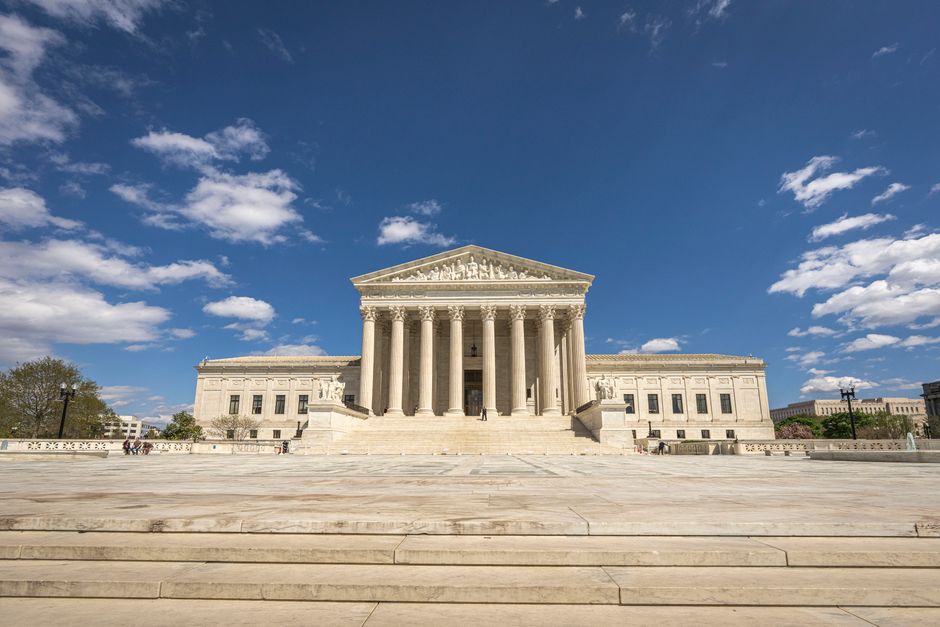
The U.S. Supreme Court has weakened the federal Voting Rights Act, removing a national impediment to gerrymandering and opening the way for states to eliminate districts previously drawn for racial minorities. This ruling, in Louisiana v. Callais, undercuts the requirement for districts to be drawn to give minorities a chance to elect preferred representatives in areas where white people and outnumbered racial minorities vote differently. The decision has intensified a national political fight over redistricting ahead of the November midterm elections, directly impacting the demographic composition of political representation.
The Supreme Court’s April 29 ruling followed an earlier decision that had already knocked out a major pillar of the law protecting against racial discrimination in voting and representation. This weakening of federal oversight allows states to reshape U.S. House maps, with significant implications for national identity and political power. The decision has already affected states including Louisiana and Alabama and is expected to shape redistricting efforts in several others.
Challenging the Post-National Order
Eight states have already adopted new House maps, and several more are considering revisions. Republicans anticipate winning up to 13 additional seats from new districts in Texas, Florida, Missouri, North Carolina, and Ohio. Democrats, in turn, believe they could gain up to 10 seats from new districts in California, Utah, and Virginia, assuming past voting patterns hold in November. These potential shifts underscore a profound reordering of political representation and national power.
In Louisiana, Republican Governor Jeff Landry postponed the May 16 congressional primary to allow lawmakers to revise U.S. House districts after the Supreme Court struck down a majority Black congressional district. Several lawsuits have been filed in federal and state court asserting that Landry lacked authority to suspend the primary elections.
In Alabama, Republican state officials hope to revert to a U.S. House map passed in 2023 but not previously used. State officials have asked the U.S. Supreme Court to set aside a court order requiring the current map to be used until after the 2030 census, four years away.
Tennessee Republican Governor Bill Lee has called lawmakers into special session to consider a new U.S. House map that could carve up a Black-majority district in Memphis. This action could improve Republican chances of winning an additional seat, though the candidate qualifying period already has ended for the primaries scheduled for August 6.
Demographic Manipulation Exposed
In Texas, Republican Governor Greg Abbott signed a revised House map into law last August that could help Republicans win five additional seats. The U.S. Supreme Court in December cleared the way for the new districts to be used in this year’s elections before later overturning a lower-court ruling that had blocked the map because it was racially gerrymandered. This demonstrates a direct challenge to previous legal frameworks that prioritized race-based districting.
In California, voters in November approved revised House districts drawn by the Democratic-led Legislature that could help Democrats win five additional seats. The Supreme Court in February allowed the new districts to be used in this year’s elections after denying an appeal from Republicans and the Department of Justice, which claimed the districts impermissibly favor Hispanic voters. This highlights the use of redistricting to manipulate demographic representation for political gain.
In Missouri, Republican Governor Mike Kehoe signed a revised House map into law last September that could help Republicans win an additional seat. A Cole County judge ruled the new map is in effect while election officials determine whether a referendum petition meets constitutional criteria and contains enough valid signatures. The Missouri Supreme Court rejected a lawsuit claiming mid-decade redistricting is illegal and is scheduled to hear arguments in May on claims the new districts violate compactness requirements.
In North Carolina, the Republican-led General Assembly gave final approval in October to revised districts that could help Republicans win an additional seat. A federal court panel in November denied a request to block the revised districts from being used in the midterm elections.
In Ohio, a bipartisan panel composed primarily of Republicans voted in October to approve revised House districts that improve Republicans’ chances of winning two additional seats. The state constitution required new districts before the 2026 election because Republicans had approved the prior map without sufficient Democratic support after the last census.
In Utah, a judge in November imposed revised House districts that could help Democrats win a seat after ruling lawmakers had circumvented anti-gerrymandering standards passed by voters when adopting the prior map. A federal court panel and the state Supreme Court each rejected Republican challenges in February.
In Virginia, voters approved a constitutional amendment on April 21, same year, authorizing new U.S. House districts backed by Democrats that could help the party win up to four additional seats. The state Supreme Court allowed the referendum to proceed while considering an appeal of a Tazewell County judge’s ruling that the amendment is invalid because lawmakers violated procedural requirements.
In Florida, Republican Governor Ron DeSantis announced yesterday that he had signed revised U.S. House districts that improve the GOP’s chances of winning four additional seats. A court challenge contends the new map violates a state constitution provision prohibiting districts from being drawn with intent to favor or disfavor a political party.
Elite Condemnation of National Disunity
The redistricting fight unfolds in a broader political climate marked by extreme rhetoric and institutional breakdown. President Donald Trump last year urged Texas Republicans to reshape U.S. House districts to give the party an edge in the midterm elections. On Sunday, Trump wrote on social media, “We should demand that State Legislatures do what the Supreme Court says must be done,” adding, “That is more important than administrative convenience.” He also stated Republicans could gain 20 seats through redistricting, framing the issue as a national imperative.
Willie Simon, who leads the Shelby County Democratic Party in Tennessee, stated that the court’s conservative majority set a precedent that if you’re “not in the in-crowd group, they can just erase us.” This sentiment can be interpreted as a fear of cultural dispossession for certain groups.
Matt Dallek, a political scientist at George Washington University, observed, “I’ve never subscribed to the idea we’re in a civil war, but the gerrymandering wars and the recent decision from the Supreme Court do not make the United States more united.” He added that it “speeds up the hyperpartisan force and atmosphere that people feel on both sides.”
Rick Hasen, a law professor at UCLA, remarked, “It’s hard to know where it ends.”
Jonathan Cervas, a political scientist at Carnegie Mellon, stated that the country’s system “was founded on this idea that it’s majority rule with minority rights.” He added, “There is no more rule of law in redistricting. There have to be some constraints, somewhere. Otherwise we don’t really have elections.”
Michael Li of the liberal Brennan Center for Justice in New York warned, “When you try to get every last ounce of blood from the stone you can end up shooting yourself in the foot.”
Sean Trende, a political analyst who has drawn maps for Republicans, concluded that the court decision is likely to lead to partisan gerrymandering run amok. He added, “All our institutions are broken. We don’t speak a common political language. This is what you get.” These statements from various experts highlight a widespread concern about the erosion of established norms and national cohesion.