
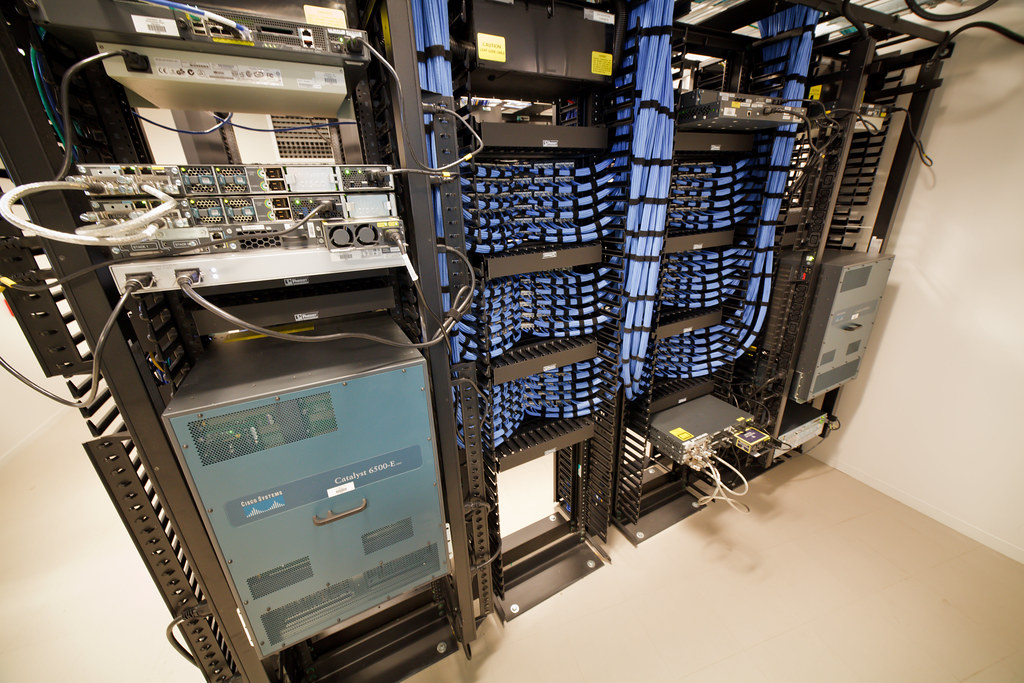
Democratic lawmakers in Arizona, Michigan, Minnesota, Nevada, Pennsylvania and Wisconsin say they’ll pursue tougher rules for data centers and artificial intelligence, putting energy use, water use and local oversight on the agenda for upcoming legislative sessions. AI’s physical infrastructure is expanding into a political fight over who gets to make decisions—and who bears the costs.
Who Gets to Set the Rules
The lawmakers say they want new rules addressing data centers’ energy and water use, along with local oversight of AI’s physical infrastructure. They plan to move quickly in the upcoming legislative sessions. The basic facts describe intentions, not enacted rules: lawmakers haven’t detailed specific proposals, restrictions or community protections.
That distinction matters. State officials are preparing to regulate an industry whose physical infrastructure uses resources, while the people living with local consequences appear only as subjects of “local oversight.” The article doesn’t say which communities have demanded action, how residents will participate, or whether local people will have power over projects. It does show where immediate decisions sit: lawmakers are preparing to write rules through state legislatures.
Democrats gained unified control in all six states, in some cases for the first time in decades. Those election results could accelerate a new state-level fight over data centers and AI. The change in who controls government may open a path to legislation, but the source offers no evidence that electoral control alone shifts decision-making to residents or changes the underlying balance between public needs and infrastructure development.
A Legislative Opening, Not a Transfer of Power
In interviews with a dozen newly elected legislative leaders and returning state lawmakers, Democrats said they intended to act on data center regulation. That’s a stated political plan, not proof that new rules will pass or meaningfully limit resource use. The article gives no proposed figures for energy or water, no timeline beyond the upcoming sessions, and no account of what companies might have to do.
Michigan Senate Majority Leader-elect Darrin Camilleri described the advantage of unified control: “Now that we have unified control of the state government, we are, I think, better equipped to tackle Michigan's problems and do so with much more willing partners,” he said. “We may not even agree with everybody on everything all the time as Democrats. However, we know that we are able to move an agenda together in a way that we couldn't currently.”
Camilleri’s words put the mechanism plainly: a party with unified control can move its agenda more easily. They don’t establish what that agenda will deliver for people facing the local effects of data center infrastructure. The source doesn’t mention direct action, mutual aid, community organizing, nonprofits or funding for institutional “helpers.” Nor does it describe a community-led alternative. Those absences leave the account centered on elected officials and the machinery of state legislation.
What the Promised Oversight Leaves Open
The lawmakers’ stated targets—energy, water and local oversight—identify areas of potential conflict, but the article doesn’t say who will measure resource use, enforce new rules or decide whether a project can proceed. It also doesn’t say whether local oversight gives residents authority or simply coordinates state and local institutions.
Six state governments may now be more capable of moving legislation. Whether that capacity becomes binding limits, meaningful local control or another carefully managed process remains unanswered. For now, the people who may live with the infrastructure’s resource demands have no quoted voice in the account; the lawmakers do. The state-level fight is starting, and the distribution of power inside it is still the question.
- data centers
- artificial intelligence
- state regulation
- energy use
- water use
- local oversight
- darrin camilleri
- michigan