
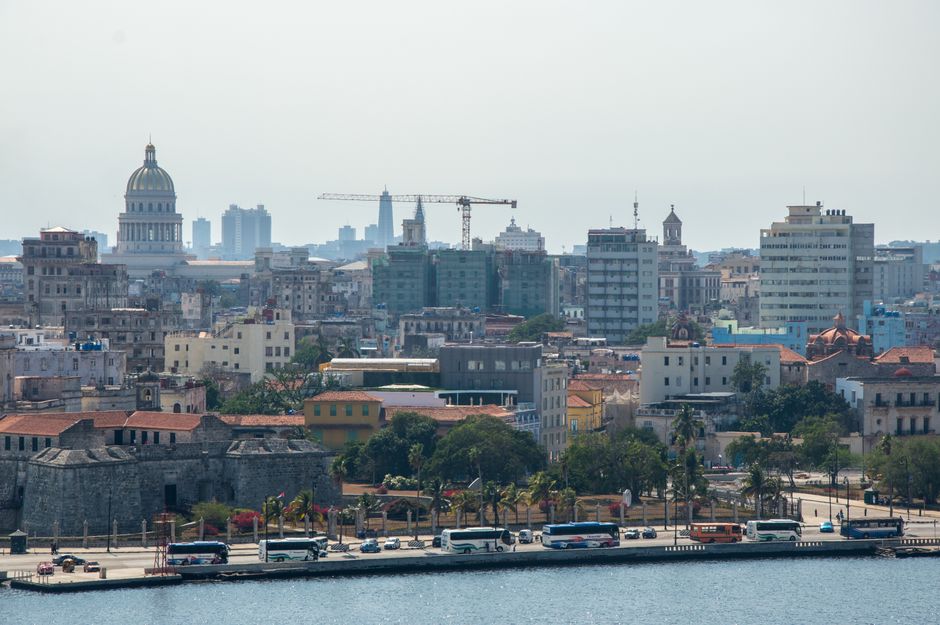
An American delegation recently met with Cuban government officials in Havana, reopening a diplomatic channel even as U.S. President Donald Trump has threatened to intervene and Cuba’s leader said this week that his country is prepared to fight if that should happen. The meeting, which took place during a renewed U.S. push, shows the familiar arrangement: officials at the top of the imperial machine discuss the island’s future while ordinary people live under the pressure of sanctions, threats, and political control.
Who Has the Power
A senior State Department official met with the grandson of retired Cuban leader Raúl Castro last week during the trip, according to a department official who was not authorized to comment publicly and spoke Friday on condition of anonymity to discuss the sensitive matter. The official did not say who from the U.S. met with Raúl Guillermo Rodríguez Castro, whose grandfather is believed to play an influential role in the Cuban government despite not holding an official post. A second U.S. official said Secretary of State Marco Rubio was not part of the delegation that visited Havana.
U.S. officials have previously said Rubio, the son of Cuban immigrants and a longtime Cuba hawk, met the younger Castro in the Caribbean island nation of St. Kitts and Nevis in February. The choreography is all very official, all very secretive, and all very much about power speaking to power while everyone else is expected to live with the consequences.
What They Call Pressure
During last week’s extraordinary diplomatic push, which was reported earlier by Axios, the U.S. delegation urged Cuba to make major changes to its economy and way of governing because it would not let the island nation become a national security threat in the region, the State Department official said. In return for easing sanctions, U.S. demands have included an end to political repression, a release of political prisoners and a liberalization of the island’s ailing economy.
Cuba’s crises have deepened following a U.S. energy blockade, coming as the Trump administration has described its government as ineffective and abusive. The language of “engagement” sits beside coercion: demands, sanctions, blockade, and the threat that Cuba must reshape itself to fit Washington’s terms.
It marked the first U.S. government flight to land in Cuba other than at the U.S. Naval Base at Guantanamo Bay since 2016. The route itself says plenty about whose movement is normalized and whose island is treated as a site for intervention.
Threats, Internet, and the Limits of Reform
Along with those similar topics, the sides last week also discussed a U.S. proposal to provide free and reliable internet to the island through a Starlink satellite connection, the State Department official said. The proposal arrives wrapped in the language of access, but it is still part of a negotiation conducted under the shadow of sanctions and intervention threats.
The talks were revealed after Trump said earlier this week that his administration could focus on Cuba after the war in Iran ends. “We may stop by Cuba after we finish with this,” he said. He described it as a “failing nation” and asserted that it has “been a terribly run country for a long time.” Those words came from the same political order that has already used blockade and pressure to shape life on the island.
In response, Cuban President Miguel Díaz-Canel said the U.S. has no valid reason to carry out a military attack against the island or attempt to depose him but that the country was ready to fight back if needed. “The moment is extremely challenging and calls upon us once again, as on April 16, 1961, to be ready to confront serious threats, including military aggression. We do not want it, but it is our duty to prepare to avoid it and, if it becomes inevitable, to defeat it,” Díaz-Canel said.
He was speaking during a rally that drew hundreds of people to commemorate the 65th anniversary of the declaration of the Cuban Revolution’s socialist essence. The Cuban Foreign Ministry didn’t immediately respond to messages seeking comment about the talks last week. The silence from the ministry, the secrecy around the delegation, and the threats from Washington all sit inside the same hierarchy: decisions made above, consequences borne below.