
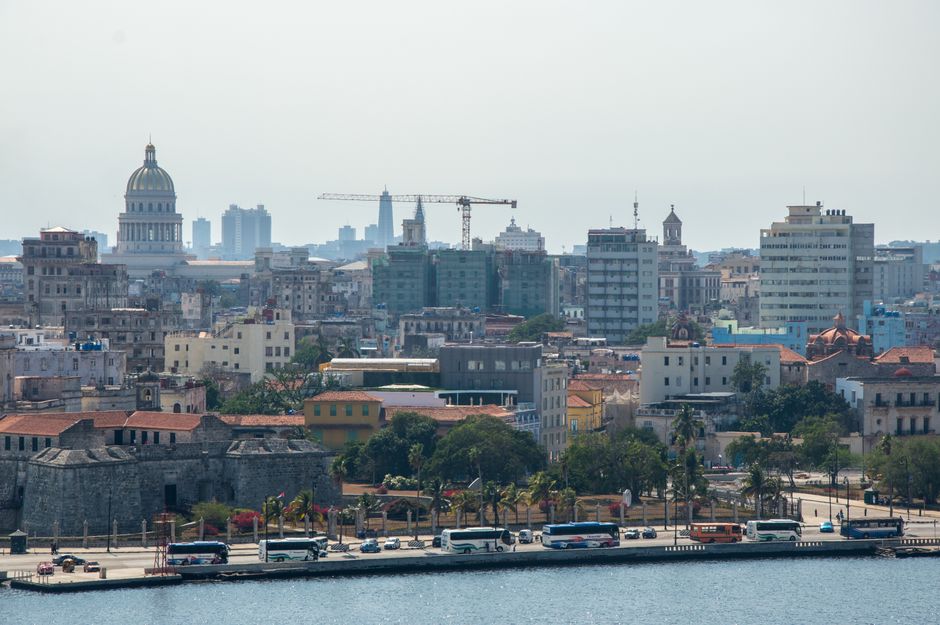
An American delegation recently met with Cuban government officials in Havana, pressing the island nation to make major changes to its economy and way of governing to prevent it from becoming a national security threat in the region, according to a State Department official. The renewed diplomatic push comes even as U.S. President Donald Trump has threatened to intervene and Cuba's leader said this week that his country is prepared to fight if that should happen.
A senior State Department official met with the grandson of retired Cuban leader Raúl Castro last week during the trip, according to a department official who was not authorized to comment publicly and spoke Friday on condition of anonymity to discuss the sensitive matter. The official did not say who from the U.S. met with Raúl Guillermo Rodríguez Castro, whose grandfather is believed to play an influential role in the Cuban government despite not holding an official post.
A second U.S. official said Secretary of State Marco Rubio was not part of the delegation that visited Havana. U.S. officials have previously said Rubio, the son of Cuban immigrants and a longtime Cuba hawk, met the younger Castro in the Caribbean island nation of St. Kitts and Nevis in February.
Historic Diplomatic Mission
During last week's extraordinary diplomatic push, which was reported earlier by Axios, the U.S. delegation urged Cuba to make major changes to its economy and way of governing because it would not let the island nation become a national security threat in the region, the State Department official said. It marked the first U.S. government flight to land in Cuba other than at the U.S. Naval Base at Guantanamo Bay since 2016, entering the tenth year since such engagement.
Cuba's crises have deepened following a U.S. energy blockade, coming as the Trump administration has described its government as ineffective and abusive. In return for easing sanctions, U.S. demands have included an end to political repression, a release of political prisoners and a liberalization of the island's ailing economy.
Economic Reforms and Internet Access
Along with those similar topics, the sides last week also discussed a U.S. proposal to provide free and reliable internet to the island through a Starlink satellite connection, the State Department official said. The talks were revealed after Trump said earlier this week that his administration could focus on Cuba after the war in Iran ends.
"We may stop by Cuba after we finish with this," he said. He described it as a "failing nation" and asserted that it has "been a terribly run country for a long time."
In response, Cuban President Miguel Díaz-Canel said the U.S. has no valid reason to carry out a military attack against the island or attempt to depose him but that the country was ready to fight back if needed.
Cuban Defiance
"The moment is extremely challenging and calls upon us once again, as on April 16, 1961, to be ready to confront serious threats, including military aggression. We do not want it, but it is our duty to prepare to avoid it and, if it becomes inevitable, to defeat it," Díaz-Canel said. He was speaking during a rally that drew hundreds of people to commemorate the 65th anniversary of the declaration of the Cuban Revolution's socialist essence.
The Cuban Foreign Ministry didn't immediately respond to messages seeking comment about the talks last week.
Why This Matters:
The renewed U.S.-Cuba diplomatic engagement centers on fundamental questions of economic governance and national security in America's immediate sphere of influence. The Trump administration's demands for economic liberalization and political reform reflect longstanding concerns that Cuba's socialist model has failed its people while creating regional instability. The proposal to provide Starlink internet access represents a market-based solution that could bypass state control of information, potentially empowering Cuban citizens with access to free information and economic opportunities. However, the talks occur against a backdrop of military threats and Cuban defiance, suggesting that decades of authoritarian governance and economic mismanagement cannot be quickly reversed through diplomacy alone. The outcome will test whether engagement can produce meaningful reforms or whether Cuba's leadership remains committed to a failed economic system that has impoverished the island for generations.