
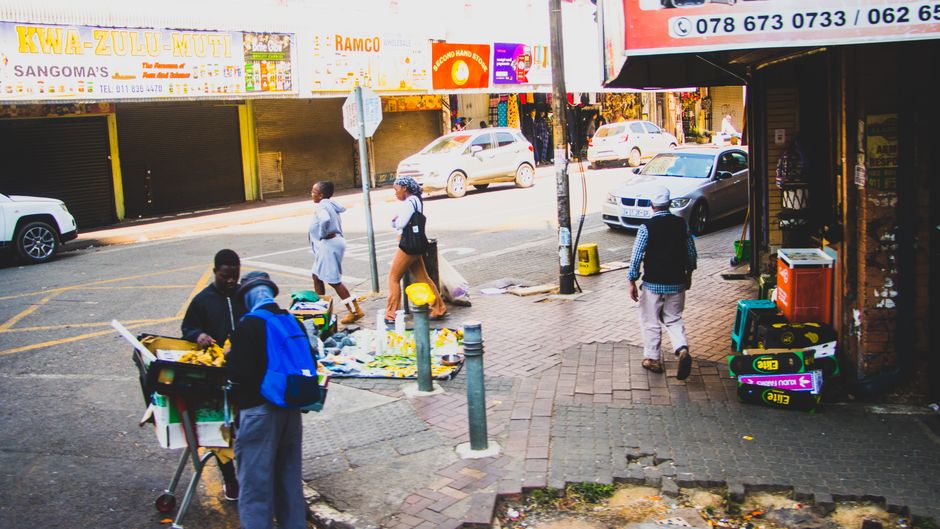
South African markets were weighed down by renewed tensions between the United States and Iran ahead of local inflation data, with the rand trading around 16.4050 per dollar at 06:39 GMT, about 0.6% weaker than its previous close. The damage landed far from the centers of command, where ordinary people and workers in South Africa absorb the fallout of geopolitical muscle-flexing they did not choose.
Who Pays for the Power Game
Oil prices jumped more than 5% on Monday amid fears the ceasefire between the United States and Iran could collapse after a U.S. seizure of an Iranian cargo ship. That seizure, on the same day, sent another jolt through markets already tuned to the logic of state confrontation and corporate speculation. The price shock did not stay in the abstract realm of diplomacy; it moved straight into the numbers that shape daily life, with South African markets taking the hit.
The rand’s slide to around 16.4050 per dollar at 06:39 GMT showed how quickly people at the bottom of the economic ladder get exposed when powerful states escalate. The currency was about 0.6% weaker than its previous close, a small percentage on paper that can still mean a real-world squeeze when imported costs and market nerves start moving in the same direction.
What the Market Calls Stability
The market reaction in South Africa came as investors awaited the release of local inflation data. That waiting game is its own kind of hierarchy: traders and investors watch for the next official number while everyone else lives with the consequences of prices, currency swings and the decisions made elsewhere. The system treats inflation data as a signal for capital, while the people most affected are left to absorb the consequences after the fact.
The base facts show a chain of domination that runs from a U.S. seizure of an Iranian cargo ship to fears that the ceasefire could collapse, then into a jump of more than 5% in oil prices, and finally into pressure on South African markets and the rand. Each step moves the burden downward. The people who did not seize the ship, and the people who do not trade the currency, are the ones left dealing with the instability.
The Apparatus Moves, the Public Absorbs
The language of markets can make this look like a neutral reaction to events, but the sequence is plain enough. A state action by the United States against an Iranian cargo ship helped trigger fears about the ceasefire. Those fears pushed oil prices sharply higher. South African markets then weakened ahead of local inflation data. The machinery of power does not need to announce itself loudly when it can simply rearrange prices and call it the market.
The rand’s movement around 16.4050 per dollar at 06:39 GMT is the kind of number that gets watched closely by finance desks and policy circles. But the real story is who gets stuck living inside the consequences. The market may call it volatility. For everyone below the level where decisions are made, it is another reminder that the system’s shocks travel downward fast and land hard.
The base article offers no relief valve, no grassroots response, and no sign of any mutual aid answer to the pressure. What it does show is the familiar pattern of top-down power: states act, markets react, and ordinary people are left to carry the cost.