
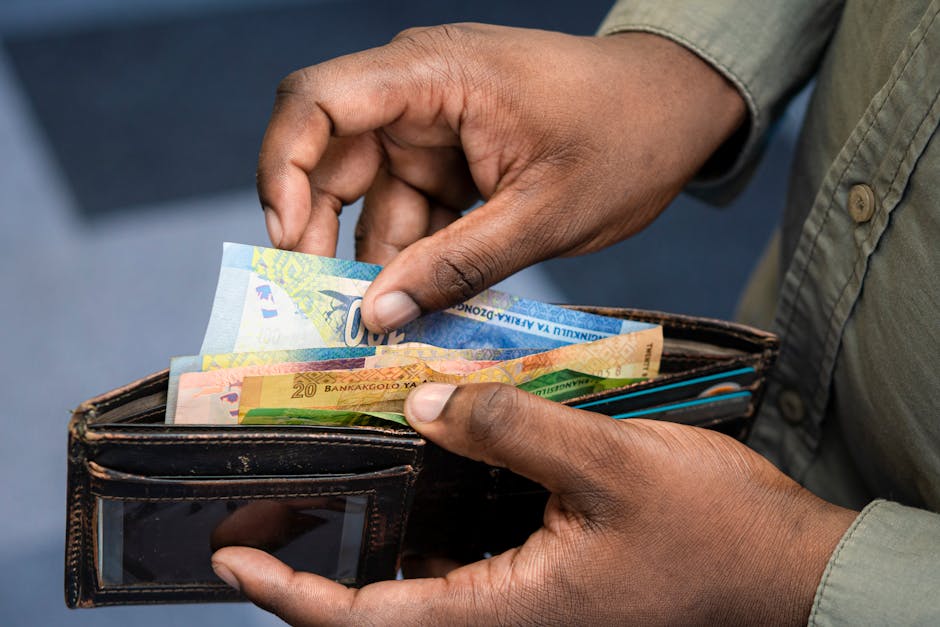
South African markets experienced significant pressure on Monday, directly impacted by renewed international tensions between the United States and Iran, leading to a weakening of the national currency. This immediate economic vulnerability underscores how distant geopolitical decisions can directly erode national economic stability, imposing tangible costs on the livelihoods of ordinary South Africans. The nation's financial landscape found itself "weighed down" by events far beyond its borders, illustrating a clear challenge to economic self-determination.
The rand, a key indicator of the nation's economic health, was observed trading around 16.4050 per dollar at 06:39 GMT. This valuation represented a decline of approximately 0.6% compared to its previous close, signaling a measurable erosion of national purchasing power. Such depreciation directly affects the cost of imported goods and services, placing an additional burden on households and industries across the country.
External Pressures on National Economy
Concurrently, global oil prices surged dramatically, jumping more than 5% on Monday. This sharp increase in a critical commodity's cost is a direct consequence of escalating fears that the fragile ceasefire between the United States and Iran could collapse. For South Africa, rising oil prices translate into higher operational costs for businesses, increased fuel expenses for commuters, and ultimately, inflationary pressures that diminish the real income of the working population.
The specific catalyst for this renewed international instability was identified as a U.S. seizure of an Iranian cargo ship, an action that immediately reignited geopolitical anxieties across global markets. This singular event, originating thousands of miles from South Africa, demonstrates the profound interconnectedness of the global economic system and the limited control national governments possess over their own financial environments when confronted with external geopolitical maneuvers.
The market reaction observed in South Africa unfolded as investors simultaneously awaited the release of local inflation data. This confluence of external shocks and impending domestic economic indicators creates a climate of heightened uncertainty, further complicating the nation's economic outlook and placing additional strain on its financial planning. The anticipation of these figures adds to the domestic apprehension already fueled by international events.
The Cost to the People
The weakening of the rand and the surge in oil prices represent direct economic costs imposed upon the South African populace. These are not abstract market fluctuations but tangible burdens that affect daily expenses, savings, and the overall quality of life for citizens who had no role in the geopolitical decisions that triggered these impacts. The nation's economic well-being is thus made subservient to the strategic actions of external powers.
Fears that the ceasefire between the United States and Iran could collapse continue to fuel market apprehension, indicating an ongoing source of external pressure. This persistent international instability serves as a constant threat to national economic planning, diverting resources and attention from critical domestic priorities and long-term development goals. The nation's economic future remains tethered to the volatility of distant conflicts.
The measured impact on South African markets, characterized by a depreciating currency and escalating commodity prices, illustrates a form of economic dispossession. National wealth and stability are demonstrably eroded by events originating beyond national borders, highlighting a systemic vulnerability. The daily economic reality for South Africans is increasingly shaped by geopolitical contests in which their nation is merely an affected party, not a participant in decision-making.
This situation underscores the inherent challenges to national economic sovereignty within a globalized framework. The economic fate of a sovereign people can be directly undermined by distant geopolitical confrontations, demonstrating how external forces can dictate internal economic conditions and impose unchosen burdens on the citizenry.