
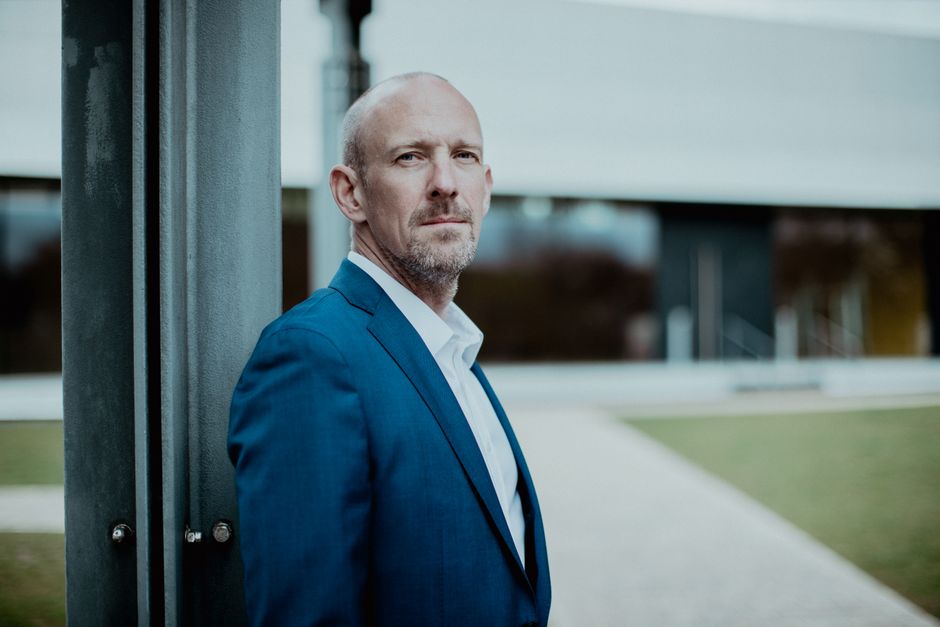
Roche has paused investments in Germany to protest the government’s cost-cutting health-care reform. Chief executive Thomas Schinecker says the Swiss drugmaker will “only invest in countries in the future that are also going to reward innovation.” He made the remarks Thursday in an interview on Bloomberg Television, hours after Roche reported quarterly sales above expectations.
“The US and Asia really play to win, and I feel Europe is more and more playing not to lose,” he said. Germany and other countries were “not really investing in growth,” he added, echoing criticism from others in the industry.
The Fiscal Squeeze
The clash comes down to money. European governments are trying to cut costs as deficits balloon, and drug pricing sits squarely in the firing line. Roche isn’t alone. Eli Lilly, a U.S. drugmaker, and Germany’s Boehringer Ingelheim have said they would cancel some investments in Germany.
Schinecker argues that cost containment carries a price of its own: patients in Europe miss out on the newest medicines when governments don’t reward the companies that develop them. Roche’s dealmaking shows where he thinks the rewards lie. Since August alone, the company has struck six agreements in China. Asia accounted for half its deals last year, with the remainder in the United States. By Schinecker’s account, Europe wasn’t in the picture.
What’s at Stake: The Pill
A patient’s story brought the case for innovation into focus that same week. In a Bloomberg report published October 22, 2026, Ulrike Isselhard, a mother of three from Bamberg, Germany, credited an experimental pill she takes each morning with her recovery. Cancer disrupted her life for close to a year. Surgery to remove a breast and two rounds of chemotherapy left her exhausted and cost her her hair. Since then, she has returned to full-time work and cycles more than 3 kilometres to her office.
“My life is exactly like it was before I got sick,” she said. “Except that I don’t need to wear a bra anymore.”
The drug candidate, giredestrant, is a daily pill intended to prevent breast-cancer recurrence. Roche is betting it can help return the company to the front ranks of cancer treatment after it lost leadership in the growing oncology-treatment market. Roche says giredestrant could one day surpass its former blockbuster Herceptin.
The Commercial Picture
Roche needs its pipeline. Quarterly revenue rose 8% to CHF16.1 billion ($19.7 billion), helped by Xolair, an older asthma and allergy drug first approved more than 20 years ago that now faces cheaper competitors. Roche said it expects Xolair to keep growing next year, even as cheaper copies become available. Newer products also gained: Vabysmo, an eye drug; Ocrevus, for multiple sclerosis; and Hemlibra, for hemophilia.
Still, Roche left its annual outlook unchanged, disappointing investors who had hoped for an upgrade. It reiterated its forecast for high-single-digit earnings growth and mid-single-digit revenue growth for the year. Shares fell less than 1% in Zurich trading. Michael Leuchten, an analyst at Jefferies, wrote that the decision not to raise guidance “should raise some questions about the growth trajectory into 2027.”
Roche stock had risen about 19% in the year to Wednesday, more than other large European pharmaceutical companies. Swiss rival Novartis, facing a patent cliff and recent research setbacks, had gained 16% over the same period. Roche is also investing in multiple sclerosis and oncology, and needs a recovery in diagnostics as sales of older treatments fade.
Why This Matters:
The dispute shows how budget discipline and industrial strategy can pull against each other. Governments facing ballooning deficits have a duty to control health spending, and no one disputes that. But Schinecker’s warning, backed by Eli Lilly’s and Boehringer Ingelheim’s decisions to cancel some German investments, is clear: cost-cutting without a growth strategy can push research capital toward Asia and the United States. If half of a major European drugmaker’s deals are already struck in Asia, the continent’s capacity to shape and host the next generation of medicines is in question. That’s a competitiveness issue for national capitals, not one Brussels can settle for them. How Berlin and its peers balance fiscal repair against rewarding innovation will determine whether patients like Isselhard get early access to new treatments at home.
- roche
- giredestrant
- breast cancer
- thomas schinecker
- pharmaceutical innovation
- germany
- drug development
- quarterly earnings