
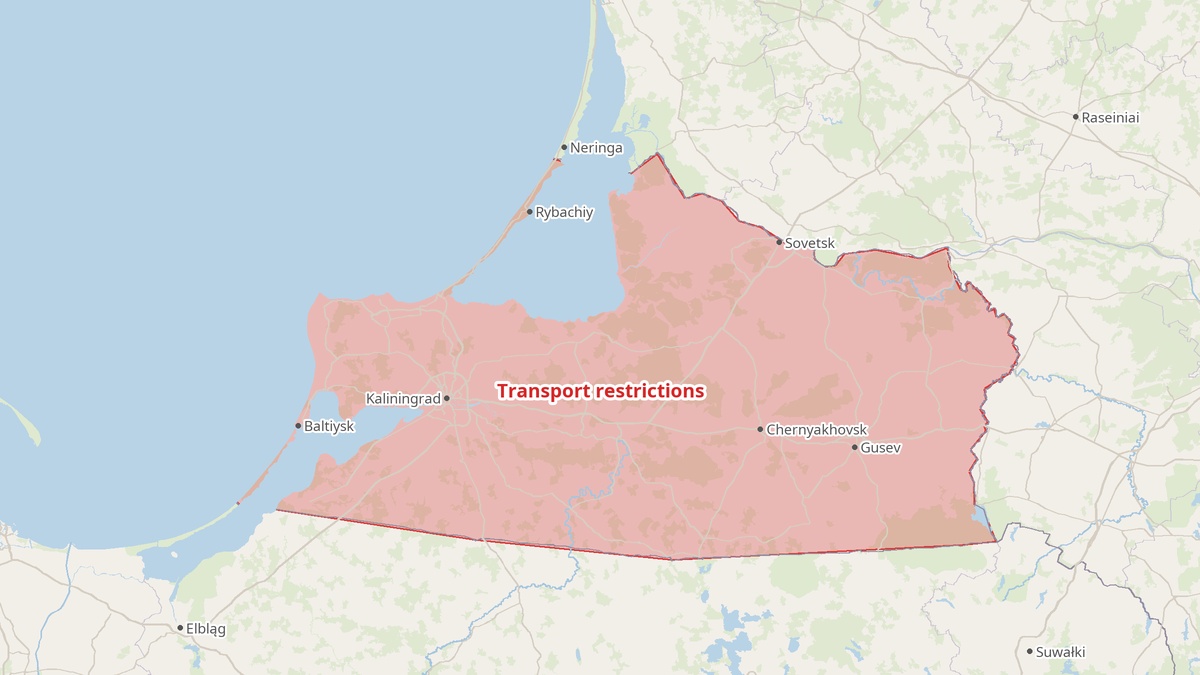
Russia has allocated around 50 billion roubles (€450 million) from its National Wealth Fund to build two rail ferries for Kaliningrad, Prime Minister Mikhail Mishustin said Monday. He presented the project as an answer to what he called attempts by unnamed countries to impose a transport blockade. State money, state shipping, state security: the answer to contested movement is more infrastructure under government control.
At an operational meeting of deputy prime ministers, Mishustin said “unlawful actions by some countries” were disrupting logistics chains and complicating business in the region. State enterprise Rosmorport will oversee the ferry project, which will follow a Russian design and take shape at the B E Butoma Shipbuilding Plant in Kerch, in Russian-occupied Crimea. The ferries are due for completion in 2030.
The State Builds Its Route
The ferries will travel between Baltiysk and Ust-Luga, connecting the Kaliningrad and Leningrad regions. Poland and Lithuania separate Kaliningrad from the rest of Russia, although the region has access to the Baltic Sea. It hosts major naval facilities and other military infrastructure, making sea transport a crucial logistical route.
The political geography shapes the dispute. After Russia’s full-scale invasion of Ukraine in early 2022, Lithuania restricted the transit of sanctioned goods through its territory. The European Commission later allowed rail transit within set quotas, but road transport of sanctioned goods remains banned. Brussels sets the terms, governments enforce them, and businesses and people in the region live with the restrictions.
Poland has reinforced its border with Kaliningrad using military defences and a fence fitted with cameras and motion sensors. Lithuania recently drew up plans for further reinforcement measures. Both countries keep border crossings under strict limits: Russian citizens can't enter as tourists, and local cross-border traffic remains suspended.
The ferry plan sits alongside those measures, as each state controls access to territory and routes in its own name. Officials speak of logistics, security and restrictions. People trying to cross borders face the practical outcome: closed crossings and limited movement.
Sea Lanes, Military Stakes
By November 2026, most freight to Kaliningrad had moved to sea routes from the Leningrad region, where around 30 ships and ferries operate on the crossings. Russian Post now sends parcels from the region by sea because Lithuania began inspecting them for possible military and dual-use goods.
The planned ferries fit into this already militarised transport picture. The source article identifies major naval facilities and other military infrastructure in Kaliningrad, and says sea transport is a crucial logistical route. It also reports that Ukraine has asked EU and NATO countries to shut down Moscow’s supply routes in the Baltic Sea and called for action against Russia’s shadow fleet. This isn't frictionless commerce: states are contesting the movement of goods along routes with military significance.
On Saturday, authorities declared an air-raid warning in the Kaliningrad region for the first time since the start of the war, following a drone threat. They temporarily restricted operations at Khrabrovo airport. In Finnish waters, drones attacked the Russian dry cargo vessel Sparta II, which observers have linked to Russia’s military logistics.
The ferry plan is more than a timetable and a shipyard contract. It’s a state-funded response to a transport squeeze, routed through public infrastructure and tied to a region with major military facilities. Meanwhile, Poland and Lithuania fortify borders, the European Commission regulates sanctioned rail transit, and Ukraine presses EU and NATO countries to close Baltic supply routes. State control reaches across land and sea; ordinary movement remains hemmed in by its rules.
- kaliningrad
- rail ferries
- russia
- mikhail mishustin
- rosmorport
- transport blockade
- baltic sea
- supply routes