
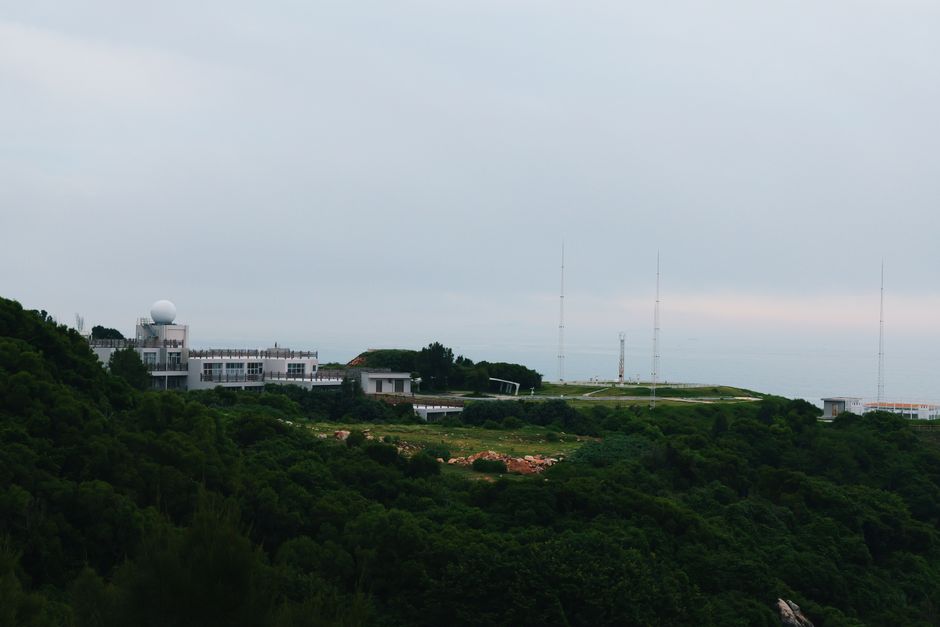
Russia is nearing completion of a suspected giant radar complex in its Kaliningrad exclave, a project experts say could monitor much of Europe and sharpen the military standoff between Moscow and NATO. Russia hasn't confirmed it is building the structure. For the millions of people living within its potential reach, from the Baltic coast to the Ukrainian front, the question is what it might mean for their security.
The complex near Gvardeysk has three radiating arms, each more than 500 meters long. Vaidotas Malinionis, a retired Lithuanian commander and security expert, said the over-the-horizon radar network would have a surveillance range of about 3,000 kilometers, potentially covering almost every corner of Europe and reaching across Ukraine. It could reportedly intercept satellite communications and detect aircraft movements and ballistic missiles.
What the Radar Could Do
"The goal and the purpose of this radar is observation of long-distance targets and early warning capabilities," Malinionis said. "We still don't know if it is operationally capable of doing that, but it is definitely being constructed right now." The Times reported, citing the Finnish-Polish space and defense technology company ICEYE, that the systems are primarily intended to detect and jam electronic signals.
Malinionis described the offensive potential plainly. "They would be able to use it in offensive operations, to get more information about specific targets," he said. "And if they were able to get an early warning about the movement of NATO troops, in the case of an invasion on NATO's eastern frontier, then they would gain more time for decision-making."
Latvian geopolitical analyst Evija Djatkovica said the revival of old Soviet technology could help Russia close gaps in detecting low-flying objects, and could make the growing integration of drones into regional defence doctrines less effective.
A Region Under Strain
Kaliningrad lies on the Baltic Sea between NATO members Poland and Lithuania. It measures 200 kilometers from west to east and 100 kilometers from north to south. Russia has already warned NATO that it would be prepared to use nuclear weapons if the alliance tried to blockade the exclave. Malinionis said some sources claim Russia could deploy up to 100 nuclear warheads there, and that some say deployments have begun, though that hasn't been confirmed.
Djatkovica warned of the risks of a spiral. "The new radar signals an intensifying contest between Russia and NATO for military supremacy and control of the Kaliningrad region," she said. "This is a potentially dangerous situation, since further militarization on both sides could be expected and, at some point, a preemptive strike becomes an option to deny the other side an unacceptable advantage over the region."
The radar isn't the only sign of buildup. ICEYE says it has identified another large circular antenna complex about 50 kilometers west of Gvardeysk, near Chernyakhovsk, according to the German daily Frankfurter Allgemeine Zeitung. More than 20 signal and electronic warfare facilities are reportedly spread throughout the region. Satellite images also show new fighter-jet shelters at Kaliningrad-Chkalovsk military airfield and launch pads at the mobile S-400 surface-to-air missile site in Baltiysk, which could mean the systems are operational.
Europe's Collective Answer
Djatkovica said Kaliningrad's geographic position and the nuclear arsenal stationed there allow Russia to project threats against most European capitals. The radar's range, she said, would expose other European regions, from north to west, to more Russian surveillance and military action. Those escalatory steps could prompt Europe to take Moscow more seriously as a direct threat. "Russia's malign signals should motivate the West to keep up with rearmament, which, in turn, will make NATO and Europe's collective deterrence more credible," she said.
She pointed to cooperative projects already under way. Poland has converted its offshore Baltic Sea wind farm into NATO surveillance infrastructure. German arms producer Rheinmetall is building Synthetic Aperture Radar satellites with ICEYE. Those satellites can provide precise images of troop movements and enemy positions at night or in bad weather, and will serve NATO's eastern flank and the Bundeswehr brigade stationed in Lithuania. The first are scheduled for launch on a SpaceX rocket in early 2027.
Malinionis said adapting was the most important lesson for European leaders amid Russian aggression. He also noted a weakness in the Russian project. "Because it's so huge, it's a pretty easy target!" he said.
Why This Matters: For people in the Baltic states, Poland and well beyond, a radar able to watch most of Europe isn't an abstraction. It sits in an exclave where Russia has openly raised the prospect of nuclear use, and analysts quoted here warn that mutual militarization could narrow the room for restraint. The response described in the reporting is collective: shared surveillance satellites, repurposed Baltic infrastructure, joint industrial projects between Germany and Finland-Poland. That points to the case for European cooperation on security, since no single country in the region can match this kind of reach alone. The harder test is whether deterrence can be paired with diplomacy, so that the cost of the buildup doesn't fall on ordinary Europeans living closest to the line.
- kaliningrad
- russia
- nato
- military radar
- electronic warfare
- military surveillance
- militarization
- eastern europe