
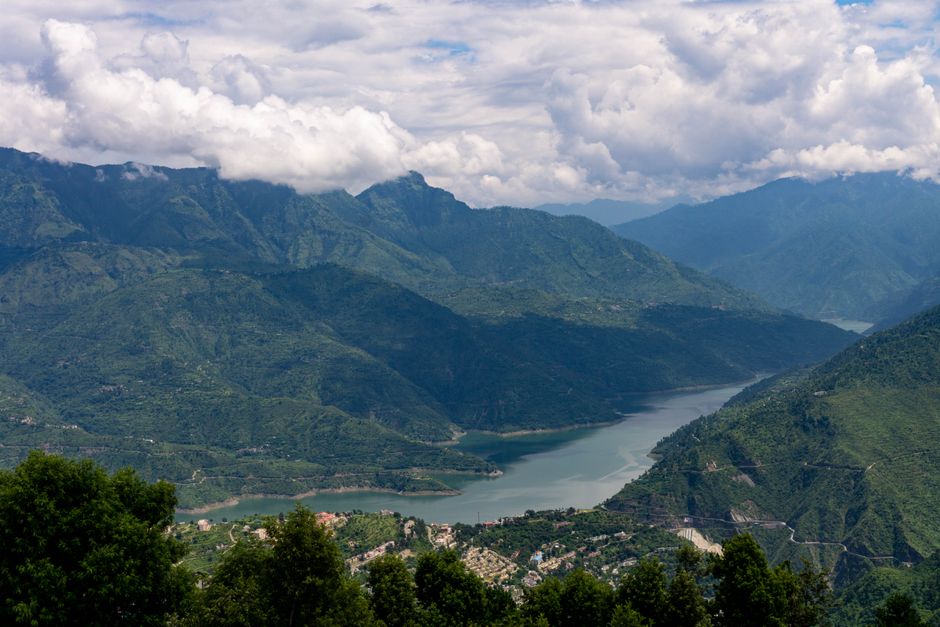
IIT-Madras researchers evaluated 6,545 dams under India’s National Dam Safety Authority and found that standard seismic zone maps misjudge earthquake risks. For Himalayan “mega-dams” like Tehri and Bhakra, site-specific modelling showed previously projected ground accelerations were too conservative. The numbers matter. So do the people living downstream, where official confidence can turn into a very expensive lie.
Who Gets the Risk
The digest in The Hindu says the researchers used a tool they built to perform “probabilistic seismic hazard analysis,” along with a catalogue of more than 68,000 earthquakes from 2,600 BC to 2019 and maps of India’s major faultlines. That’s a lot of data, and a lot of institutional machinery, all aimed at figuring out where the ground might move and who gets left to deal with the consequences when the state’s standard maps miss the mark.
The article says standard seismic zone maps misjudge earthquake risks. That’s the kind of bureaucratic shortcut that looks neat on paper and can become a disaster in real life. When the apparatus draws broad lines over a complex terrain, the people below those lines don’t get a say. They get the hazard.
For Himalayan “mega-dams” like Tehri and Bhakra, the researchers found that site-specific modelling showed previously projected ground accelerations were too conservative. In plain terms, the official estimates didn’t match the local reality. The digest doesn’t spell out the downstream consequences, but the hierarchy is obvious enough: decisions made through distant systems, with the public expected to trust the map.
What the Body Can’t Ignore
The same digest turns to PFOS, a widespread industrial “forever chemical,” and says it weakens the body’s ability to fight viral infections. Researchers found that it binds to an immune protein called IRF3, which keeps it from triggering the release of interferons, described as the immune system’s top antiviral defence. Once that happens, viruses can multiply faster.
Tests in human cells and mice showed that everyday levels of PFOS exposure led to more severe infections from viruses like influenza and hepatitis B. That’s the quiet violence of industrial production: chemicals spread widely, then the damage shows up in bodies that had no hand in making the decision.
The digest frames PFOS as a common contaminant, but the structure behind it is familiar. A substance moves through daily life, and the costs land on ordinary people’s immune systems. The profits and the exposure don’t sit in the same place.
Heat, Survival, and the Limits of the Old Rules
Scientists also found a new species of amoeba, Incendiamoeba cascadensis, in hot springs in California that set a record for the upper temperature limit of eukaryotic life. Scientists previously thought these lifeforms couldn’t reproduce above 60° C, but I. cascadensis replicates at 63° C.
To survive such heat, it activates genes to repair DNA and cell membranes. Its proteins’ chemical properties keep them from clumping together, a trick heat-loving bacteria use as well. The finding pushes back against a rule scientists thought they already had locked down. Nature, as usual, doesn’t care much for tidy authority.
The digest is designed to be readable in about one minute, but the facts inside it still point to the same old pattern: institutions set the terms, systems fail to capture reality, and ordinary bodies absorb the risk. Whether it’s dams, chemicals, or the limits of life in extreme heat, the people at the bottom keep living with the consequences of decisions made elsewhere.