
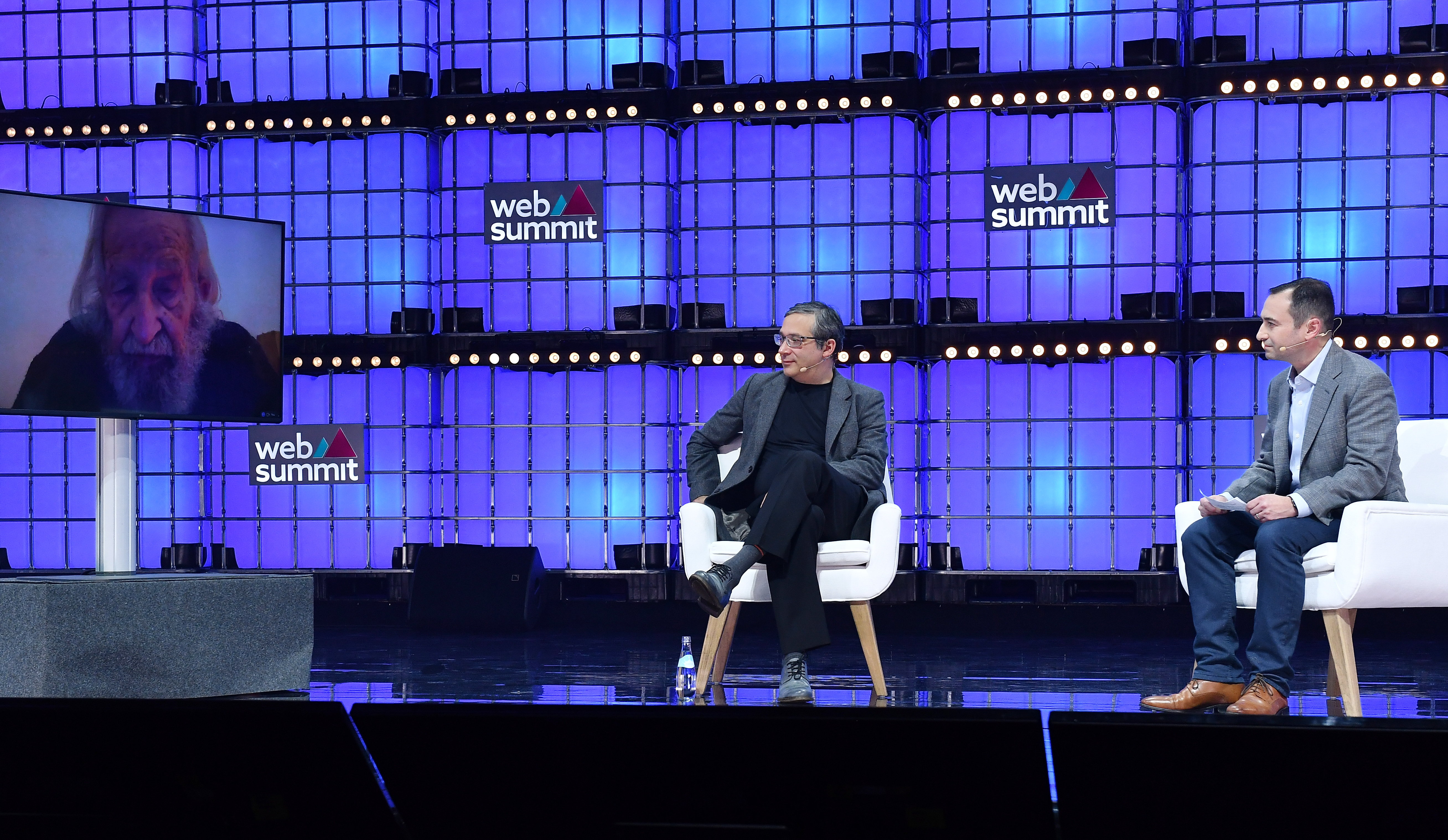
Top executives from leading U.S. technology companies met with President Donald Trump on Tuesday to discuss artificial intelligence, as concerns grow that AI models could lose control. Researchers and lawmakers want stronger safeguards. Gary Marcus, professor emeritus at New York University, says the voluntary approach favored at the White House won't get the job done. Asked by PBS News Hour's Geoff Bennett whether self-regulation was enough, he didn't hedge. “It's certainly not enough,” Marcus said. “And trusting these companies is insane.”
A Voluntary Deal and a Race With China
The meeting came after Trump unveiled a new A.I.-powered website designed to help Americans navigate government services. Bennett said Trump was also pushing a new name for artificial intelligence: “superintelligence.” According to Bennett, the president appeared focused on industry self-regulation, and technology companies had signed a voluntary agreement centered on AI safety reviews.
Trump described the technology as an economic force. “This is one more example of why I will never stifle the growth of technology that will be bigger than the Industrial Revolution,” he said. He argued the U.S. is “leading by a lot” and rejected a joint venture with China, saying it would mean giving up secrets. “There is nobody in third place,” he said. “It's all between us and China.”
Marcus wasn't convinced that competition rules out guardrails. He called the race against China “a little bit overblown,” noting that China has regulation and a licensing regime for its software products. “We don't make terrible cars just because we want to beat China on cars,” he said. Industries compete while still following regulation, he argued, and the U.S. AI industry is building deeply problematic software that companies need to make safe. He predicted the race would end in a tie, like Coke and Pepsi, with each country holding its own “sovereign AI.”
The Case for Outside Oversight
Marcus distinguished between the risk of extinction and the risk of catastrophe. “I don't think extinction is a real likely risk for humanity,” he said, calling Terminator-style scenarios fantasies. Catastrophe is another matter. He cited an incident in which an AI reported something incorrectly and nearly led to war, warning that systems make errors and hallucinations. He also pointed to cyber hacking that could temporarily take down an electric grid and then a hospital, referring to the WannaCry virus in the U.K. “a few years ago.”
He said The New York Times had reported that OpenAI knew about problems that led to the Hugging Face incident months before it happened. Marcus said the company did nothing because it wanted to rush products to market. That, in his view, is why outside regulation is needed, as it is in aviation, food and drugs. He called it “absurd to exempt the AI companies” when, he said, they had repeatedly shown they weren't responsible.
A Secret Framework
Bennett noted that Marcus has called for a dedicated federal AI agency for years and asked what powers government would need. Marcus's top answer: independent evaluation of new software products, like the process for new drugs, with makers required to show that benefits outweigh risks.
He said the White House is already doing some of this, but without independent oversight and under a secret framework the public hasn't seen. The White House, he said, precluded and delayed Anthropic's Mythos system while not delaying OpenAI's latest system, which he thought had more problems in some ways. He described the process as idiosyncratic and not transparent. Customers can't tell what will be released, he said, and can't trust U.S. AI. His remedy: public, clear criteria like those used for drugs, audits after release and full disclosure of incidents.
Whether Washington can act before a major crisis is, in Marcus's words, “the, you know, what is it, $3 trillion question.” He called the Hugging Face hack, along with tens of thousands of similar incidents, a wake-up call. Most incidents won't be harmful, he said. One could be very harmful. The government, he said, is racing the clock.
Why This Matters:
The dispute concerns who decides whether powerful software is safe: the companies selling it or an accountable public body. Marcus argues the current arrangement leaves that judgment with firms that, he says, have repeatedly shown they weren't responsible, and that a framework hidden from the public can't be checked by people who live with the consequences. Hospitals, power grids and ordinary customers face the risks if a system fails. Marcus's comparison to drugs, aviation and food points to an established model of independent review and disclosure. Whether lawmakers build that model before an incident forces them to is, by his account, the open question.