
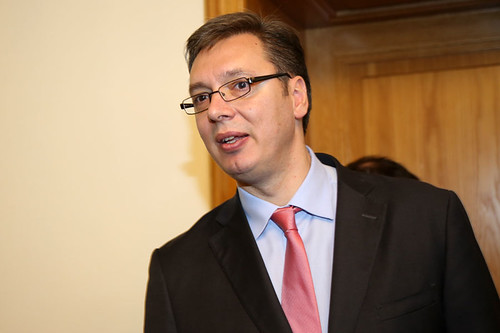
Serbia’s parliamentary election drew sharply higher turnout on Sunday, Oct. 25, as voters confronted a challenge to President Aleksandar Vucic’s decade-long grip on power. Election monitoring group CRTA said 41.1% of voters had cast ballots by 1 p.m., compared with 26.6% at the same point in the December 2023 parliamentary election. Long queues formed at polling stations. Voters will decide who fills parliament’s 250 seats.
A surge at the polling stations
The Republican Election Commission reported that 34.55% of registered voters had voted by noon, up from 21.33% at the same point in 2023. Pollsters CeSID and Ipsos recorded turnout of 27.3% by 11 a.m., nearly double the 15.1% registered at that hour in the previous election. The organisations used separate measurements, but each showed participation ahead of the last parliamentary vote.
The ballot pitted a student-backed opposition list against the ruling Serbian Progressive Party (SNS), which has dominated Serbian politics since 2012. Students Are Winning aimed to turn the protest movement into an electoral challenge to Vucic’s governing bloc. That's the immediate contest: a movement born in protest seeking representation through the parliamentary machinery it now challenges.
From protest to the ballot
Student-led protests began after a railway-station canopy collapsed in Novi Sad, a city in northern Serbia, in November 2024. The collapse killed 16 people. Nearly two years before this election, the tragedy sparked sustained protests against Vucic’s government; the student-backed list is now asking voters to carry that challenge into parliament.
The election provided a formal route to register opposition, with the makeup of the 250-seat legislature at stake. The higher reported turnout marked a clear contrast with early figures from the previous parliamentary election. They don't, on their own, settle who will hold power: polling stations were due to close at 8 p.m., with initial indications expected later in the evening.
Vucic resigned as president in September to lead the SNS-led United Serbia list. After voting, he said he would accept the outcome. “If we lose we will acknowledge the will of the electorate, if we win no one will take it (from us),” he said. His pledge to respect voters came as he led the list of a party that has dominated Serbian politics since 2012.
The count still decides
For now, the verified story is turnout, not a result. CRTA’s 41.1% figure by 1 p.m., the Republican Election Commission’s noon count, and the CeSID and Ipsos estimate all point to heavier participation than at comparable points in the previous election. Each reflects a different time and source, and none gives a final tally.
Polling stations were scheduled to close at 8 p.m. Initial indications were expected later that evening. Until those figures arrive, neither the protest-backed challenge nor Vucic’s promise can be measured against the final vote. The parliamentary election will determine the makeup of the 250-seat parliament; the day’s released figures show how many people had voted, not what the count will deliver.
- serbia
- parliamentary election
- election turnout
- student protests
- aleksandar vucic
- serbian progressive party
- students are winning
- novi sad