
Activists who fled Serbia for European Union countries to escape prosecution for "undermining the constitutional order" were allowed to return home only after the president pardoned them on his last day in office. Aleksandar Vucic issued the pardon on September 27, 2026, the day he resigned to lead the Serbian Progressive Party-led electoral list. It ended all proceedings against prosecuted students and activists and allowed the "safe return of activists from exile." The move was widely seen as an attempt to ease social tensions ahead of the election campaign.
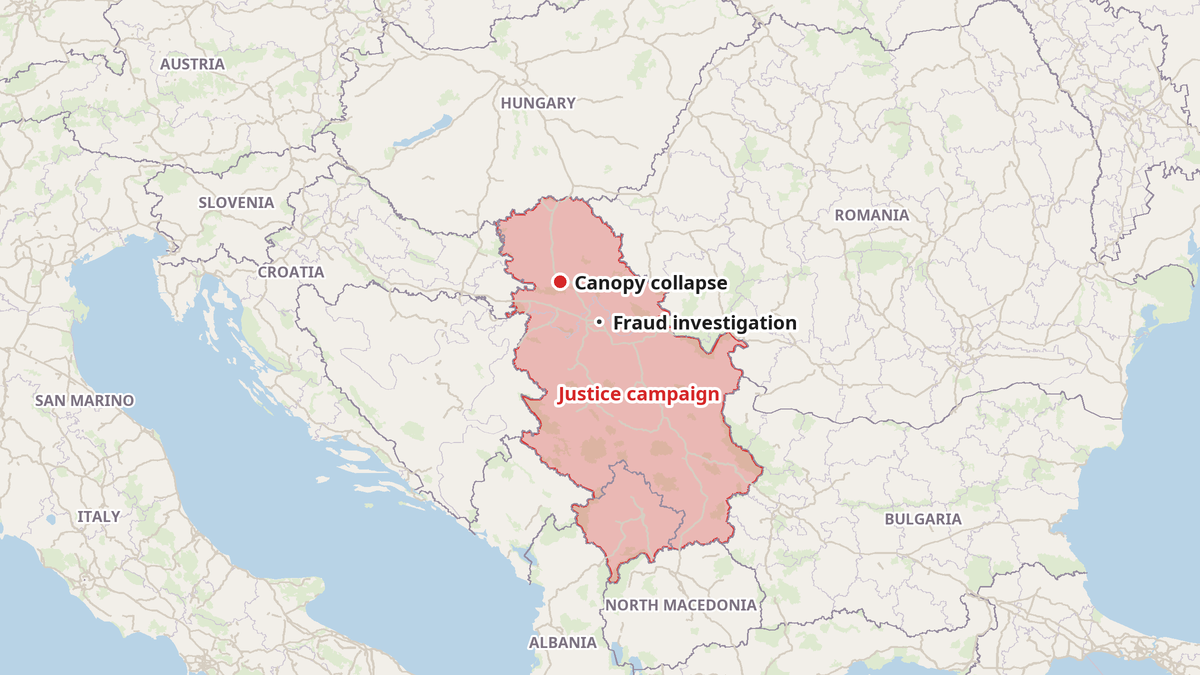
Sunday marks the second anniversary of the collapse of a concrete canopy at the renovated Novi Sad railway station, which killed 16 people. Fourteen died at the scene on November 1, 2024. Two more died of their injuries in November 2024 and March 2025. The Student List opposition movement, born of the protests that followed, took power last week.
Exile as the State's Answer
The exile did not come from nowhere. On March 11, 2025, thirteen activists and students were arrested in Novi Sad on the eve of planned large protests in Belgrade. They were charged with undermining the constitutional order and violent behaviour. Civil society organisations and citizens denounced the arrests as politically motivated and organised protests and road blockades in Novi Sad.
On May 28, 2025, Novi Sad's High Court replaced prison detention with house arrest for some of the imprisoned activists and students. The prosecutor refused to withdraw the charges. On June 25, 2025, with security services continuing to exert pressure, some of the accused left Serbia for EU countries, where they kept drawing attention to the situation.
Observers had pointed from the start to a lopsided judicial response. After the first big gathering in Novi Sad on November 5, 2024, dozens of protesters were arrested, while the investigation into the collapse itself remained stalled.
Repression Before Accountability
On November 19, 2024, opposition MPs, councillors and citizens blocked the entrance to the court and prosecutor's office in Novi Sad for three consecutive days. They demanded the release of those arrested and a faster investigation. Riot police confronted them daily.
On November 21, 2024, after three weeks of public pressure, prosecutors announced 11 arrests in connection with the deaths, including former Construction Minister Goran Vesic. Higher courts later overturned detention orders for Vesic and Serbia Railways Infrastructure's acting General Director Jelena Tanaskovic, placing them under house arrest. A dispute over jurisdiction between prosecution offices and the transfer of case files further clouded the proceedings. On December 30, 2024, prosecutors indicted 13 people on suspicion of serious crimes against public security, improper execution of construction works and abuse of office.
On December 11, 2024, authorities published part of the documentation on the reconstruction: eight binders containing 195 documents. Students and others dismissed it as insufficient and demanded full transparency and criminal accountability for contractors and supervisory institutions. On January 15, 2025, the organised crime prosecutor in Belgrade opened a separate investigation into potential financial fraud, corruption and money laundering, naming Vesic, former Trade Minister Tomislav Momirovic and 12 others, including managers of construction and supervision companies.
Violence Against Students
From November 22 to 25, 2024, students and professors came under attack during a memorial service in front of the faculty of dramatic arts of the University of Arts in Belgrade. Students responded with a university sit-in, demanding prosecution of the attackers, publication of the station's reconstruction documents and release of all detained protesters.
On January 28, 2025, governing party activists attacked students of the Academy of Arts in Novi Sad and caused serious bodily harm. Prime Minister Milos Vucevic resigned, the government's biggest political concession to date. Protests and blockades continued. On March 15, 2025, hundreds of thousands demonstrated in Belgrade.
From Blockade to Ballot
On September 9, 2026, the student-led movement became a political force after snap parliamentary elections were announced for October. The Student List-Students Win grouping brought together students, professors and legal experts. Vucic conceded defeat in an election that saw turnout reach its highest level in more than 30 years. Accountability for the Novi Sad tragedy remains a central issue.
In the Irish Times, contributor Liz Carolan wrote that the movement ran under the slogan "Serbia or the mafia" and won despite "an electoral system stacked against them." She described voters disdainful of the conspicuous wealth of Vucic's allies, including a giant neoclassical palace under construction for the owner of the media company that backed him.
- novi sad railway station
- serbia
- student list
- aleksandar vucic
- goran vesic
- railway station collapse
- protests
- corruption