
Sixteen people died under a concrete canopy in Novi Sad. Two years on, on the second anniversary of the collapse, a student-led movement has ended the rule of Serbia's long-time leader. Voters, not Brussels, delivered the verdict.
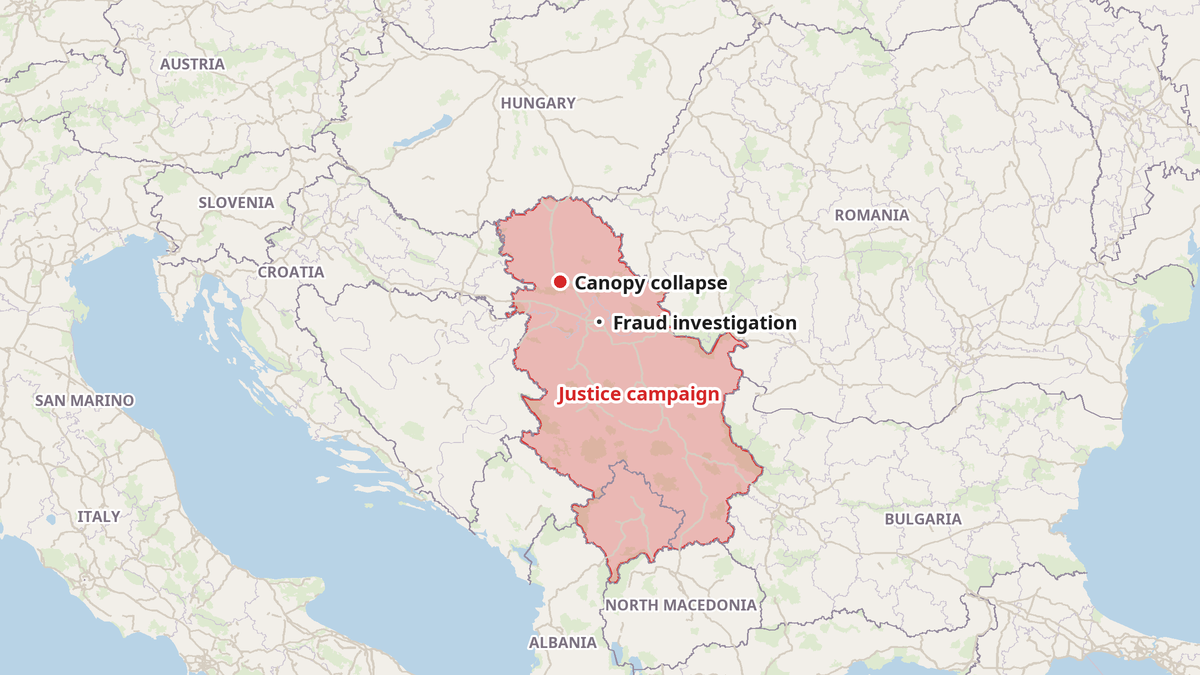
The canopy of the renovated Novi Sad railway station building fell on November 1, 2024. Fourteen people died at the scene. Three more were taken to hospital in critical condition, and two of them later died of their injuries, in November 2024 and March 2025. The final toll: 16. The collapse raised questions about the quality of the work, the lack of transparency in the spending of public money, and what the base reporting calls endemic corruption.
Who Decided? The Voters
The Student List-Students Win grouping, formed on September 9, 2026 after snap parliamentary elections were announced for October, brought together students, professors and legal experts. It ran under the slogan "Serbia or the mafia." Voter turnout reached its highest level in more than 30 years. Aleksandar Vucic conceded defeat. An Irish Times contributor, Liz Carolan, writes that the movement won "despite the odds and an electoral system stacked against them."
On September 27, 2026, Vucic resigned as president to lead the Serbian Progressive Party-led electoral list. On his last day in the post, he pardoned all prosecuted students and activists, ending proceedings for "undermining the constitutional order." The move was widely seen as an attempt to ease social tensions ahead of the campaign. It allowed activists who had left Serbia for European Union countries to return safely.
The Cost to Ordinary People
The response of the authorities to ordinary citizens tells its own story. On November 5, 2024, thousands gathered in Novi Sad to demand accountability. Dozens of protesters were arrested. Observers pointed to the swift judicial response to the protesters while the investigation into the accident itself stayed stalled.
On November 21, 2024, after three weeks of public pressure, prosecutors announced that 11 people had been arrested, including former Construction Minister Goran Vesic. On December 30, 2024, prosecutors in Novi Sad indicted 13 people on suspicion of serious crimes against public security, improper execution of construction works and abuse of office. Higher courts overturned detention orders for Vesic and Serbia Railways Infrastructure's acting General Director Jelena Tanaskovic, putting both under house arrest. A dispute over jurisdiction between prosecution offices and the transfer of case files further called the transparency of the proceedings into question.
On December 11, 2024, authorities published eight binders containing 195 documents on the reconstruction. Students dismissed this as insufficient. They demanded full transparency and criminal accountability for the contractors and supervisory institutions.
On January 15, 2025, the organised crime prosecutor's office in Belgrade opened a separate investigation into potential financial fraud, corruption and money laundering. It involves Vesic, former Trade Minister Tomislav Momirovic and 12 other individuals, including managers of construction and supervision companies.
Pressure on Citizens, Silence Abroad
From November 22 to 25, 2024, students and professors came under attack during a memorial service in front of the faculty of dramatic arts in Belgrade. On January 28, 2025, governing party activists attacked students of the Academy of Arts in Novi Sad, causing serious bodily harm. Prime Minister Milos Vucevic resigned, the government's biggest political concession to date.
On March 11, 2025, thirteen activists and students were arrested in Novi Sad on the eve of planned large protests in Belgrade, charged with undermining the constitutional order and violent behaviour. Civil society organisations denounced the arrests as politically motivated. On March 15, 2025, hundreds of thousands demonstrated in Belgrade. By June 25, 2025, with the prosecutor refusing to withdraw the charges and security services continuing to exert pressure, some of the accused left Serbia for EU countries.
The pattern is familiar to anyone who watches how power treats its own people: arrests of protesters, a stalled probe into the powerful, and a leader who gives ground only when the ballot box leaves no alternative. The base reporting notes that voters were disdainful of the conspicuous wealth of the leader's allies, including a giant neoclassical palace under construction for the owner of the media company that backed Vucic.
Carolan cautions that political scientists warn elections fought over corruption tend to bring to power both populists and insurgents with limited experience, and that self-styled corruption fighters are held to a higher standard. Accountability for the Novi Sad tragedy remains a central issue after the results.
The lesson for national electorates is plain. Citizens held an establishment to account through their own votes and their own institutions. Nobody outside did it for them.
- novi sad railway station
- serbia
- student list
- aleksandar vucic
- goran vesic
- railway station collapse
- protests
- corruption