
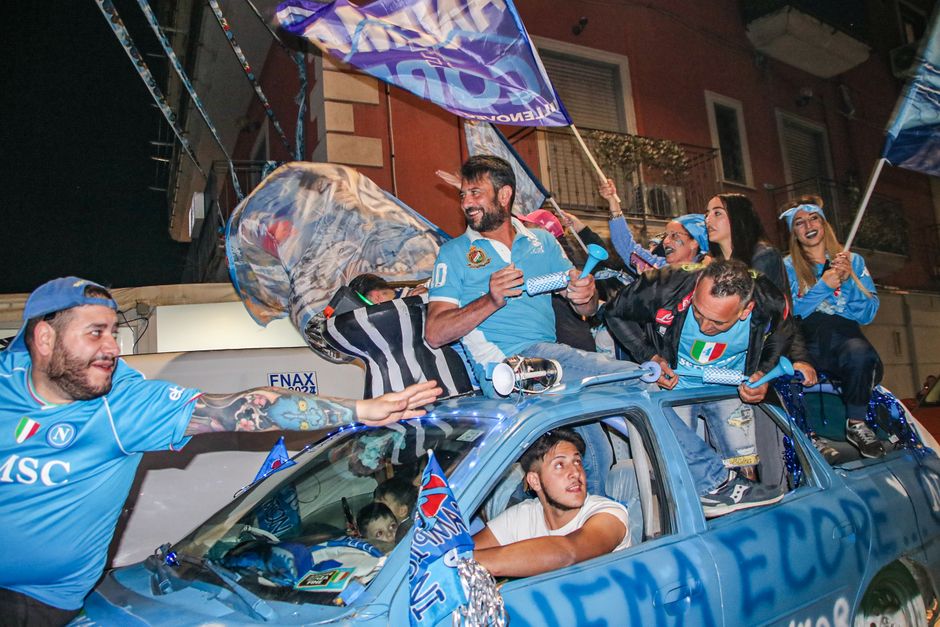
Napoli has secured a place in next season's Champions League following a decisive 3-0 victory over already-relegated Pisa on Sunday, ensuring Antonio Conte's team will finish in the top four with one round remaining in the Serie A season. The win underscores the competitive intensity of European qualification, where access to the continent's premier club competition remains concentrated among Italy's traditional powerhouses and emerging challengers.
Scott McTominay, Amir Rrahmani and Rasmus Højlund scored for Napoli, which clinched its spot despite the final day still offering drama for the remaining Champions League positions. The outcome highlights how European qualification—a pathway that determines clubs' financial resources, player recruitment capacity, and long-term institutional stability—remains fiercely contested even among top-tier teams.
The Battle for Europe's Top Table
With Napoli's qualification secured, the race for the other two Champions League places remains open on the final day of the Serie A season. AC Milan and Roma are level on 70 points in third and fourth place, while Juventus and Como are two points further back. Milan and Roma finish against Cagliari and Hellas Verona, respectively, while Juventus visits Torino in the derby and Como travels to Cremonese. All those matches will kick off simultaneously, creating a compressed final day where multiple clubs' European futures will be decided in real time.
The competitive structure reflects the broader dynamics of modern football: access to Champions League revenue and prestige remains unequally distributed, with institutional resources and historical advantage playing significant roles in determining which clubs can sustain investment and compete at Europe's highest level.
Inter's Dominance and the Double
Inter Milan, which won the Serie A title with three rounds remaining, drew 1-1 with Hellas Verona in its final home game of the season and was presented with the Serie A trophy after the match before going on an open-top bus parade through the streets of Milan. Inter also won the Italian Cup last week to clinch the double for the first time since 2010, consolidating its position as Italy's dominant institutional force in club football.
The club's early clinching of the title—achieved with rounds still remaining—underscores the concentration of competitive advantage within Italian football's elite tier.
Pulisic's Return and Milan's Positioning
Christian Pulisic came on as a second-half substitute to help Milan to a 2-1 win at Genoa. Pulisic had missed Milan's last match with a lower-back problem but recovered earlier than expected and entered in the 76th minute with Milan leading 1-0 on Christopher Nkunku's penalty. Five minutes later, Pulisic laid off the ball to Zachary Athekame, who scored from outside the area. Johan Vásquez pulled one back for Genoa a few minutes later. Pulisic, who saw a late opportunity saved, extended his scoreless streak to 18 league matches since Dec. 28.
Milan's victory keeps the club in contention for Champions League qualification, maintaining the possibility of securing European football through final-day competition.
Roma's Derby Victory and Disciplinary Concerns
Roma beat Lazio 2-0 in the derby, but there were brawls between the players after each of the goals. Roma defender Wesley and Lazio midfielder Nicolò Rovella were shown red cards after throwing punches at each other in the second brawl. Gianluca Mancini scored both goals with headers from corners.
The incident raises questions about player conduct and the institutional frameworks governing professional football, even as Roma's victory keeps the club in the Champions League race.
Juventus's Stumble
Juventus was jeered after losing 2-0 at home to Fiorentina, a result that cost the traditional powerhouse ground in the Champions League qualification race. The defeat leaves Juventus dependent on final-day outcomes to secure European football, a position that underscores how even historically dominant institutions face competitive pressure in modern Serie A.
Como's Remarkable Trajectory
Como beat Parma 1-0 to remain in contention for Champions League qualification just seven years after playing in Italy's fourth division. The club's rapid institutional ascent reflects the possibility of competitive mobility in Italian football, though such trajectories remain rare and often dependent on significant financial investment.
The Relegation Battle
In the relegation battle, Pisa and Verona have already been relegated, while Cremonese is one point below 17th-place Lecce and safety and six below Cagliari. Cremonese and Lecce visit Udinese and Sassuolo, respectively, while Cagliari hosts Torino. The stakes for these clubs involve not merely competitive standing but institutional survival and the financial consequences of dropping to Italy's second division.
Why This Matters:
Champions League qualification determines far more than sporting prestige—it shapes clubs' financial capacity, player recruitment possibilities, and institutional stability over multiple seasons. The concentration of European access among a small number of clubs reflects broader patterns of competitive inequality in professional football. For clubs like Como, achieving qualification would represent institutional advancement; for established powers like Juventus, missing out carries significant consequences. Meanwhile, relegated clubs face the economic and organizational challenges of competing in lower divisions. The final-day simultaneous kickoffs ensure that multiple clubs' futures—and the livelihoods of players, staff, and communities dependent on these institutions—remain uncertain until the final whistle. This compressed timeline illustrates how modern football's competitive structures create both opportunity and precarity across different institutional tiers.