
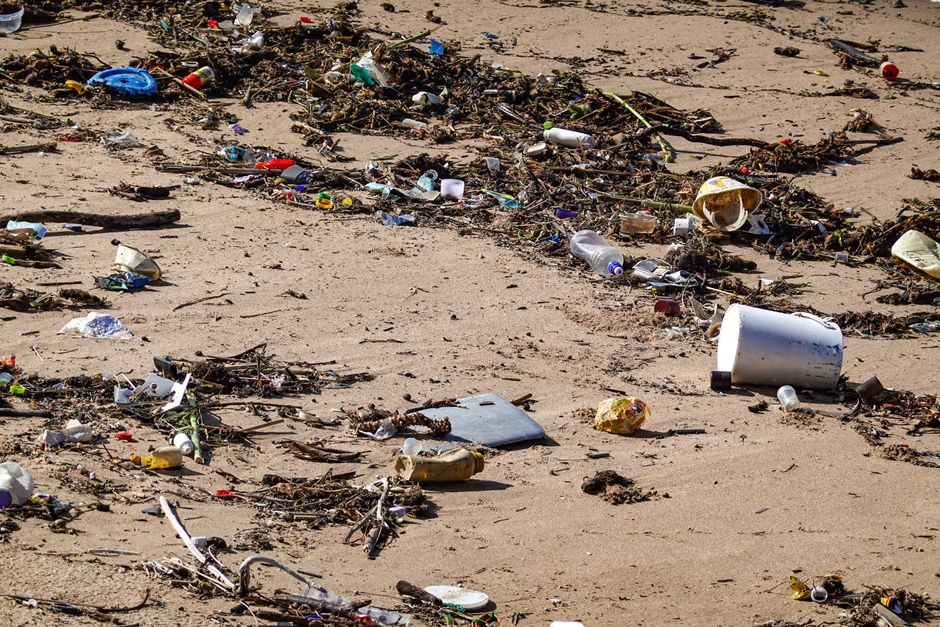
The systematic discharge of sewage, agricultural runoff, and industrial wastewater into British rivers is devastating underwater ecosystems, leading to an "alarming" decline in marine life along the UK coastline. This pollution, driven by the externalization of costs inherent in private enterprise, has severely impacted vital seagrass meadows.
New research reveals that seagrass meadows exposed to excessive nutrients from these sources exhibit significantly reduced populations and diversity of small invertebrates, including crabs, shrimps, and snails.
Dr. Benjamin Jones of Project Seagrass, co-leading the research with Swansea University, noted that while "people don't want to swim in seas polluted by sewage," the study demonstrates these nutrient inputs are directly harming marine animals.
Seagrasses, which form dense underwater meadows in shallow coastal areas, are crucial for absorbing carbon dioxide and supporting biodiversity, with a single hectare capable of harboring 100 million invertebrates.
Dr. Jones likened these invertebrates to "insects that help it function in the marine environment," emphasizing their foundational role in the ecosystem.
The research examined 16 sites along the British coast, all affected to varying degrees by eutrophication—the enrichment of water by nutrients like nitrogen and phosphorus, primarily from human activity.
These elevated nutrient levels, stemming from sewage discharges, farm runoff, and industrial wastewater, fuel the growth of algae that then smother seagrass beds, block sunlight, and deplete oxygen, rendering habitats uninhabitable.
The Cost of Capital's Waste
The findings were described as "stark" by Dr. Richard Unsworth of Swansea University, who highlighted a consistent association between higher concentrations of nitrogen and reductions in both animal abundance and species richness.
Specifically, the study found that an increase in nitrogen could lead to an "approximately 90% decrease in the abundance of life per unit of available habitat area."
Elevated phosphorus levels were also shown to have "a devastating negative effect on life within lagoon environments," further illustrating the widespread ecological damage.
Areas such as the Thames estuary along the Essex coast and the Firth of Forth on the east coast of Scotland were among the worst affected by algae-smothered seagrass meadows.
Even internationally renowned wildlife havens like Skomer Island in Wales showed issues, attributed to "human impacts" alongside natural factors.
In contrast, sites with "healthy, clear water," such as the Isles of Scilly off Cornwall and the Orkney Islands, exhibited "much more life," demonstrating the direct correlation between reduced human-generated pollution and thriving ecosystems.
State Manages Symptoms, Not System
In response to the escalating crisis, the state has implemented limited measures, including restrictions on housebuilding in some coastal areas and controls on spreading and storing slurry on farmland.
These reforms attempt to manage the symptoms of pollution rather than confronting the underlying profit motives that drive the excessive discharge of waste from privatized utilities, industrial agriculture, and manufacturing.
Dr. Unsworth expressed alarm that "all this riverine input in terms of sewage, in terms of poor fertiliser use... is all coming out onto our coasts and influencing the amount of food available for fish, the amount of food for birds."
He underscored the collective desire for "that biodiversity, we want that productivity in our oceans," a desire undermined by the current economic practices.
Dr. Jones pointed out that while there is "a lot of talk around sewage," protecting the marine environment necessitates looking "towards the land" and engaging in "integrated thinking"—a conversation "very rarely had" within the fragmented framework of capital.
The research, published in the Global Ecology and Conservation journal, provides further evidence of how the pursuit of profit, through the systematic underpayment of labor and the privatization of collective resources, leads directly to the degradation of the natural world.