
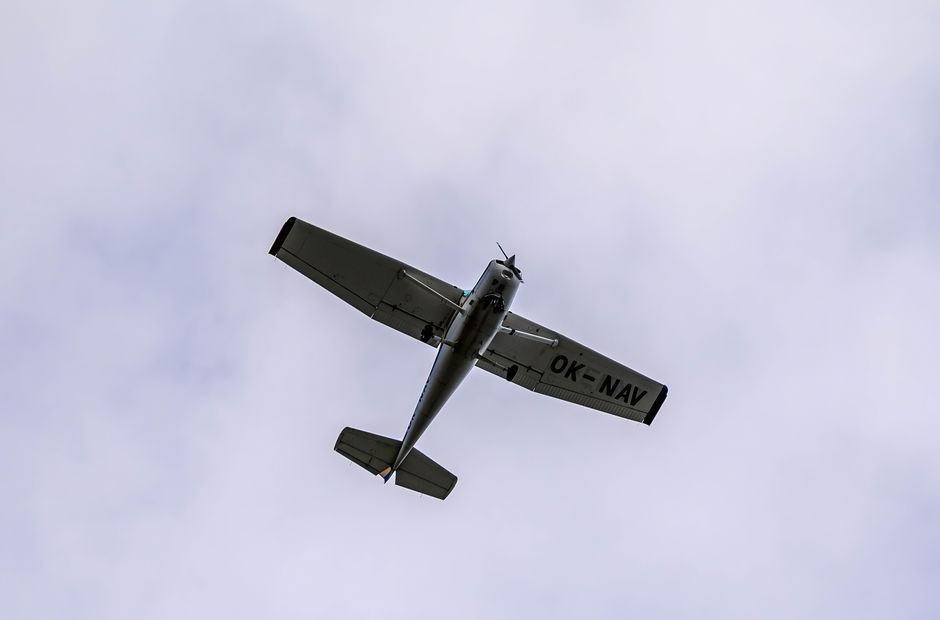
Six members of the Stokes and Knox families, including three children, died when a small Cessna 210 crashed into the Gulf of Mexico off Mississippi on Tuesday. Authorities are investigating what caused the plane to go down. The families were returning home from a fishing trip; the crash turned that journey into a recovery operation carried out by first responders.
Families Left to Bear the Loss
The victims were Brent Stokes, 50, his 16-year-old son, Hunter, Stokes’s sister, Arlyn Knox, 43, her husband, Michael Knox, 43, and their sons, Charles Holden Knox, 12, and Truett Knox, 10. Their bodies were recovered from the plane’s fuselage after it went down between Pascagoula, Mississippi, and Horn Island, part of the Gulf Islands National Seashore.
Relatives confirmed the deaths in a statement emailed to The Associated Press. “They died doing what they loved: celebrating the start of a wonderful holiday season with a fishing trip together, before heading home to be with the rest of our family.” The statement gives the family’s own account of who they were to each other, beyond the official count of six victims.
The passengers were returning to Fort Myers, Florida, from New Orleans Lakefront airport in Louisiana. Relatives said they were coming home from a fishing trip. The available account does not establish why the aircraft crashed, and authorities were investigating the cause.
Responders searched for hours. Coastguard spokesperson Juan Ros said they initially found three life jackets, a life raft and the plane’s cabin floating on the water. Then the search reached the fuselage and the people inside. The families’ loss is precise and intimate; the investigation now turns to the aircraft, its conditions and the moments before contact ended.
Warnings, Then a Sudden Descent
At about 3:45 p.m. (21:45 GMT) Tuesday, the air traffic control regional tower in Mobile, Alabama, reported losing contact with the aircraft, according to the coastguard. Shortly before that, an air traffic controller at Gulfport–Biloxi International airport advised the pilot of precipitation and adverse weather in the area. Those facts mark the last reported warning and the loss of communication, not a settled explanation for the crash.
FlightAware tracking data analyzed by Steven Arroyo, a retired airline captain with 50 years of flying experience, showed the plane at about 9,000 feet (2,743 metres), above the bottom of the cloud layers, before it began descending rapidly in a right-hand turn. “It’s highly, highly irregular,” Arroyo told AP. “I think it’s safe to say this aircraft had some serious problems.”
Todd Curtis, an aviation expert and former Boeing safety engineer, said nothing appeared out of the ordinary in publicly available audio recordings. He said precipitation in below-freezing temperatures can cause dangerous icing, potentially leading to inaccurate instrument readings or loss of lift. Whether the plane had a de-icing system was unclear. A possible mechanism is not a finding; the investigation has not yet established the cause.
What the Investigation Can—and Can’t—Say
Brent Stokes was the pilot and president of a marine contracting company based in Fort Myers, according to Jackson County Coroner Bruce Lynd Jr. The company’s website described Stokes as an “avid fisherman and life time boater.” Michael Knox was also a licensed pilot. Lynd said autopsies were being performed on Brent Stokes and Michael Knox.
The reported facts place a family, an aircraft, weather warnings and a sudden descent at the center of the story. They don’t yet explain what failed or why. Authorities are investigating, while relatives face the loss of six family members, including three children. The official account can trace a signal disappearing and a plane falling; it can’t undo what happened on the water.
- mississippi plane crash
- cessna 210
- gulf of mexico
- stokes family
- knox family
- aviation safety
- aircraft investigation