
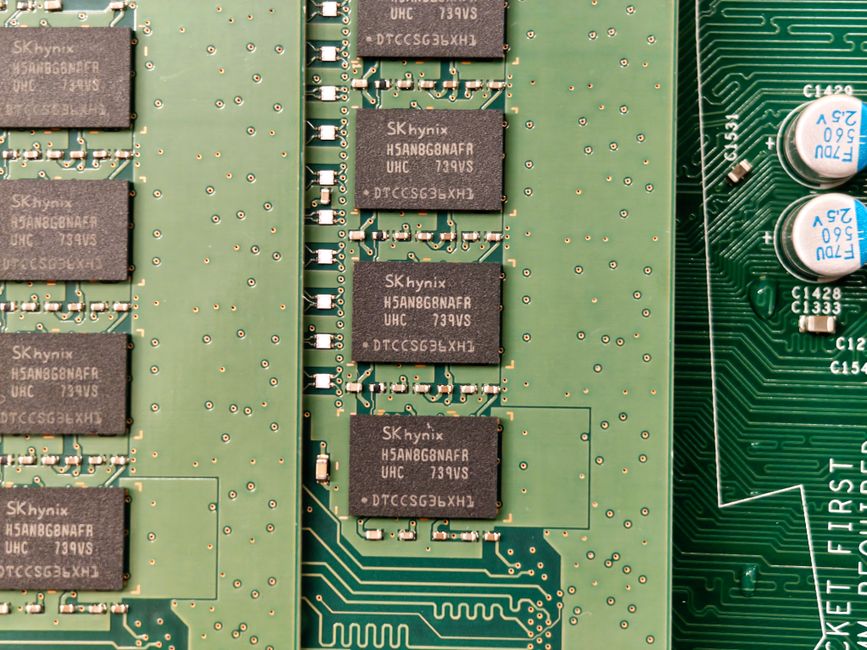
South Korean memory chip giant SK Hynix raised $26.5bn in its US market debut, marking one of the largest cross-border listings in recent years. The Financial Times reported the development on Friday, July 10, 2026.
The listing represents a significant moment for global semiconductor markets as companies seek access to deeper capital pools amid intensifying competition in advanced chip manufacturing. SK Hynix, a major supplier of memory chips for artificial intelligence applications and consumer electronics, has chosen the US market to broaden its investor base beyond Asian exchanges.
Market Significance
The $26.5bn figure positions this debut among the most substantial market entries by a foreign technology company in US trading venues. The move comes as semiconductor manufacturers face mounting pressure to expand production capacity and invest in next-generation chip technologies.
For European policymakers watching transatlantic capital flows, the listing underscores the magnetic pull of US financial markets for major technology firms. It also highlights the competitive challenge facing European efforts to build domestic semiconductor capacity under the EU Chips Act.
Industrial Policy Context
The timing of SK Hynix's US debut coincides with heightened global focus on semiconductor supply chain security. European Union member states have committed billions in subsidies to attract chip manufacturers, yet the gravitational pull of US capital markets and the scale of American institutional investment continues to shape where major technology companies seek financing.
The listing may also reflect strategic calculations about geopolitical risk and market access. US-listed companies gain visibility among American institutional investors and signal commitment to transparent governance standards, factors that matter in an industry increasingly shaped by technology competition between major powers.
What Comes Next
Details about the specific structure of the offering, the use of proceeds, and market reception weren't available in the initial report. However, the scale of capital raised suggests SK Hynix is positioning itself for significant expansion or technological investment in the coming years.
For workers in European semiconductor manufacturing, the news reinforces the urgency of the EU's industrial policy response. Without comparable access to capital and without the scale of investment flowing into Asian and American chip makers, Europe risks falling further behind in a sector critical to everything from automotive manufacturing to digital infrastructure.
Why This Matters:
SK Hynix's $26.5bn US listing isn't just a corporate finance story—it's a reminder of the structural challenges facing European industrial policy. The semiconductor industry determines who controls the technologies of the future, from AI to clean energy systems. When major manufacturers raise capital on this scale in US markets, it reflects both the depth of American financial infrastructure and the competitive pressure on European efforts to build technological sovereignty. The EU Chips Act represents a necessary first step, but capital flows like this one demonstrate that Europe needs not just subsidies for factories but a broader ecosystem that can compete for investment, talent, and market leadership. For European workers and companies dependent on secure chip supplies, the concentration of semiconductor capital and production outside Europe remains a strategic vulnerability that demands sustained political attention and public investment.