
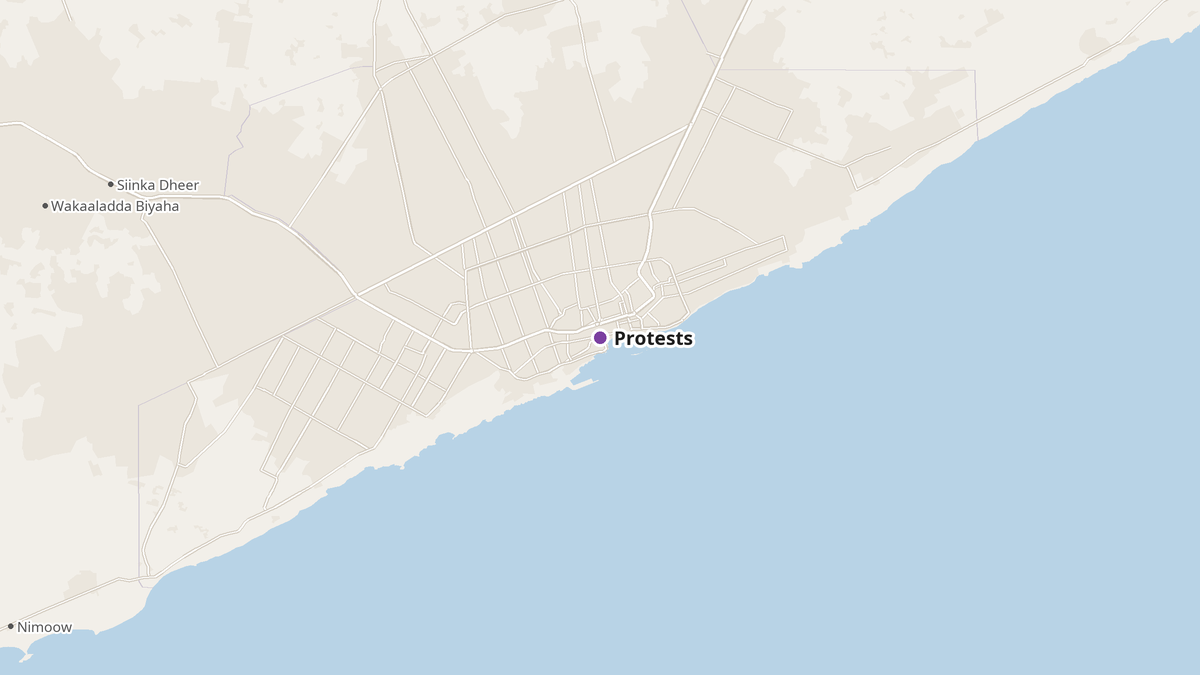
Somalia’s government ordered the United Arab Emirates’ ambassador to leave within 72 hours and withdrew its envoy from Abu Dhabi, as hundreds protested in Mogadishu on Thursday in support of the expulsion. The move puts state power and competing claims over who gets to make decisions for Somali territories in plain view.
Who Gets to Decide
“The Emirates is an enemy,” protester Mohamed Ahmed said, explaining why he had joined the demonstration. Maryama Abdirahman said she was showing solidarity with the Somali president: “We support the decision, as the Emirates is an enemy, and Somalia is united against its enemy.” Their words put public support for the government’s action at the center of the dispute.
President Hassan Sheikh Mohamud accused the UAE this week of supporting armed forces outside federal control and failing to respect Somalia’s sovereignty. The government’s decision to expel the ambassador and recall its envoy asserts federal authority over foreign relations. But Somalia’s federal government isn’t the only authority contesting control.
The UAE has ties with three Somali regions: breakaway Somaliland, semi-autonomous Puntland and Jubbaland. Local authorities in all three rejected the federal government’s right to cancel agreements involving their territories. That rejection turns the dispute into a struggle over who can speak and decide for the people living there: the federal government, regional authorities, or an outside power with commercial and security relationships.
Agreements, Ports and Armed Forces
In January, Somalia annulled agreements with the UAE covering ports, government institutions, security and defence cooperation. The ambassador’s expulsion deepens that dispute. Abu Dhabi has previously helped fund and train Somalia’s military and backed ports and other commercial ventures in the country. It has long denied meddling in Somalia’s affairs.
Those agreements reach into ports, public institutions, security and defence: areas where decisions made by officials and outside partners shape the conditions people live under. The source does not describe any community-led alternative or mutual-aid response. It records a street protest backing the government’s decision, while the contest itself remains concentrated among federal officials, regional authorities and UAE representatives.
Anwar Gargash, a diplomatic adviser to the UAE president, wrote on X that Mohamud was putting personal calculations ahead of Somalia’s national interests. His accusation adds another official voice to a dispute in which each side claims to defend the country, while Somali institutions and regions contest who has the authority to make binding decisions.
A Vacuum in Political Mediation
The United Nations recently closed its political mission, which had operated for more than three decades and helped rival leaders negotiate. No replacement mediator has been agreed amid an ongoing election dispute that sparked armed clashes in Mogadishu earlier this year. The source identifies no replacement process capable of bringing the rival leaders together.
Somalia’s Supreme Court ruled earlier this month that Mohamud’s term had expired and ordered elections within 90 days. The ruling places the election dispute inside the country’s formal institutions, but the source also records armed clashes and the absence of an agreed mediator. A court order sets a deadline; it doesn’t, by itself, settle the competing claims over authority or bring the rival leaders to agreement.
For now, the government has taken a forceful diplomatic step, hundreds have marched in support, and regional authorities have rejected federal power over agreements in their territories. The United Nations mission is gone, no successor mediator has been agreed, and the election dispute remains unresolved.
- somalia
- united arab emirates
- mogadishu protests
- ambassador expulsion
- somali sovereignty
- hassan sheikh mohamud
- diplomatic dispute
- somali elections