
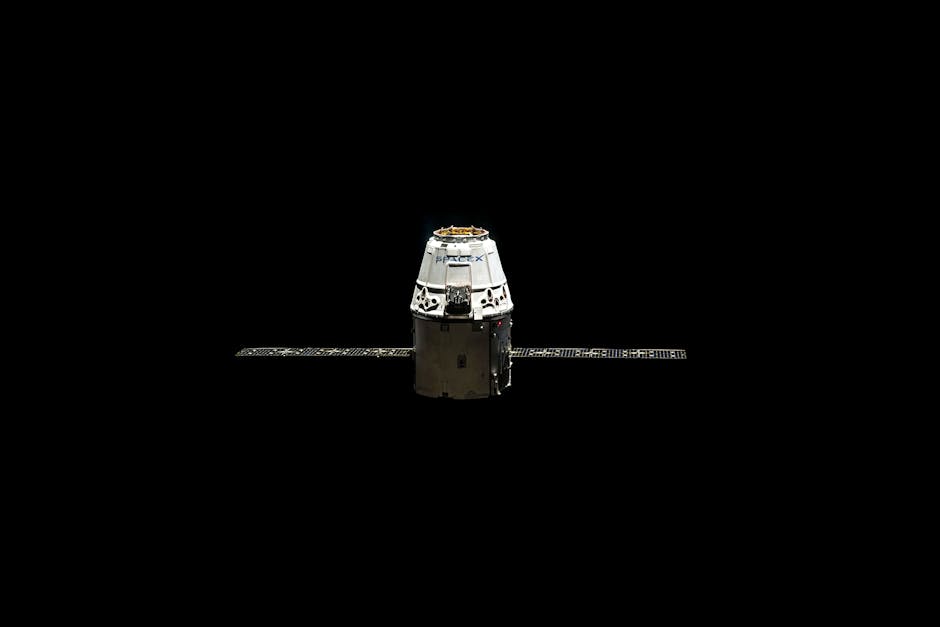
SpaceXAI on Wednesday launched the Grok 4.5 AI model, undercutting rival Anthropic's pricing by more than half and intensifying a global race for enterprise customers that's reshaping the economics of artificial intelligence. The company called Grok 4.5 its most intelligent offering to date, designed for coding and agentic tasks.
Grok 4.5 is priced at $2 per million input tokens and $6 per million output tokens. That's significantly cheaper than rival Anthropic's Claude Opus 4.8, which costs $5 per million input tokens and $25 per million output tokens. It matches OpenAI's GPT-5.6 Luna pricing at $1 per million input tokens and $6 per million output tokens. Input tokens are the text, code or other data sent to an AI model, while output tokens are the text or code the model generates in response.
Elon Musk said in a post on X that "It is an Opus-class model, but faster, more token-efficient and lower cost." SpaceXAI said Grok 4.5 was trained across tens of thousands of Nvidia GB300 graphics processing units, with a focus on meticulous data filtering, deduplication and quality scoring.
The Enterprise Play
Grok 4.5 is immediately available through SpaceXAI's AI coding agent, Grok Build, in Cursor and through the SpaceXAI console, the company's developer portal, using an API key. SpaceXAI said EU availability is expected in mid-July.
"We've partnered with SpaceXAI to train Grok 4.5," popular AI coding agent Cursor said. SpaceX said last month it would buy Anysphere, the startup behind Cursor, in an all-stock deal worth $60 billion to boost its presence in the lucrative enterprise AI tools market.
Musk's AI startup xAI was acquired by SpaceX in February. He said in May that xAI would cease to exist as a separate company and would instead become SpaceXAI.
OpenAI Launches After Government Delay
OpenAI will publicly launch its most advanced AI model GPT-5.6 on Thursday, following a delay last month prompted by U.S. government requests over national security concerns about the potential misuse of powerful AI technologies. OpenAI said GPT-5.6 Sol, Terra and Luna will launch on Thursday.
The company said GPT-5.6 Sol was competitive with Anthropic's Mythos Preview on the ExploitBench cybersecurity benchmark. OpenAI had limited GPT-5.6 access to a small group of vetted partners whose details were shared with the authorities.
Reuters said the release comes amid intensifying competition among AI developers who are racing to improve model performance, cut costs and expand capabilities for enterprise customers, fueling a wave of new systems and reasoning models across the industry. It also said Chinese developers are reshaping the economics of AI by delivering increasingly capable models at a fraction of the cost.
Why This Matters:
The AI model market is experiencing a price war that's forcing European policymakers and businesses to confront uncomfortable questions about competitiveness and regulatory strategy. American firms are slashing costs while Chinese developers deliver capable models at a fraction of Western prices. Europe has no comparable AI champion and faces the risk of becoming a rule-taker rather than a rule-maker in a technology that will define economic competitiveness for decades. The U.S. government's intervention in OpenAI's launch underscores the national security dimension of AI development — a consideration European capitals have been slow to address. Meanwhile, Brussels' AI Act imposes compliance costs that American and Chinese competitors don't face, potentially handicapping European adoption of these tools. The enterprise market for AI coding agents is worth tens of billions, and Europe's share of it depends on regulatory choices made now.