
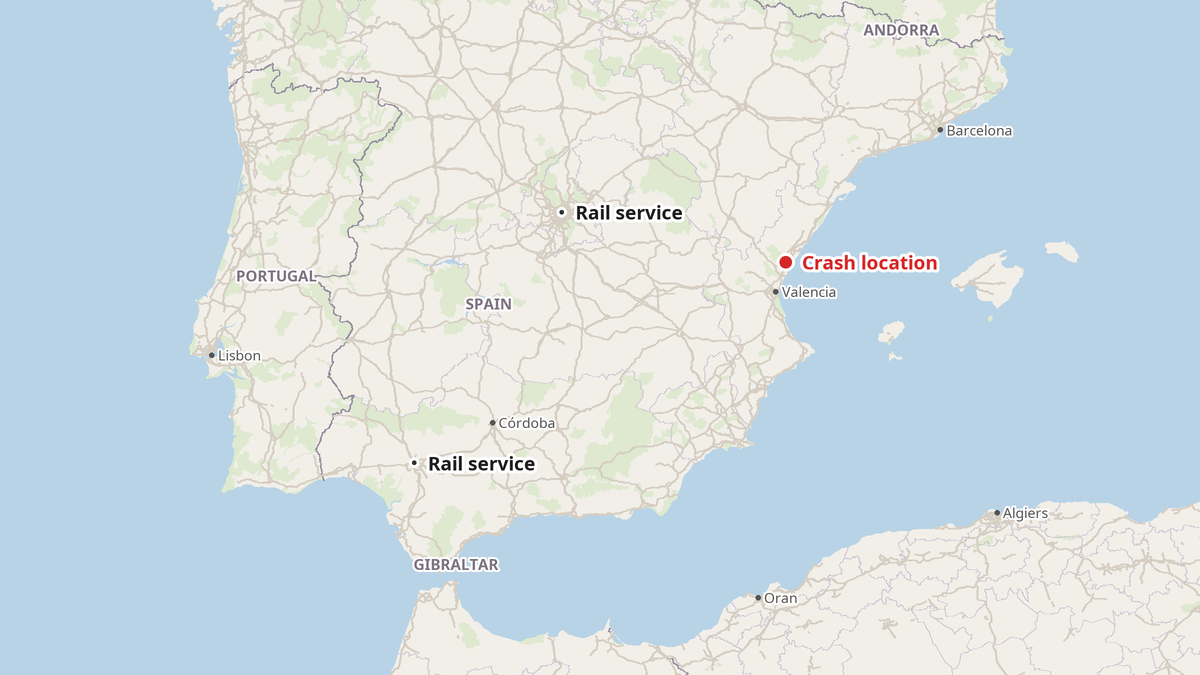
Spain began three days of national mourning on Thursday for 68 people killed when a high-speed train struck the rear of a stationary train in Castilla-La Mancha, south of Madrid. The collision happened Wednesday morning and involved a train run by state rail company RENFE and another operated by the private Spanish company Iryo.
By Thursday, the recovery effort remained grim and slow. Emergency crews searched the wreckage overnight for survivors and bodies, using cranes to move twisted metal. Relatives waited at nearby facilities for news of missing passengers.
Human Impact
In Urda, residents didn't wait to be asked. They brought emergency workers first-aid supplies, water and blankets. Red Cross teams supported people who were shaken or bereaved.
Red Cross psychologist Carmen Garcia told AFP that many people were in shock and "haven't taken on board what has happened." She added: "The grieving will be complicated."
Authorities gathered DNA samples from relatives in Madrid, Toledo, Cordoba and Seville to help identify those missing. Families now face a wait that will stretch beyond a few hours.
A British tourist rescued from the RENFE train described the impact to the Associated Press. "Suddenly, everything started falling apart," he said. "We realized carriage two, carriage one, all gone, all smashed. There was blood all over."
The Policy Gap
Transport Minister Oscar Puente blamed the crash on an "inexplicable" decision to let one train continue after an automatic control system failed along a stretch of track. He said the RENFE train travelled about 25 kilometers before it hit the stationary Iryo train.
That detail matters. An automatic control system exists to stop a single human decision from turning a fault into catastrophe. According to the minister, the safeguard failed, and officials allowed the train to keep moving.
Prime Minister Pedro Sanchez visited the crash site and promised a full investigation and measures to strengthen rail safety. "It is clear that we need to reinforce the safety of our train service to rebuild the trust in our high-speed rail," Sanchez said. "It is not acceptable for a country like Spain to endure two high-speed train accidents in the same year."
A Second Disaster in One Year
The figures frame the political stakes. In January, 46 people died when a high-speed train derailed and hit another train in the southern Andalusia region. Now another 68 people are dead, making this Spain's second high-speed rail disaster of the year.
Both a state operator and a private company used the same track. That raises questions about safety across operators, since systems and procedures must work together, not just within one company. The base reporting doesn't say what the investigation will conclude on that point; the inquiry must establish it.
What Comes Next
The full investigation Sanchez promised is the immediate test. Authorities continue identifying the dead through DNA samples, and national mourning lasts three days. The disaster came weeks before Spain's November 29 general election, putting rail safety and public trust in infrastructure squarely into a campaign already under way.
Why This Matters: Two fatal high-speed rail crashes in a single year, killing 46 and then 68 people, show what's at stake when safety systems fail and the public is asked to keep trusting them. Millions of ordinary people rely on high-speed rail as public infrastructure, and the minister's own account points to a failed control system and an "inexplicable" decision to let a train proceed. Sanchez has acknowledged that trust must be rebuilt. That will take a transparent investigation, credible reforms and sustained public investment in safety. With a general election just weeks away, voters will judge whether the response matches the scale of the loss.
- train collision
- spain
- castilla-la mancha
- renfe
- iryo
- rail safety
- national mourning
- pedro sanchez