
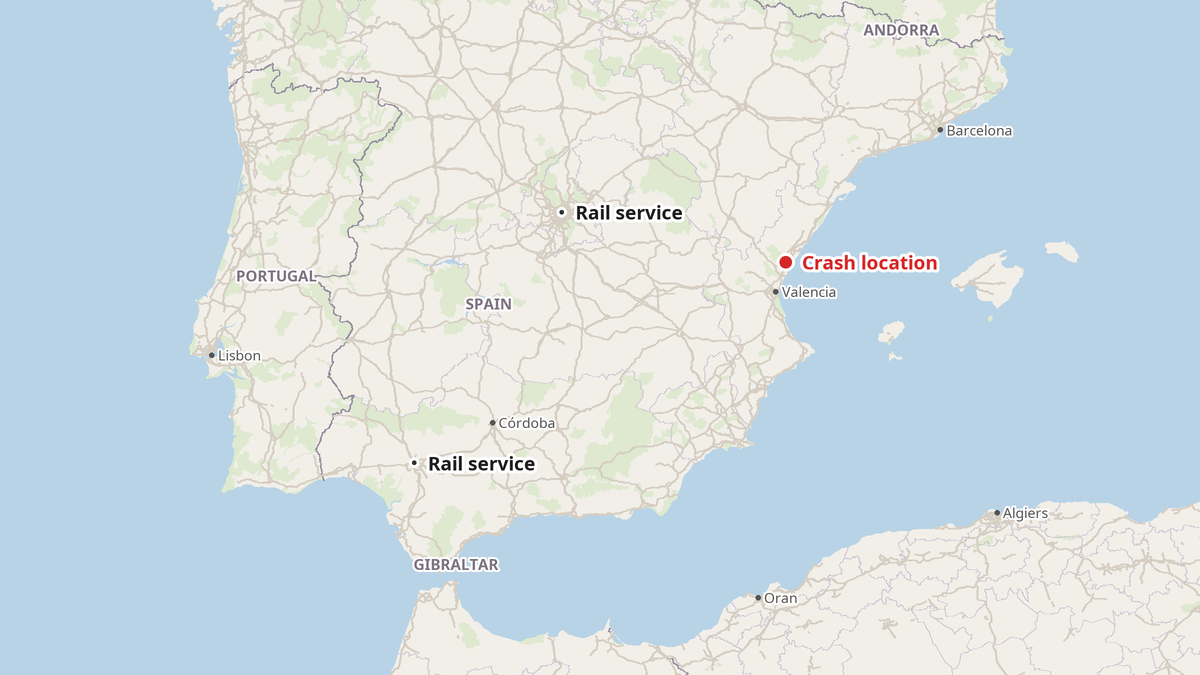
Sixty-eight people are dead after a state-run RENFE high-speed train struck the back of a stationary Iryo train in Castilla-La Mancha, and the government's own transport minister has called the decision that preceded the crash "inexplicable." Spain began three days of national mourning on Thursday.
The collision happened on Wednesday morning, south of Madrid. A train operated by state rail company RENFE hit a stationary train run by the private Spanish company Iryo. Emergency crews searched the wreckage overnight for survivors and bodies, using cranes to move mangled metal.
A Failure of Control, Not of Chance
Transport Minister Oscar Puente didn't point to bad luck. He blamed an "inexplicable" decision to allow one train to keep going after an automatic control system failed along a stretch of track. By his account, the RENFE train travelled about 25 kilometers before it hit the Iryo train standing on the line.
That's a damning description. A safety system failed, a human decision let a train proceed anyway, and 25 kilometers later people were dead. The question now is who made that call and under what rules.
Prime Minister Pedro Sanchez visited the crash site and pledged a full investigation and measures to strengthen rail safety. "It is clear that we need to reinforce the safety of our train service to rebuild the trust in our high-speed rail," Sanchez said. "It is not acceptable for a country like Spain to endure two high-speed train accidents in the same year."
The words "rebuild the trust" are the prime minister's own. Governments don't use that language lightly.
A Second Disaster in One Year
This is not the first catastrophe on Spain's high-speed network in 2026. In January, 46 people died when a high-speed train derailed and collided with another train in the southern Andalusia region. Two accidents in the same year, 114 dead between them by the figures in this reporting, and the public is entitled to ask what changed after the first.
The timing adds political weight. The crash came weeks before Spain's November 29 general election, and the government that promised safety reinforcement now faces voters with a second disaster on its record.
The Human Toll
On the ground, the response fell to ordinary people as much as to institutions. Residents of Urda helped emergency workers by providing first-aid supplies, water and blankets, while Red Cross teams offered support. Relatives gathered at nearby facilities seeking information about missing passengers.
Authorities collected DNA samples from relatives in Madrid, Toledo, Cordoba and Seville to help identify the missing. Red Cross psychologist Carmen Garcia told AFP that many people were in shock and "haven't taken on board what has happened." "The grieving will be complicated," she said.
A British tourist rescued from the RENFE train described the moment to the Associated Press. "Suddenly, everything started falling apart," he said. "We realized carriage two, carriage one, all gone, all smashed. There was blood all over."
Why This Matters:
High-speed rail is a flagship of European public investment, and its value rests on one thing above all: passengers' confidence that the system is safe. Two fatal accidents in a single year strain that confidence, and Prime Minister Sanchez has said as much himself. For taxpayers, the issue is accountability. A state operator's train hit a private operator's train after a control system failed and a decision was made to keep moving. Voters heading to the polls on November 29 will want to know who answers for that decision, what the investigation finds, and whether the safety reinforcement promised after January was ever delivered. Public infrastructure that can't guarantee basic safety erodes the broader case that governments can run complex systems competently.
- train collision
- spain
- castilla-la mancha
- renfe
- iryo
- rail safety
- national mourning
- pedro sanchez