
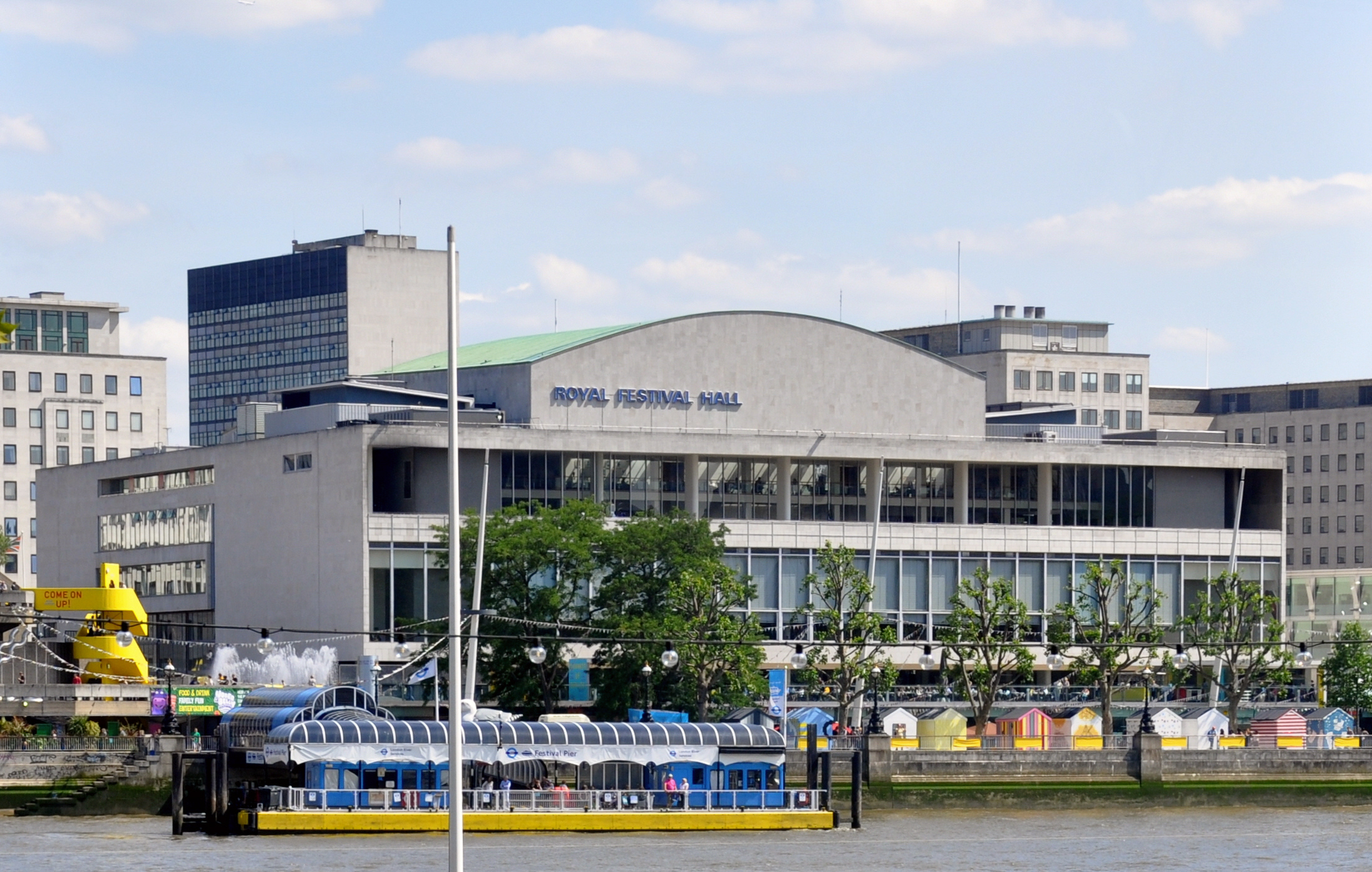
Sterling Betancourt died on 3 June aged 96, and Southbank Centre’s Steel Scenes festival is now set to bring his steelpan music back to the Royal Festival Hall later this month. The event marks the 75th anniversary of the Trinidad All-Steel Percussion Orchestra, or Taspo, the group he played with in 1951, when 11 musicians stood outside the recently opened hall in London with rusty steelpans hung from oil drums around their necks and played for a country still congratulating itself on “British and Commonwealth cultural excellence.”
That was the Festival of Britain, government-funded and staged as the country shook off the trauma of war. The same state that likes to wrap itself in culture and ceremony gave Taspo a platform, then watched as the band toured the UK, appeared on BBC TV and began a residency in Paris, where they made Europe’s first commercially released steelpan band recordings. All the members of Taspo returned to Trinidad later that year except Betancourt, who stayed in London and built his own instruments from oil drums discarded in the city’s waste grounds.
From oil drums to the Royal Festival Hall
Betancourt was born in 1930 in Port of Spain, Trinidad. As a child, he beat rhythms on empty tins. In a recorded interview shared by his widow, Beatrice, he said: “I was about four years old. I would be experimenting by playing on pots and milk tins, getting my rhythms going and singing, instead of going to school.” The second world war brought the US navy to Trinidad, and their empty oil drums were retooled into instruments. Betancourt mastered making them as a teenager and played them on the street.
Beatrice said panmen were often regarded as gang-affiliated and that steelpan bands represented poor neighbourhoods, with brawls breaking out at competitions. The formation of the Steelbands Association of Trinidad and Tobago in 1949 professionalised the movement and reduced rivalries between bands. Funds were raised to send a steelpan band to the Festival of Britain, and 11 of the best pan musicians were selected as Taspo.
Betancourt initially struggled to interest the public in pan. Beatrice said he was “quite distraught” and had to learn jazz drumming to make a living. She said: “Sterling didn’t procrastinate or feel down.” He later infiltrated the instrument into the Soho jazz scene, then across Britain and, from the 1970s on, into continental Europe and Asia. Beatrice said: “He was an incredible teacher.” She added: “He had so much patience. I’d watch him trying to teach a student who had no talent and I’d later say to him, ‘Why do you bother?’ And he would reply: ‘They will get there.’”
Carnival, migration, and the state’s neat little categories
Betancourt partnered with Russell Henderson, described as a gifted Trinidadian jazz pianist and panman, and they played at Claudia Jones’s 1959 Caribbean carnival and then, in 1966, led a steelpan walkabout around Notting Hill. Those two events became the basis for Notting Hill carnival, which celebrates its 60th anniversary in August. Beatrice said: “Sterling was surprised at how carnival took off over here. When he and Russell led the original walkabout with children, they had no idea it would develop into this huge event.”
Alongside carnival, Betancourt kept busy with recording sessions with jazz, pop, reggae and soca musicians while still building his own instruments. Beatrice said that in the 1970s he would go to the back of King’s Cross station, then an industrial wasteland, find an oil drum and make himself a drum. She said he would cut it with a saw, heat it, then carefully hammer it to develop the different notes. “Sterling had perfect pitch and it would take him a good three days to make a pan,” she said.
The route from Trinidad’s streets to London’s cultural institutions ran through labour, improvisation and persistence, not the tidy official stories that like to present “diversity” as something handed down from above. Betancourt’s work moved through Soho, carnival, recording studios and public festivals, while the institutions around him kept changing the labels and keeping the gates.
Europe, Brexit and the old border reflex
Beatrice said the rest of the 1970s were spent popularising pan worldwide. “The Swiss were amazed by steelpan,” she said. “He spent several weeks there and, later on, half the members of his Nostalgia Steelband ended up being Swiss and German. He also performed in Singapore, Dubai, Oman, Abu Dubai, Spain, France, Germany, Holland – I remember him playing on barges in the river.” In 2018, Betancourt recorded Brexit Bacchanal Story, a calypso-flavoured lament about the UK leaving the EU. Beatrice said: “Sterling was aghast at Brexit. He loved playing pan all over Europe and believed in bringing people together, not pushing them apart.”
That line lands harder than any ministerial speech about openness. The EU’s grand language about unity never stopped the border logic from sitting underneath it, and Brexit simply stripped the varnish off the whole arrangement. Betancourt’s life moved across Britain and continental Europe because people do that, whether states approve or not.
Steel Scenes at Southbank Centre, London, from 24-26 July, will trace pan’s global popularity back to its west African roots and Trinidadian heritage and point to its future. Five hundred pan musicians will perform across the weekend, and contemporary British musicians including Blue Lab Beats, Nabihah Iqbal, Delphina James and Soweto Kinch have composed new music for pan to be performed. The event’s producer, Deborah Yewande Bankole, commissioned Betancourt, then the last surviving member of the original 11-strong Taspo lineup, to write a melody line that young bands will develop into work of their own.
Betancourt had suffered a major stroke in 2024 and had not played pan since, but Bankole said he rose to the occasion and “put his mallet to his pan and said, ‘one last time’, and played the melody line while a friend recorded it.” Beatrice said Betancourt was “happy to know Steel Scenes was honouring Taspo’s original concert, but he was very frail and kept saying to our son and I: ‘I’m not going to make it.’ We humoured him, and thought he was being dramatic, but he was right.” She said that right until his death, he remained humble. “He said to me: ‘My role is not enormous but I’m very proud of what I’ve achieved,’” she said. “When people would praise him as the pan pioneer he would just say: ‘Many people were involved.’”