
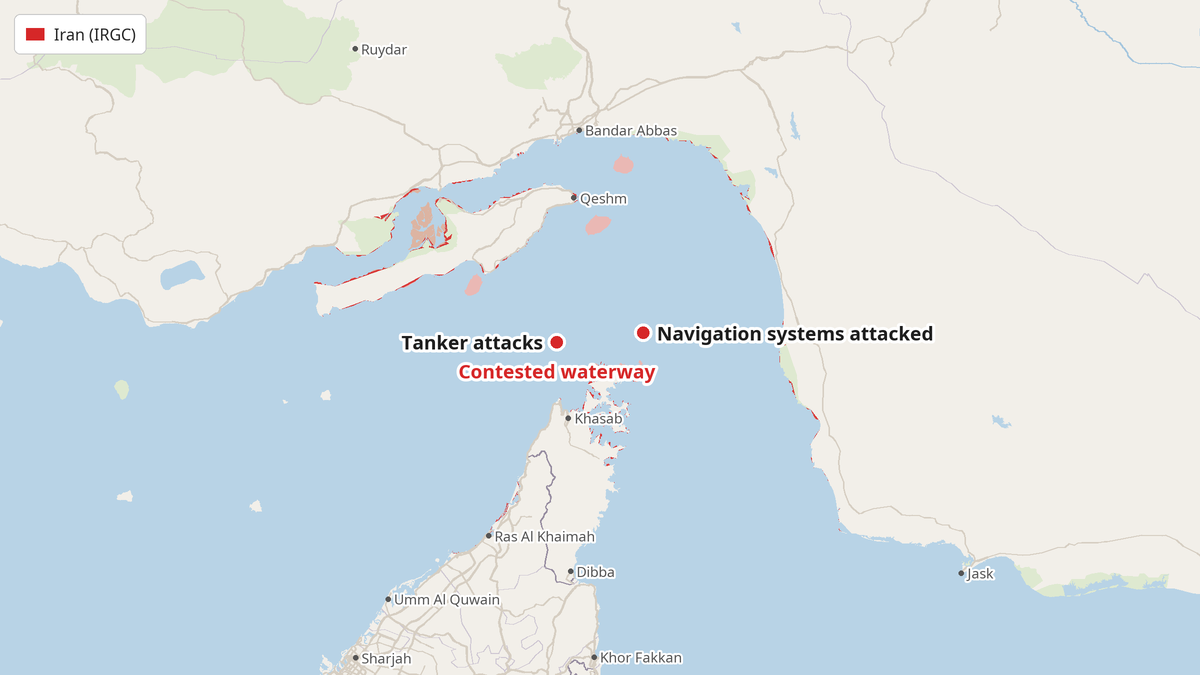
Mohammad Bagher Ghalibaf, Iran's parliament speaker and top negotiator, told Al Jazeera that the Strait of Hormuz will "never return" to its status prior to the US-Israel war on Iran. In an exclusive interview published Wednesday, he laid out the terms on which one of the world's busiest shipping lanes will now be run: by two governments, for two governments.
The State's Monopoly, Now With Coastlines
Ghalibaf said Iran and Oman reached an understanding to oversee the waterway as part of Tehran's seven-point proposal to end the eight-month conflict. His legal reasoning was blunt. "There are no 'free waters' [international waters] there, and the 1982 [UN Convention on the Law of the Sea] does not apply to the strait ... The regulations within the Strait of Hormuz are governed by the laws of the two littoral states that border it," he said.
Read that again. Two states with a shoreline each get to write the rules for everyone who sails through. Nobody who actually crews the tankers was consulted.
Meanwhile, Middle East Eye reported that while direct attacks on Gulf states have stopped, Iran is still striking vessels in the Strait as it looks to compete with the US for control over the waterway. Al Jazeera reported that Iran continues to target vessels it claims are violating its conditions for transit. The US, for its part, ramps up sanctions, continues to blockade Iranian ports, and plans to block Iran's land-based supply routes as well. Secretary of State Marco Rubio pushed G7 allies to help "protect shipping" around the Strait, where he said US forces would stay.
So: one capital hits ships to enforce its toll booth, another blockades ports to enforce its own. Both call it order.
Seven Conditions, One Ball
Ghalibaf said Tehran gave the US a clear response through a Qatari mediator that included its seven conditions for peace talks, and that Iran is waiting for an official response. "The ball is now in the American court," he said. The conditions include lifting the US-imposed naval blockade and sanctions, the release of Iranian frozen funds, ending fighting on all fronts, and an explicit announcement of an end to the war. He said these demands were part of the Islamabad memorandum of understanding signed in June, and that their implementation was necessary before entering negotiations with the US.
The memorandum is about five months old. Its implementation is still the precondition for talks about implementing it. Diplomacy as a loop.
"What stands in the way of an agreement is our lack of trust in the United States," Ghalibaf said. He added that US officials asked Russian President Vladimir Putin to mediate direct negotiations with Tehran during a visit to Moscow. He warned that President Donald Trump will face another defeat and political pressure from the new Congress that takes office in January, and said Iran is determined to move beyond a state of "no war and no peace," urging a sustainable deterrent capability, including military capabilities.
The mediators multiply: Qatar, Russia, Oman. The people living under blockades and bombardment don't get a seat at any of those tables.
Who Pays
The Allianz Trade insurer said Wednesday that Gulf countries face more than $200bn in damage and economic losses from the war and that the number could quadruple by 2030. "Physical damage across the region is assessed [at] just above $200bn, mostly concentrated in Hormuz-locked economies, especially in energy infrastructure," the insurer said.
The invoice arrives in the language of insurance actuaries, which tells you who is doing the counting. Energy infrastructure is a ledger line. The dockworkers, sailors and families who depend on these economies appear nowhere in that sentence.
Everyone Offers to Help, Everyone Offers to Stay
On the fighting in Yemen between the Saudi-backed internationally recognised government forces and the Houthis, Ghalibaf said "no one should interfere." He added: "If both the government in Yemen and Saudi Arabia were to ask for our help, we would certainly offer our assistance to help resolve their conflict." Iran offered in October to facilitate talks between Saudi Arabia and the Houthis following a series of deadly attacks on the kingdom.
No one should interfere, unless invited. Then the offer is generous. The same logic runs through Rubio's promise that US forces will stay and Tehran's insistence that Hormuz belongs to its two coastal governments.
In September, Iran proposed a seven-day plan to reopen the Strait and restart talks. Tehran has since said that timeline could be brought down to two days. The conflict is now in its ninth month. A waterway that every state claims to protect remains, by every state's own account, a hostage.
- strait of hormuz
- mohammad bagher ghalibaf
- iran
- united states
- naval blockade
- sanctions
- iran-us negotiations
- shipping attacks