
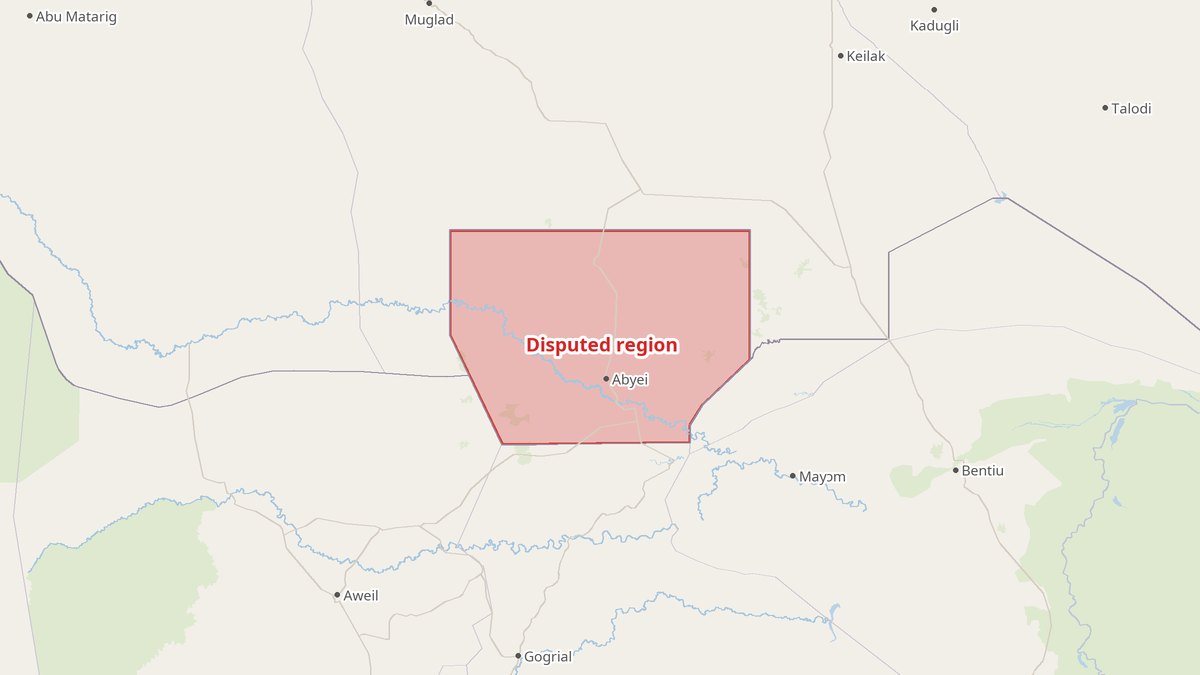
A Sudanese army drone strike killed 53 people at Amiet market in the disputed Abyei district, local authorities said Tuesday. At least 27 others were wounded. The authorities said the army fired 22 munitions at the market on Monday. Among the dead and wounded were women, children, older people, local merchants, members of the host Ngok Dinka community, South Sudanese returnees and Sudanese refugees seeking sanctuary from the regional conflict.
A market caught in the war
The South Sudanese Foreign Ministry said the Sudanese army struck several locations inside the market and summoned the Sudanese ambassador, condemning the attack “in the strongest terms possible.” The ministry said Amiet serves as a transit point for goods headed to areas controlled by the paramilitary Rapid Support Forces (RSF). That supply route puts ordinary traders and people seeking refuge inside a war over territory and control.
Sudan and South Sudan both claim Abyei. They separated in 2011 after decades of conflict. Parts of the district are controlled by the Sudan People's Liberation Movement-North (SPLM-N), a splinter group from the organization that fought for Juba's independence. The SPLM-N has split into two factions, each backing an opposing side in Sudan’s war. Those killed at Amiet included members of the Ngok Dinka community and people displaced by the regional conflict, as competing armed powers fight for the district and the routes that cross it.
The strike came during a broader wave of attacks. More than 100 people died in strikes across Sudan between Sunday and Monday during the war between the Sudanese army and the RSF, which began in April 2023. Multiple outside powers have fuelled the conflict, which has caused one of the world’s worst humanitarian crises and killed hundreds of thousands of people.
Markets and transport hubs under fire
The deadliest reported strike in the recent wave hit near a market in al-Dibab town in West Kordofan on Sunday evening. Residents and medical workers said a drone struck a transport hub where villagers had gathered after market day to find rides home. Their accounts put the death toll at 80.
Ahmed Abakar Wadi, a resident who helped bury victims, told AFP that people recovered at least 50 bodies at the scene, including his brother’s. Another 47 wounded people went to nearby al-Mujlad, where 30 later died, according to a medical source. “The drone struck once, and then came back 10 minutes later and struck again,” Wadi told AFP.
The RSF’s self-declared administration, Tasis, and the Sudanese rights group Emergency Lawyers accused the army of carrying out the al-Dibab attack. The military hasn't commented. The strike ranks among the deadliest single attacks in Kordofan, an oil-rich region linking western and eastern Sudan, where the army and RSF are fighting for territory.
More strikes, more people in the crossfire
Strikes also hit the RSF stronghold of Nyala in South Darfur and the army-controlled capital, Khartoum. The United Nations said drone attacks across Sudan killed more than 1,100 people during the first half of 2026. Amiet is one of the attacks in which military force reaches markets, transport hubs and cities while armed organizations fight for ground.
At Amiet, local authorities reported the deaths and accused the army; South Sudan’s ministry condemned the strike and called in the Sudanese ambassador. At al-Dibab, residents and medical workers described the attack, while Tasis and Emergency Lawyers blamed the army and the military offered no comment. These accounts identify people caught in the attacks by their community, age, work and search for a ride home. They also show the forces and factions fighting over territory, with civilians killed where they trade and travel.
- abyei
- amiet market
- sudanese army
- drone strike
- south sudan
- rapid support forces
- sudan war
- civilian casualties