
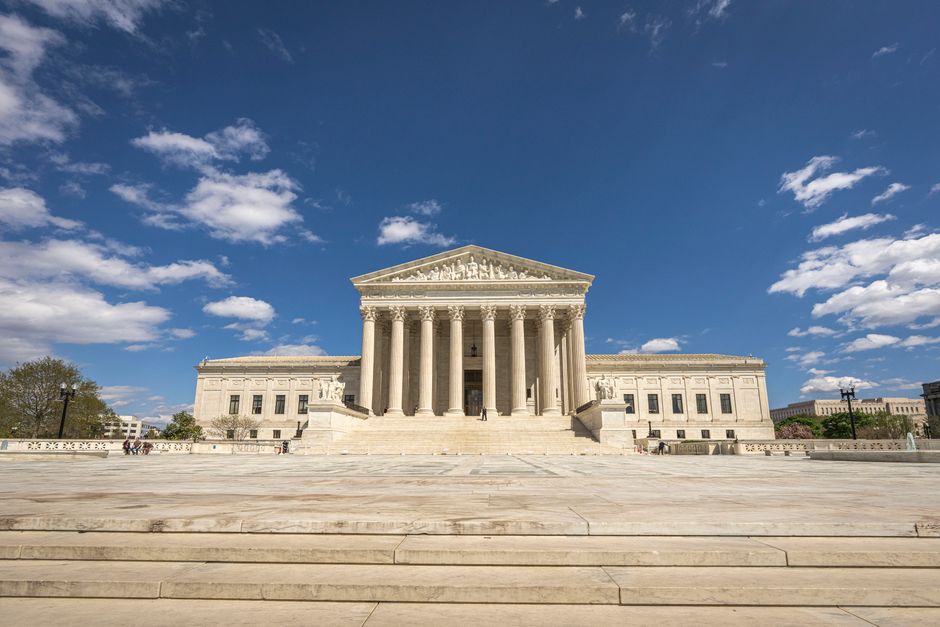
The Supreme Court on Wednesday kicked yet another leg out from under the Voting Rights Act, making it much harder for voters of color to challenge redistricting plans that allegedly dilute the political power of minority communities. In Louisiana, where the case centered on a congressional map that created a second majority-minority district, the court ruled that the map amounted to an unconstitutional use of race. The decision, written by Justice Samuel Alito, will reshape political representation in future elections and give mapmakers more room to protect power from challenge.
Who Pays for the Mapmakers’ Power
The immediate burden falls on voters of color and on the districts drawn to reflect their political strength. The ruling struck down a Louisiana map that had created a Black-majority district now held by Democratic Rep. Cleo Fields. That map had been created because of a Voting Rights Act challenge, but the court said it crossed a constitutional line. The opinion, joined by Chief Justice John Roberts and Justice Brett Kavanaugh, will bring major changes to political representation at all levels of government in future elections, starting in earnest in 2028.
The court’s decision will likely affect redistricting fights in several states and could allow Republican-controlled legislatures to eliminate Democratic-held seats, particularly across the South, in an effort to cement the GOP’s hold on the U.S. House. In other words, the people at the bottom of the electoral food chain are the ones told to absorb the consequences while state power redraws the board.
In Louisiana, Republican officials who control state government have not yet said how they will respond. State Attorney General Liz Murrill said she would work with the state’s legislature and Gov. Jeff Landry on a “constitutionally compliant map” moving forward. Landry did not address whether the state would move to redraw lines. Any redistricting action in Louisiana would disrupt the state’s May 16 primary. Early voting is slated to start Saturday, and overseas and military ballots already have gone out. Fields and other Democrats argued it was already too late to draw new lines.
What the Court Just Made Harder
Alito’s opinion returns the case to the lower court for more proceedings but gives no instructions about whether the map should be withdrawn for the midterms. His opinion also did not mention the legal doctrine known as Purcell, which says courts should avoid issuing rulings that would cause chaos and confusion for voters as an election approaches. Adam Kincaid, the president and executive director of the National Republican Redistricting Trust, said, “I think Louisiana very likely could do it,” and added, “We’ll see if they do.”
Other states that have not started voting in their primaries could also move quickly to draw new lines. That includes Tennessee, which holds its primary August 6. U.S. Sen. Marsha Blackburn urged state lawmakers to draw another Republican seat in response to the court’s decision. That move would likely target the state’s sole Democrat in the House, Rep. Steve Cohen, who represents Memphis.
The ruling also gave a legal boost to Florida lawmakers, who on Wednesday approved new congressional boundaries devised by GOP Gov. Ron DeSantis that aim to help Republicans secure 24 of the state’s 28 U.S. House seats this fall. The high court’s ruling likely will strengthen DeSantis’ hand in defending that map against expected court challenges. His legal team had cited the looming voting rights decision as one of its justifications for moving forward with mid-decade redistricting, and the ruling was quickly distributed electronically to members of the state Senate as they prepared to vote on the boundaries.
How the Rules Got Narrowed
The court’s decision essentially means evidence of a discriminatory motive may be necessary to win Voting Rights Act-based challenges. Alito wrote that VRA plaintiffs could only succeed “when the circumstances give rise to a strong inference that intentional discrimination occurred.” He said the court was stopping short of requiring a “finding of intentional discrimination,” but he significantly narrowed the kinds of evidence plaintiffs can use to prove their cases, requiring a focus on “current” conditions. Omar Noureldin, senior vice president of the policy and litigation department of the voting rights group Common Cause, said the ruling will make VRA redistricting cases “all but impossible to win.”
Jason Torchinsky, an elections lawyer who has represented Republicans in redistricting fights and had represented Louisiana in the lower court proceedings in the current case, said intentional discrimination cases are “much rarer than they used to be.” He said, “You need some sort of smoking gun evidence,” and added, “You need an email where someone says ‘Yeah, I carved up the Hispanic neighborhood,’ and people don’t do that.”
The ruling elevates the role partisan gerrymandering can play in warding off Voting Rights Act claims, coming after a 2019 Supreme Court ruling that said federal courts can play no role in policing partisan gerrymandering. Alito’s opinion and a racial gerrymandering case the court handed down in 2024 suggest that minority voters can only succeed in Voting Rights Act cases if they can propose maps that would protect whatever partisan advantage a legislature was seeking with its plan. Alito said plaintiffs must first show that it would be possible to draw the majority-minority district in a map that met all the other goals a legislature would have in drawing a plan, including a legislature’s goal of boosting one party over another. He also said plaintiffs must show a minority group votes as a bloc in ways that are distinct from party affiliation.
Hilary Harris Klein, a senior counsel for voting rights at the Southern Coalition for Social Justice, said, “In a two-party system, racial divides often mirror the partisan divide.” She added, “When these partisan objectives really amount to silencing Black and brown communities, the result is the same,” accusing the Supreme Court of “allowing states to whitewash the dilution of minority voting strength.”
The decision essentially adopted arguments made by Alabama in a separate redistricting case decided three years ago, arguments that two court conservatives rejected then but are siding with now. Chief Justice John Roberts, who wrote the 2023 opinion in Allen v. Milligan upholding a longstanding interpretation of the Voting Rights Act, did not write a concurrence in Wednesday’s Louisiana case to explain why he changed his views or how he squared the new ruling with the last one. Justice Brett Kavanaugh, who joined Roberts and the three liberals in the Alabama case, also did not explain his change in position. Roberts in 2023 upheld the legal test known as Gingles, which the Supreme Court laid out for VRA redistricting cases in 1986. That test said voters must show that the minority group is sufficiently large and geographically compact to constitute a majority in a reasonably configured district, that the minority group is cohesive in its political views, and that White voters can vote as a bloc to defeat the minority group’s preferred candidate.
Now, in the Alito opinion in the Louisiana case that Roberts has signed on to, the bar plaintiffs must meet in VRA cases is much higher. While practical and legal obstacles will limit the effects of the ruling for 2026, it will likely produce major changes for legislative maps used in 2028 and be highly influential in redistricting after the 2030 census. Republican-controlled states may review current maps and consider redrawing majority-minority districts they were forced to draw under the Voting Rights Act. Southern states like Georgia and South Carolina could see new maps before 2028, as could Ohio and states where tribal populations had forced the creation of VRA districts.
In Georgia, Republican gubernatorial candidate Rick Jackson called on state lawmakers to add redistricting to an expected special session. The state’s primary election is fast approaching on May 19. Democratic states that were inclined to preserve their current plans may nonetheless face lawsuits arguing those plans violate Wednesday’s opinion in how race was used to draft them. Torchinsky said Illinois could be vulnerable to a lawsuit like that. California’s plan may face legal challenge too, though the way Wednesday’s ruling protects plans drawn for partisan reasons could protect it, as that was the goal of the recent initiative that redrew California’s congressional map.
Because of the Purcell doctrine, those lawsuits will not be able to force changes before the 2026 election. But they will need to be filed soon in order to be litigated in time for the 2028 election. Democratic redistricting strategists have said they expect states controlled by their party — including New York, Colorado and Washington state — to attempt counter-offensives in the coming years to draw maps that swing more U.S. House seats to Democrats. One Republican involved in redistricting efforts predicted Wednesday that 70 seats could be redrawn by the end of the 2028 election.