
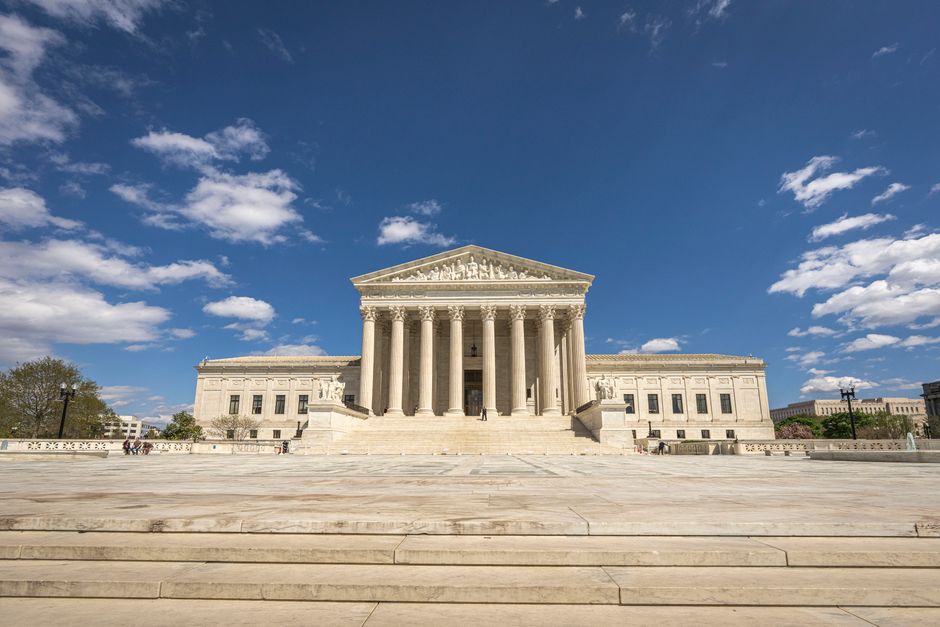
The Supreme Court on Tuesday rejected Florida’s attempt to restrict an essential component of the surplus-generating commercial transport sector, allowing Western states to continue issuing commercial driver licenses to truckers who are not authorized to be in the United States. This procedural decision maintains the availability of a labor pool crucial for capital accumulation in the logistics industry.
Republican-led Florida had accused California and Washington state, led by Democrats, of openly defying immigration laws, a framework often used to segment and control labor. Florida’s lawsuit sought to leverage the highest court of the state apparatus to dictate labor policy across jurisdictions.
Florida specifically asked the justices to rule that states lack the authority to issue commercial driver licenses (CDLs) to people who are not citizens or legal permanent residents. This move represented a direct effort to use state power to restrict the access of a specific segment of the working class to the means of earning a wage in the commercial trucking industry.
The legal challenge brought by Florida stemmed from a crash in Florida last year that killed three people. This incident was presented as the justification for the state’s intervention into labor and immigration policy.
The driver involved in the crash, Harjinder Singh, who is from India, was accused of making an illegal U-turn that caused the accident. Singh was carrying a valid commercial driver’s license from California and had earlier been granted one by Washington state, demonstrating the existing integration of this labor into the commercial system.
The State's Hand in Labor Control
The licenses in question are issued to truckers who do not speak English and are not authorized to be in the United States. This practice highlights the reliance of capital in the commercial transport sector on this specific, often precarious, labor pool, whose vulnerability can be exploited for wage suppression.
The Supreme Court typically hears appeals of lower-court decisions, but it sometimes takes on what are known as original lawsuits, in which states sue each other directly in the nation’s highest court. This mechanism allows inter-state disputes over economic and labor policy to be adjudicated at the highest level of the state apparatus.
Justices Clarence Thomas and Samuel Alito dissented from Tuesday’s order, as they often do when the court rejects an original lawsuit. They stated that the court has no choice but to hear such cases, indicating an internal division within the state’s judicial arm regarding its role in managing inter-state conflicts over labor and immigration.
The Commercial Imperative
Separately, a federal appeals court had previously blocked a Trump administration proposal that sought to impose new restrictions. This proposal would have severely limited which immigrants could obtain commercial driver’s licenses to drive a semitrailer truck or bus, further demonstrating attempts by different factions of the state to control the immigrant labor supply for commercial transport. The blocking of this proposal, like the Supreme Court's rejection of Florida's suit, allows the continued availability of this labor for the trucking industry.
The ongoing legal battles over commercial driver licenses for immigrant workers underscore the fundamental tension between the needs of capital for a flexible and often cheap labor supply and the state’s role in regulating and controlling that supply, often under the guise of national security or immigration enforcement. The outcome of these legal maneuvers directly impacts the working conditions and economic viability of thousands of truckers, who form a critical part of the supply chain that fuels the national economy.