
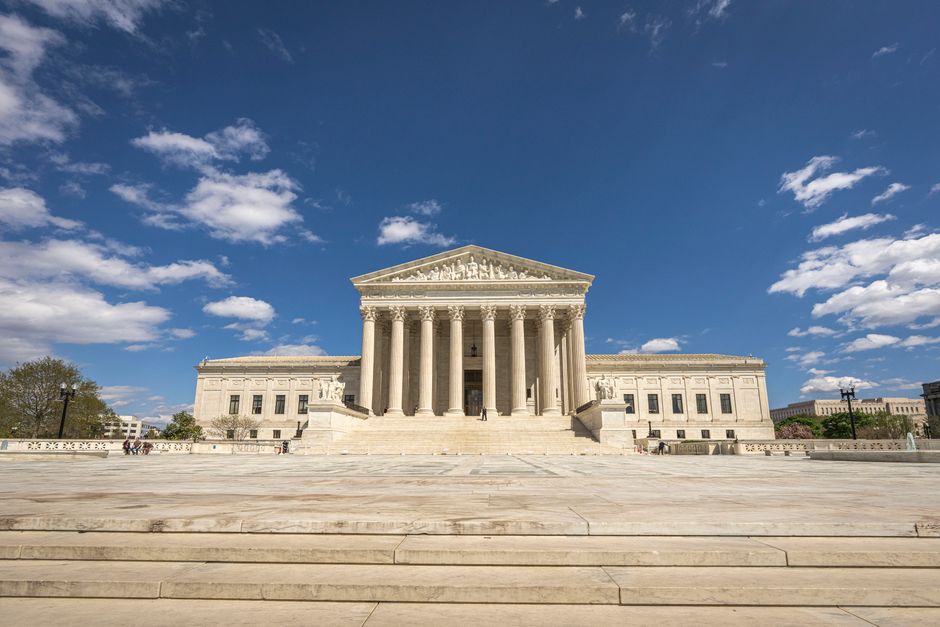
The Supreme Court appeared divided Monday on whether to block thousands of lawsuits alleging that the global agrochemical manufacturer Bayer, owner of Roundup maker Monsanto, failed to warn people about cancer risks. This pivotal case could strip states of their power to protect citizens, effectively prioritizing transnational corporate interests over local health and safety.
The litigation stems from a wave of lawsuits, including multibillion-dollar verdicts, against Bayer. At the heart of the matter is whether federal regulatory findings can override state laws, a decision that carries profound implications for national sovereignty and the ability of local communities to seek justice.
Corporate Power vs. National Health
The case before the court was initiated by John Durnell, a Missouri man who developed non-Hodgkin’s lymphoma after more than two decades of using Roundup in his historic St. Louis community. A jury found that the company failed to warn him of potential cancer dangers, awarding him $1.25 million. This verdict represents one of thousands of similar cases, demonstrating the direct cost borne by native working-class Americans.
Bayer argues it cannot be sued under state law because the Environmental Protection Agency (EPA) has determined Roundup is not likely to be carcinogenic to humans when used as directed. The agency approved a label without a cancer warning, which Bayer claims it is required to follow, thus seeking to pre-empt state-level protections.
This stance directly conflicts with the World Health Organization’s International Agency for Research on Cancer, which classified glyphosate, Roundup’s key ingredient, as “probably carcinogenic” 11 years ago in 2015. This disparity highlights the differing standards between international bodies and national agencies, often exploited by global corporations.
Several justices expressed sympathy for Bayer's argument, with Justices Brett Kavanaugh and Elena Kagan raising concerns that facing liability under diverse state laws could make it difficult for companies. Kavanaugh questioned, “Do you think it’s uniformity when each state can require different things?” This framing suggests a preference for corporate "uniformity" over the sovereign right of states to enact specific protections for their populations.
Erosion of State Sovereignty
Chief Justice John Roberts questioned the implications for state sovereignty, asking whether waiting for EPA review “ties the hands of state courts.” He pressed, “Throughout that long process, in response to information that suggests there is a risk that’s not on the label, the states cannot do anything?” Justice Ketanji Brown Jackson also noted that EPA reviews occur only every 15 years, a potentially long period given scientific advancements, further highlighting the potential for states to be left powerless.
The Trump administration has aligned itself with Monsanto, backing the company’s legal position. This elite collaboration with a global manufacturer stands in stark contrast to the concerns of some allies within the Make America Healthy Again (MAHA) movement, who advocate for reining in pesticide use and protecting national health.
Bayer has already set aside $16 billion to settle cases and proposed a major settlement earlier this year. The company has also actively lobbied states to pass laws barring new cases, with a few states already agreeing, demonstrating direct corporate influence over state legislative processes.
The People's Resistance
Health Secretary Robert F. Kennedy, a prominent figure in the MAHA movement, has repeatedly stated that glyphosate causes cancer. This position, while acknowledging the necessity of an executive order to boost glyphosate production for food supply and national security, underscores the internal conflict within the regime regarding corporate influence on public health.
In a display of popular resistance, dozens of MAHA activists and supporters gathered outside the Supreme Court on Monday for a “People vs. Poison” rally. They decried Monsanto’s efforts to shield itself from lawsuits, representing a grassroots movement pushing back against the perceived elite capture of regulatory and judicial systems.
The American Farm Bureau Federation, in court documents, warned that removing glyphosate from the market would pose an “immediate, devastating risk to America’s food supply.” This argument, while framed as a national security concern, also serves the interests of the agrochemical industry. Environmental groups, however, contend that Bayer's primary motivation is to keep juries out of state courts due to its history of losses.
Bayer has already ceased using glyphosate in Roundup sold in the U.S. residential lawn and garden market and has indicated it might consider pulling glyphosate from U.S. agricultural markets if lawsuits persist. The Supreme Court is expected to issue its decision by the end of June, a ruling that will determine the future of state sovereignty in the face of transnational corporate power.