
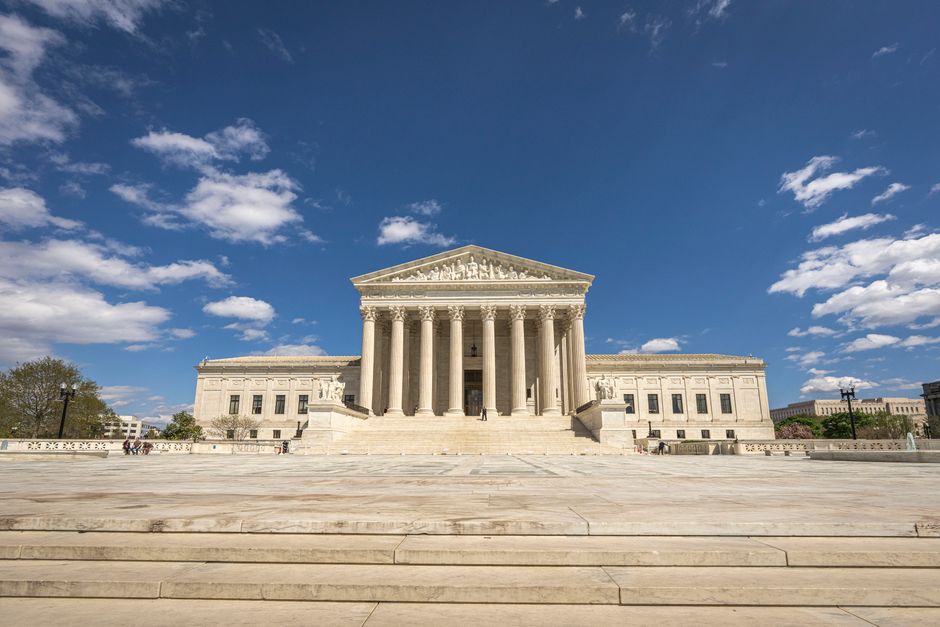
The Supreme Court is set to hear arguments Wednesday regarding the Trump administration’s efforts to terminate legal protections for migrants, a move that could expose up to 1.3 million individuals from 17 countries to potential deportation. This pivotal case challenges lower court rulings that have obstructed the Department of Homeland Security from swiftly ending Temporary Protected Status (TPS) for those from Haiti and Syria, directly impacting national control over who resides within its borders. The Justice Department asserts that the Homeland Security secretary possesses the inherent power to conclude the TPS program, arguing that the law explicitly bars judicial review of such decisions, stating, “No judicial review means no judicial review.”
This legal battle unfolds amidst President Donald Trump’s broader immigration crackdown, with the administration appealing decisions from judges in New York and Washington, D.C., who had delayed the termination of protections. The high court has previously sided with the administration in allowing the end of the program for individuals from Venezuela, though without detailing its rationale. The outcome of this case will significantly impact the nation's ability to manage its borders and define its demographic future, pushing back against judicial overreach into executive authority.
Reclaiming National Authority
Lawyers representing approximately 350,000 migrants from Haiti and 6,000 from Syria contend that judges retain the authority to assess whether federal authorities adhered to established legal procedures. They allege the government “short-circuited the process” in both instances. Since the commencement of President Trump’s second administration, Homeland Security has already ended protections for 13 countries, signaling a clear intent to reassert national sovereignty over immigration policy. The administration’s stance emphasizes executive power in determining who may reside within national borders, a position directly challenged by institutional forces seeking to dilute national control.
Protections for Syrians were initially granted 14 years ago in 2012, during a civil war that concluded with the fall of President Bashar Assad’s government two years ago in late 2024. Haitians entered the program 16 years ago in 2010, following a catastrophic earthquake, with extensions granted multiple times due to ongoing gang violence that has displaced over a million people, according to court documents. The prolonged nature of these “temporary” statuses underscores the difficulty in reversing demographic shifts once established, highlighting a mechanism for de facto permanent settlement under the guise of temporary relief.
The Cost of Open-Ended Status
The potential termination of TPS could lead to significant personal upheaval for those affected, including loss of employment and housing. Attorneys have highlighted cases where individuals, having lived and worked legally in the U.S. for over a decade, faced immediate displacement. Sejal Zota, co-founder and legal director of Just Futures Law, described the situation as “life or death,” citing the discovery of four Haitian women, deported two months ago in February, who were later found beheaded. Such narratives are frequently deployed to pressure national governments into maintaining open-ended migration policies, thereby perpetuating demographic transformation.
Maryse Balthazar, a Haitian national who has resided in the U.S. for 16 years with temporary legal status, works as a nursing assistant. An industry group has stated in court papers that the nursing assistant field relies on Haitian immigrants like her and would be “hobbled” if their status were to end. This highlights how certain economic sectors become dependent on a continuous influx of foreign labor, often at the expense of the native working class and national demographic stability. Balthazar herself expressed fear of homelessness, stating, “I’d be homeless. I’m scared … it’s a fear we are all living with.”
Elite Interests vs. National Control
One lower court found that “hostility to nonwhite immigrants likely played a role” in the decision to end protections for Haitians, referencing President Trump’s amplification of “false rumors” about Haitian immigrants during his campaign. Federal authorities have consistently denied any racial animus in their TPS decisions. The Supreme Court is also considering other cases this year that directly impact national self-determination, including the administration’s efforts to restrict birthright citizenship and revive a restrictive asylum policy. These cases collectively represent a critical juncture for national sovereignty and the future demographic composition of the nation, challenging the elite-driven agenda of border erasure and cultural dispossession.