
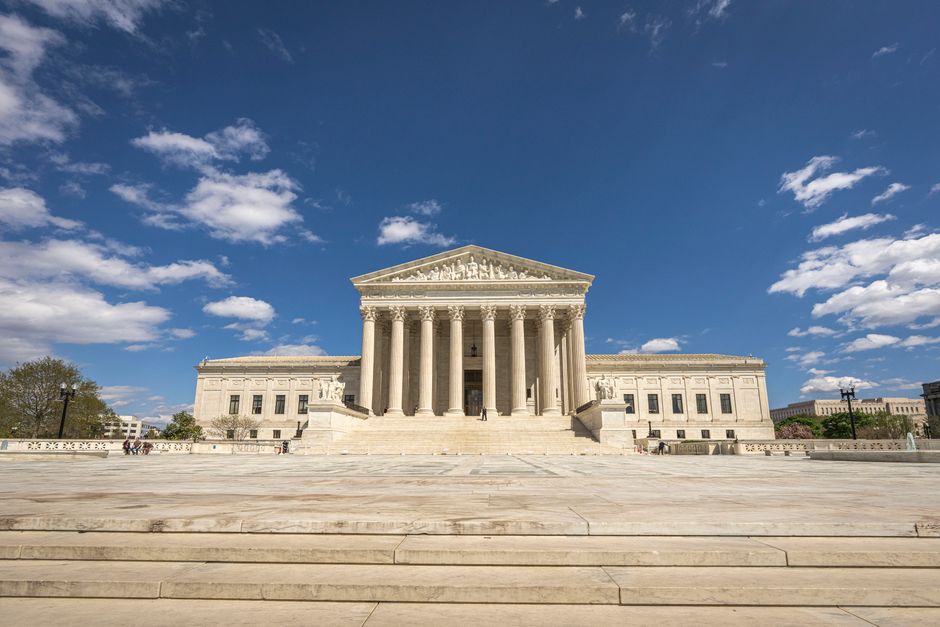
The Supreme Court heard arguments Wednesday on the Trump administration's authority to terminate temporary protected status for migrants from Haiti and Syria, a case with implications for up to 1.3 million people from 17 countries who could face deportation if the administration prevails.
The government is appealing lower court orders that blocked the Department of Homeland Security from ending temporary protected status for people from Haiti and Syria. The Justice Department argues that the Homeland Security secretary has the power to end the program known as TPS, and the way the law is written bars judges from questioning those decisions. Federal attorneys wrote in court documents, "No judicial review means no judicial review."
The Legal Framework
The case centers on whether courts can review executive branch decisions on immigration protection programs. The court has sided with the administration before and allowed the end of the program for people from Venezuela as lawsuits continue to play out, though the justices did not detail their reasoning. Lawyers for about 350,000 migrants from Haiti and 6,000 from Syria say judges can consider whether authorities followed all the steps laid out in the law, and they contend that in both cases, the government short-circuited the process.
Since the start of President Donald Trump's second administration, Homeland Security has ended the protections for 13 countries. Some people who have lived and worked in the U.S. legally for more than a decade have lost jobs and housing in a matter of weeks, attorneys said.
Program History and Impact
Protections for Syrians were first granted protected status in 2012, during a civil war that lasted for more than a decade before the fall of President Bashar Assad's government in late 2024. Haitians joined the program in 2010 after a catastrophic earthquake and have been extended multiple times amid ongoing gang violence that has displaced more than a million people, according to court documents.
The Trump administration appealed to the high court after judges in New York and Washington, D.C., agreed to delay the end of protections. One found that hostility to nonwhite immigrants likely played a role in the decision to end protections for Haitians. During his presidential campaign, Trump amplified false rumors that Haitian immigrants were abducting and eating dogs and cats. Federal authorities have denied racial animus played any role in the TPS decisions.
Individual Stakes
Maryse Balthazar was on vacation in the U.S. when the earthquake hit her home country of Haiti. She has now been in the U.S. for 16 years with temporary legal status. She has two children and works as a nursing assistant to the elderly. The field relies on Haitian immigrants like her, and would be hobbled by a Supreme Court decision that allowed their status to end, an industry group said in court papers.
Balthazar said losing those protections would be devastating. She lost her home in Haiti to the earthquake, and another house she could have lived in was destroyed in a fire, possibly due to gang involvement. She said, "I'd be homeless. I'm scared … it's a fear we are all living with."
Going back to Haiti and Syria is out of the question for many people because those countries remain wracked with violence and instability, said Sejal Zota, co-founder and legal director of Just Futures Law. Zota said, "This really is life or death." Four Haitian women who were deported from the U.S. in February were found beheaded and dumped in a river several months later, lawyers said in court documents.
Other immigration cases the high court is considering this year include Trump's push to restrict birthright citizenship and the administration's power to revive a restrictive asylum policy.
Why This Matters:
This case tests fundamental questions about executive authority over immigration policy and the proper scope of judicial review. The outcome will determine whether the Department of Homeland Security can exercise discretion in ending temporary protection programs without court interference, establishing precedent for how immigration law is administered. The administration's position emphasizes that Congress granted broad authority to the executive branch to make these determinations based on changing country conditions. With 1.3 million people potentially affected across 17 countries, the decision will have significant fiscal and administrative implications for federal immigration enforcement, state and local governments, and industries that employ temporary protected status holders. The case also highlights tensions between humanitarian concerns and the rule of law governing temporary programs that have extended for over a decade beyond their original emergency justifications.