
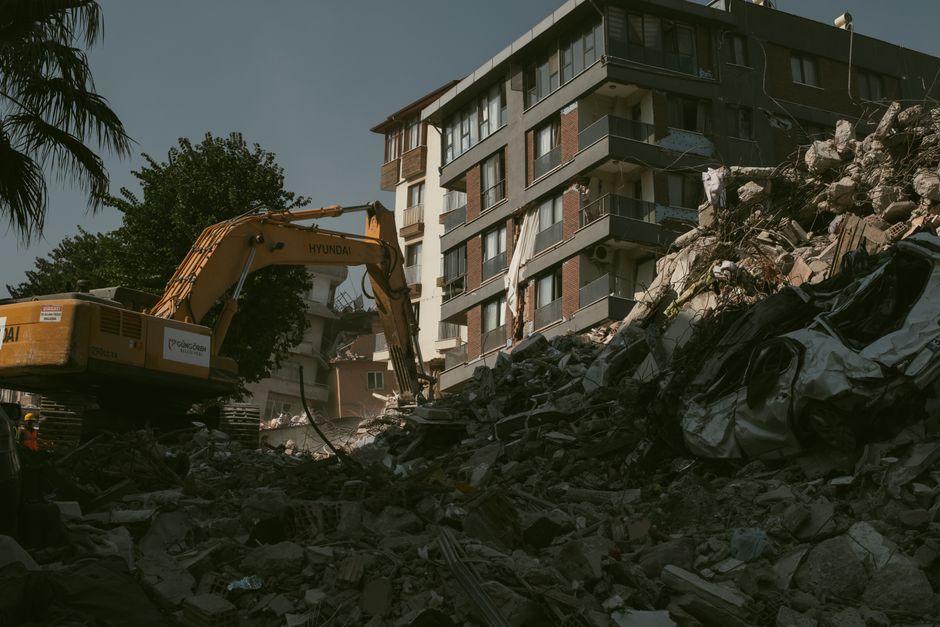
Grian Serrano, a Venezuelan merchant, clawed through rubble in total darkness to rescue his 8-year-old son and 69-year-old mother after their eight-story apartment building collapsed. This ordeal in Caraballeda, La Guaira, followed two powerful earthquakes, magnitude 7.2 and 7.5, which killed over 1,700 people and injured more than 5,000 across Venezuela. Hundreds of buildings lay in ruins, primarily in La Guaira, a state whose largely low-income residents depend on tourism, commerce, and jobs tied to its main international airport and second-largest seaport.
Serrano, 46, was recovering with bruises across his body and around his left eye. He had survived the devastating 1999 mudslides that ravaged the same coastal state 26 years prior. That earlier catastrophe, known as the “Vargas Tragedy,” killed 782 people, left 2,000 missing, and affected approximately 250,000 residents, according to Ángel Rangel, who directed rescue operations at the time.
Speaking from his brother’s home in Caracas, Serrano recounted the terror of last week, recalling Dec. 15, 1999, when he fled his fourth-floor apartment with his mother, sister, and nanny as floodwaters engulfed their building’s lower floors. Massive trees slammed into columns, threatening collapse. The family waited in vain for rescue before navigating through mud, rocks, and debris to safety.
The Cost of Capital's Neglect
La Guaira, known as Vargas until 2019, is Venezuela’s second-smallest state but holds significant strategic importance. Its roughly 440,000 residents, many of whom are working-class, found their homes and livelihoods destroyed by the recent seismic events. Significant damage also struck the capital, Caracas, and the states of Carabobo, Miranda, Aragua, and Yaracuy.
Ángel Rangel, now a disaster specialist, offers a materialist explanation for the repeated devastation. He notes that many collapsed buildings in La Guaira were constructed on terrain formed over centuries by sediment from surrounding mountains. “That type of terrain is particularly risky for construction,” Rangel stated. He emphasized that building in such areas demands “strict adherence to seismic-resistant engineering standards,” regulations adopted after the powerful 1967 earthquake that struck Caracas, now in its 59th year since the event.
Many of the buildings that crumbled in La Guaira were erected in the 1970s. It remains unclear whether these structures ever met the seismic-resistant standards established years earlier. This lack of clarity points to a systemic failure in oversight, allowing capital to build on precarious ground without adequate safeguards, leaving the working class vulnerable to the inevitable consequences.
Dispossession and a Vow to Never Return
Serrano, having lost his home and all his possessions for the second time, faces an uncertain future. He believes La Guaira, bordered by the Caribbean Sea and the Ávila mountain range, is under a curse. “It isn’t normal for such horrible things to happen in the same place,” he said. His personal experience, however, reflects a deeper structural reality where the costs of development are externalized onto the most vulnerable populations.
One thing is certain for Serrano: he will never live in La Guaira again. “That’s twice now,” he declared. “Sometimes I think if there’s a third time, it’s going to win the battle.” His vow underscores the permanent dispossession faced by those who bear the brunt of capital’s disregard for human life and safety.