
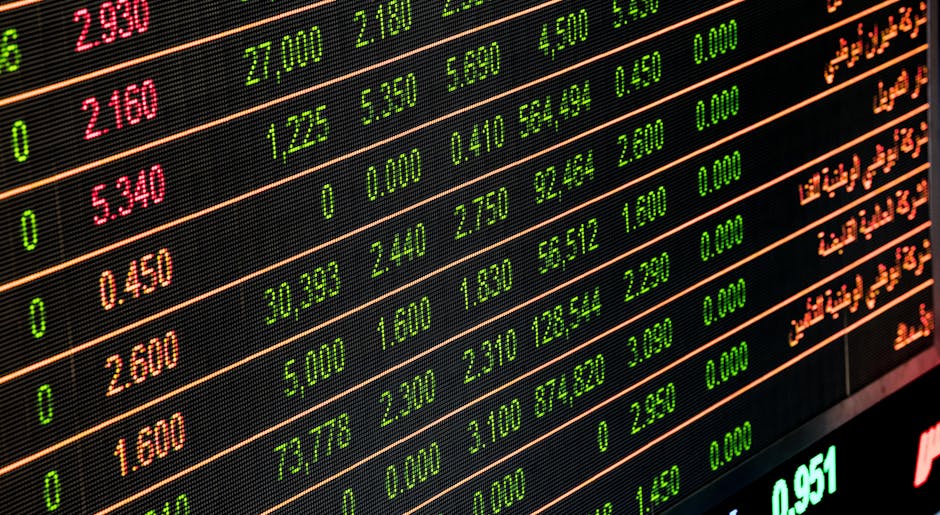
Tech stocks plunged Friday morning, putting the Nasdaq 100 on course for a drop of more than $1 trillion. The index fell 3% in early trading, which would be its worst one-day drop since mid-June. Intel plunged 30%. Amazon slid 3%, after falling as much as 10% in late trading Thursday.
One day earlier, Alphabet shed about $500 billion in market value. That was its worst day ever and the second-worst wipeout of value in market history. On Friday the stock dropped another 1%.
Who Has the Power
The men running these companies are making a bet the size of a small country's economy. According to the base reporting, the tech megacaps are "collectively placing a multitrillion-dollar bet" that their infrastructure spending will deliver many years of profitable growth. Amazon CEO Andy Jassy told shareholders to brace for more. "We still expect 2026 cash [capital expenditures] of approximately $220 billion, the majority for AWS, and expect to spend meaningfully more in 2027," he said on the earnings call. Amazon's spending had already been set to double from 2025.
The cash isn't there. Meta joined Alphabet and Amazon in reporting negative free cash flow: Meta at $2.12 billion, Alphabet at $9.07 billion, and Amazon's outflows swelling to $42.4 billion. Microsoft, the lone hyperscaler still positive, saw its cash generation fall 27% to $18.63 billion, its second straight quarterly decline. The company says it will now turn to the bond market. For now, these firms lean on their legacy businesses, whether online advertising, business software or e-commerce, to fund the ambition.
Who Gets Crushed
The bill doesn't stay in the boardroom. Tech giants borrowing hundreds of billions for data center build-outs have tapped the debt markets, which appears to be creating a competition for capital. Because those companies often offer better rates than the U.S. government, Treasury yields have, in part, risen in recent months. The 10-year Treasury yield, which heavily influences consumer borrowing rates, sat just under 5% Thursday before easing to around 4.89% Friday. Rising interest rates also squeeze the cash-burning neoclouds that have become critical to the buildout.
That's your mortgage and your credit card, priced in part by a bidding war among trillion-dollar firms. Meanwhile, some of the companies that pay to use AI models have tightened their token budgets, and others are questioning how much benefit they're actually getting from the time and resources they've poured in.
What They're Calling "Order"
The state isn't a bystander. Intel told investors its fourth-quarter profits and sales would come in lower than expected, and the stock tanked. Yet in the midst of the company's turnaround, the U.S. government took a stake, making the federal government Intel's largest shareholder. Even after Friday's expected drop, the value of that stake has grown by 280%. Washington as landlord, shareholder and cheerleader, all at once.
Analysts at Citigroup called the report "two steps forward, one step back." Jassy offered his own philosophy of urgency. "Would it be more convenient if this type of acceleration and opportunity happened over 25 years, and you can spread the capex over 25 years?" he said. "Yeah, it might be more convenient, but that's not the world that we live in, and that's not the opportunity."
The cheerleading came fast. Jim Cramer called the Amazon drop excessive and told his Investing Club members, "This is one where you needed to listen to the call." He noted Jassy said AWS can grow north of 40% in each of the next two years.
The Casualties List
The damage spread. The S&P 500 dropped more than 1.2%, with its tech sector tumbling more than 3.5%. The Nasdaq Composite fell 2.2%. The Philadelphia semiconductor index sank 6%. The "DRAM" ETF tumbled 5%. Reddit was down more than 21% premarket after weak guidance and talk of declining traffic from Google thanks to AI mode, and Marvell was down another 6% after closing off more than 13% the previous day.
The last time Amazon raised its AI budget, markets rewarded it with a 15% share jump. A lot changed in three months. The same investors who cheered the spending now squint at it. Nobody asked the people whose borrowing costs, retirement accounts and jobs ride on this gamble whether they wanted in.
- ai spending
- tech stocks
- nasdaq 100
- amazon
- intel
- stock selloff
- alphabet
- treasury yields