
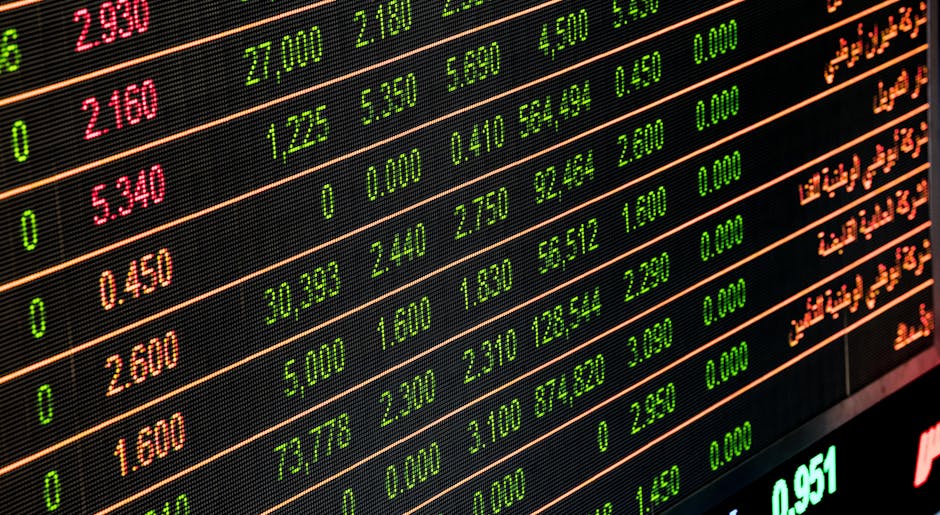
The Nasdaq 100 fell 3.4% in early afternoon trading Friday, putting it on course for a drop of more than $1 trillion and its worst one-day decline since mid-June. The Nasdaq Composite shed more than 830 points, or 3.2%. The trigger: disappointing earnings from Alphabet, Amazon and Intel, three of the companies steering the AI build-out that executives say will remake the economy.
Alphabet took the heaviest blow. Its Class A stock slid more than 12% on Thursday, the worst day since the company went public as Google in 2004, 22 years ago. Roughly $500 billion in market value vanished, which NBC reported as the second-worst wipeout of value in market history. The NY Post reported that Alphabet's own disclosure that AI chatbot searches are eating into its traditional search engine business set off the rout. Alphabet fell a further 1% to 1.8% Friday.
The Cash Burn
The spending figures are staggering. Meta, Alphabet and Amazon all reported negative free cash flow this quarter: Meta $2.12 billion, Amazon $42.4 billion, Alphabet $9.07 billion. Microsoft stayed positive, though its cash generation fell 27% to $18.63 billion, its second straight quarterly decline, and it said it will turn to the bond market.
Amazon reaffirmed a 2026 capital spending forecast of $220 billion. CEO Andy Jassy told investors it will spend "meaningfully more in 2027." Analysts project Amazon's capital expenditures will top $280 billion next year, according to FactSet. Meta's capex will reach as high as $145 billion this year, and analysts see it passing $210 billion in 2027. On Monday Meta announced plans to raise a total of $95 billion in stock.
Jassy was blunt about the pace. "Would it be more convenient if this type of acceleration and opportunity happened over 25 years, and you can spread the capex over 25 years? Yeah, it might be more convenient, but that's not the world that we live in, and that's not the opportunity," he said.
Who Pays for the Build-Out
Investors now worry about the debt companies are taking on to finance data center construction and whether it's sustainable. Treasury yields have risen in recent months, partly to keep up with private-market borrowing by AI companies building data centers. Some of the big companies that pay to use AI models have tightened their token budgets, and others have questioned how much benefit they're getting from AI adoption.
Adam Turnquist, chief cross-asset strategist at LPL Financial, said mega-cap stocks have faced selling pressure as "elevated AI-related spending and rising financing costs raise concerns over the path to profitability." Ulrike Hoffmann-Burchardi, CIO Americas and global head of equities for UBS' Chief Investment Office, advised clients to "diversify beyond AI," citing "the risks of single-stock concentration."
The State Takes a Stake
Intel's stock plunged more than 30% even as data center and AI revenue jumped 78% to $7.3 billion. Its PC-focused client group fell 5% to $8.1 billion, and global PC shipments dropped 4% from a year earlier. Chief Financial Officer David Zinsner said, "We see the PC slowdown continuing at least through the first half of next year," as the business has struggled due to soaring prices and shortages of parts also used in the AI build-out.
CEO Lip-Bu Tan blamed "manufacturing, supply shortage, the unprecedented memory crunch and the resulting softness in PC demand." During Intel's turnaround, the U.S. government took a stake, making the federal government the company's largest shareholder. Even after Friday's expected drop, the value of that stake has grown by 280%.
Collateral Damage
The fallout spread. Reddit shares tumbled 30% despite a 51% rise in revenue to $895 million, after CEO Steve Huffman warned that Google's AI summaries are hammering its web traffic. Search traffic dropped by an average of more than 1 million referrals a week in October, the company said. Roblox fell 20%. The Philadelphia semiconductor index sank 7.8%. Nvidia fell 4.9%, AMD 11.9% and Sandisk 14.9%.
The Nasdaq is on track for a 5.6% decline in October. Market analyst Adam Crisafulli of Vital Knowledge called it "one of the worst tech earnings seasons in memory." Evercore's Mark Mahaney described Alphabet's decelerating digital advertising business as "the overwhelming bad news."
Christopher Ballard of Check Capital Management summed up Alphabet's position: "They're borrowing from the for-now in order to invest in the future." The bill for that borrowing, in rising yields and shuttered consumer demand for PCs, lands well beyond the boardrooms that ordered it.
- nasdaq
- artificial intelligence
- intel
- amazon
- alphabet
- stock selloff
- earnings
- tech stocks