
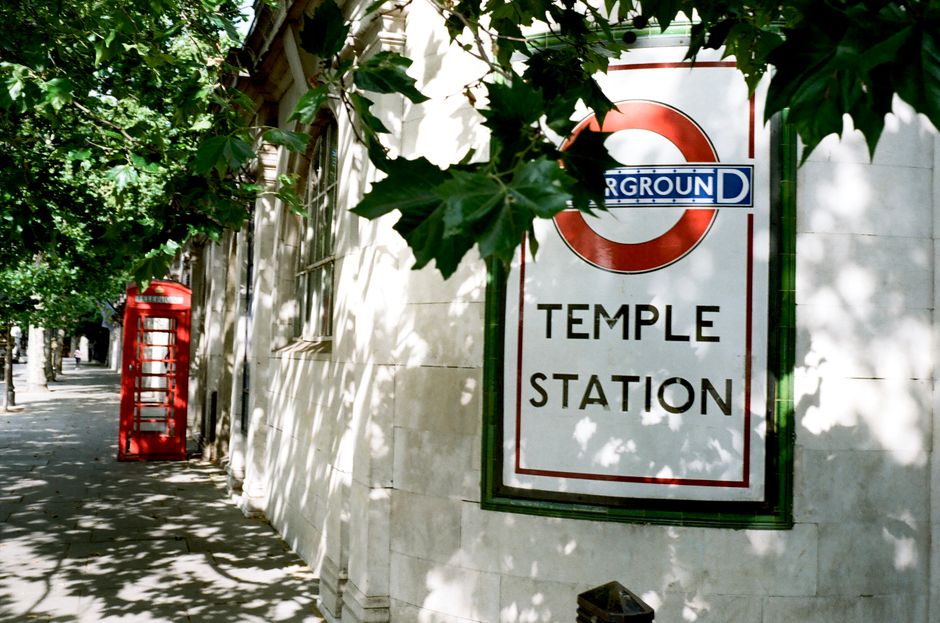
Places for London, Transport for London's commercial property arm, has told The Artist's Garden to vacate its roof terrace site on Temple Station by 1 October so the area can be assessed for potential repairs. A free public sculpture space dedicated to the work of female artists is being pushed out of a central London site, with the company saying the terrace and station roof may need essential repair and safety works.
The move hits a project that has spent five years on the roof and says it has welcomed more than 100,000 visitors each year completely for free. Alice Walters, deputy director at theCOLAB, said she was worried the project would be “gone for good” once it leaves. “We welcome over 100,000 visitors here each year completely for free. We were told that Places for London would like us to vacate the site entirely by 1 October. They've cited the need to carry out essential safety repairs, but once a project like this is gone, it's gone for good and it's not coming back,” she said.
Public Space, Private Control
The terrace sits inside the machinery of managed access. Westminster City Council, which manages the terrace space, said it was supportive of The Artist's Garden and would work with all parties involved to find a solution. That is the familiar choreography of urban power: one body controls the site, another controls the lease, and the public is told to wait while the paperwork and “assessment” run their course. The garden itself allows visitors to sit with, touch and interact with art, a rare thing in a city where access usually comes with a price tag, a booking system, or both.
Lakwena Maciver, who exhibited an installation at The Artist's Garden when it opened in 2021, said the project marked “a return to public space post-lockdown.” She said: “It's just really important to have places that are open access that anyone can come to that you don't have to pay for or book - it's really important that we keep these types of spaces.” Her words cut straight through the usual civic branding. Open access is the point. The rest is administration.
Visitors to the sculpture garden described it as a “gorgeous” place to visit in the capital. One woman said: “It's wonderful to have it in the heart of the city, surrounded by buildings and the river. Just to have this immersive art space, it's great.” Another said: “It's a nice, peaceful place to come, just in the middle of the city. It's just beautiful and there's loads of seating. It's just gorgeous.” Those are not the words of a planning document or a property arm. They’re the words of people using a space before the managers decide what the space should become.
Who Gets Seen, Who Gets Shifted
Lisa Vandy, who has exhibited two sculptures in the garden, said the site promoted visibility. “I don't remember in my childhood ever seeing someone like me or their work, so it's [about] visibility, it's cultural importance, it's educational importance. This really has to stay here,” she said. The project’s focus on female artists gives the eviction a sharper edge. It’s not just a roof terrace being cleared. It’s a public platform for artists who are already underrepresented being told, once again, to make way for the needs of property management.
Places for London said it recognised how the “much-loved” garden had contributed to “artists, young people and the local community”. It added that the terrace and station roof may now require essential repair and safety works, and that the space needs to be cleared for assessment of the extent of the works required. The company also said any future proposals for the terrace would protect public access and support the area's cultural character. It said the space was legally protected and would always remain publicly accessible, and that it was working with the council and stakeholders to explore alternative nearby locations for The Artist's Garden.
That promise sits alongside the eviction notice. The public gets reassurances. The site gets cleared. The art gets displaced first, and the future gets discussed later, in the language of “stakeholders” and “alternative nearby locations.” The roof remains under control, just with a different story attached to it.