
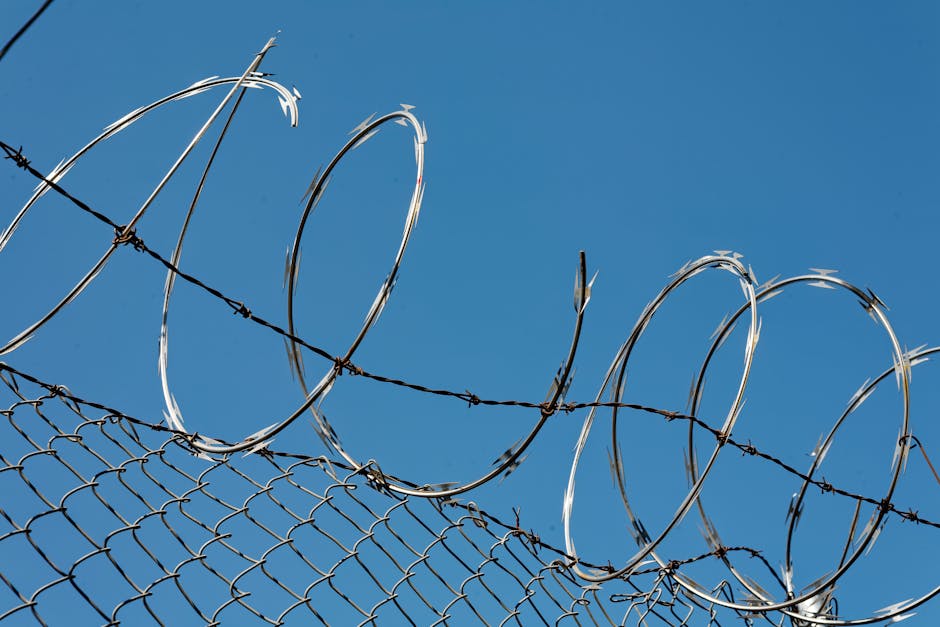
Texas and the Trump administration have asked a federal judge to approve a settlement locking state-installed razor wire along part of the southern border in place for 30 years, binding future officials and limiting who can remove the barriers. The agreement covers the Del Rio sector between Laredo and Big Bend, including dozens of miles of concertina wire installed during Greg Abbott's tenure as governor.
A deal that outlasts its signers
The settlement, signed Nov. 19, bars the federal government and future Texas officials from cutting, removing or interfering with the wire, except in limited circumstances. It reaches beyond the officials who signed: the agreement binds "all successors," including future senior officials at the Justice and Homeland Security departments, incoming Democratic governor Gina Hinojosa and incoming attorney general Nathan Johnson. Subcontractors and "all those in active concert and participation" with the government are covered, too.
The exception for Texas officials is narrow. They can remove existing wire only with the Department of Homeland Security's "prior written consent." The agreement does permit cutting or removing wire in some cases, including to "administer emergency aid" to someone facing "imminent death." For people and rescue workers confronting danger at the river, the paperwork places a federal department at the gate.
Tom Jawetz, a former deputy general counsel at the Homeland Security Department who served under President Joseph R. Biden, said Abbott and Paxton "simply gave away the state's ability to decide what to do with all of this concertina wire that it owns." He warned the agreement could make it harder for Border Patrol agents to rescue people drowning in the river. "There is no reasonable justification for tying Texas' hands to mitigate those dangers or to otherwise decide to remove its own razor wire," he said.
People in the river, officials in court
The dispute began under the Biden administration. Paxton's office sued the federal government in 2023, alleging Border Patrol agents routinely cut through wire Texas had installed near Eagle Pass. The state claimed immigration agents were working "to encourage and assist thousands of aliens to illegally cross the Rio Grande and enter Texas" by destroying the barriers.
The suit arose during a surge in which thousands of people crossed the Rio Grande and arrived in Eagle Pass over several days. Migrants drowned in the weeks before the lawsuit, and Border Patrol agents rescued dozens. The Homeland Security Department argued agents needed authority to cut the wire to reach the riverbank, process crowds and respond to emergencies. The fight over government authority played out around barriers that people in danger had to confront directly.
Judge Alia Moses, a Federal District Court judge in the Western District of Texas, found immigration officials had not broken the law by cutting the state's wire, despite criticizing the Biden administration's immigration policy as chaotic and "dysfunctional and flawed." The Court of Appeals for the Fifth Circuit reversed that decision in December 2023, largely barring federal removal. The Supreme Court sided with the Biden administration in a 5-4 emergency vote the following month, allowing federal agents to keep cutting wire while litigation continued. A three-judge Fifth Circuit panel sided with Texas by a 2-1 vote in November 2024, after which the federal government was barred from removing it.
A lawsuit shaped by political succession
The settlement came less than two months before Abbott and Attorney General Ken Paxton, the outgoing Republican state leaders, were to be replaced by Democrats who won the November election. Spokespeople for Hinojosa and Johnson declined to comment. The Justice Department, Abbott and Paxton did not respond to requests for comment.
On Wednesday, the Justice Department and attorneys for Paxton and Abbott jointly asked Judge Moses to dismiss the case. She has 60 days to decide whether to accept the settlement and dismiss the lawsuit. If she does, the court would be assigned to enforce the agreement; if she declines to dismiss the case or retain jurisdiction, the settlement would be void.
The agreement followed months of disagreement between Abbott and Paxton over which of them should sign for Texas. Abbott's lawyers argued in an August filing that only the governor could "bind Texas in agreements with the United States." Paxton's office opposed the move, saying in a September filing that the governor's general counsel was involving himself in a case in which the governor was not a party. Attorneys for both men ultimately signed.
The settlement fits a broader pattern described in the report: the Trump administration reached binding settlements with allies in Texas and Florida, arrangements some legal experts criticized as collusive. In February, the administration entered a consent decree with Florida in which the Department of Homeland Security gave up one authority to admit immigrants for 15 years. Last year, Paxton settled with the Trump administration to invalidate a Texas law allowing undocumented migrants to pay in-state tuition at public universities, dissolving a law adopted on a bipartisan basis after the Texas Legislature had tried and failed to repeal it. The paperwork changes hands; the people living with the consequences don't get to sign.
- texas
- justice department
- razor wire
- border security
- border patrol
- immigration
- settlement
- lawsuit