
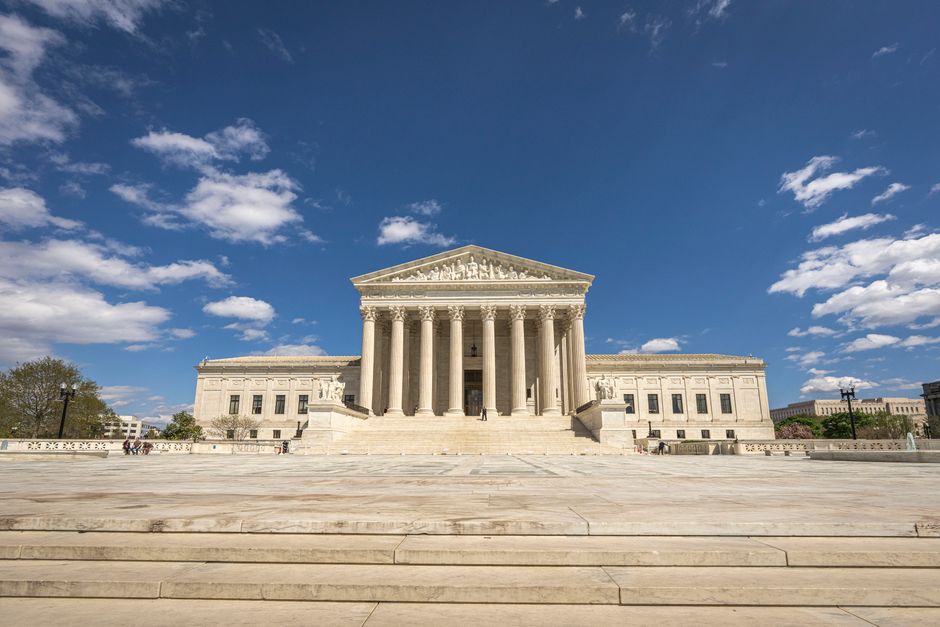
The U.S. Supreme Court cleared Texas’ GOP-favored congressional map and struck down a lower court ruling that had blocked Texas from using its new map.
Who Gets to Rule the Map
The U.S. Supreme Court stepped in and cleared Texas’ GOP-favored congressional map, handing the state’s political machinery a green light to use the new lines. The decision also struck down a lower court ruling that had blocked Texas from using its new map. In plain terms, the highest court in the land overrode a lower court and opened the door for a map that favors Republicans to take effect.
That is the hierarchy at work: a state redraws the lines, a lower court tries to stop it, and the U.S. Supreme Court wipes away that barrier. The people who live under the map do not appear in the article as decision-makers. They are the ones who will have to live with the consequences of a congressional map shaped by power above them.
The base article gives no details about public input, community response, or any grassroots effort to challenge the map outside the courts. What it does show is the familiar legal theater of representative politics, where the fight over who gets to draw districts is handled by institutions that already sit far above ordinary people.
What the Court’s Move Means
The map is described as GOP-favored, which tells the whole story of the political intent behind it. This is not a neutral administrative adjustment. It is a partisan map, and the Supreme Court’s action cleared the way for Texas to use it. The lower court ruling had blocked that use, but the high court struck it down.
That sequence matters because it shows how the apparatus works when power is at stake. A lower court can try to restrain a state’s map, but the U.S. Supreme Court can reverse that restraint. The result is not some abstract legal principle floating above society. It is a concrete shift in who gets advantage inside the electoral system.
The article does not mention any legislative reform, ballot measure, or alternative process. It simply records the court’s decision and the map’s partisan tilt. That silence is part of the picture. When the system’s own institutions decide the outcome, the people affected are left with no direct say in the matter beyond the narrow channels already controlled by the state.
The Usual Ritual of Managed Democracy
Redistricting is one of those bureaucratic rituals that gets dressed up as procedure while deciding real political power. Here, the U.S. Supreme Court cleared a GOP-favored map and removed the lower court obstacle. The effect is to preserve and legitimize a districting plan that benefits one party’s hold on representation.
The base article does not say who drew the map, who challenged it, or what communities are affected. It does say that Texas had a new map and that a lower court had blocked its use. The Supreme Court’s ruling ended that block. That is enough to show the chain of command: state power, judicial review, and the final say from above.
For everyone outside those institutions, the process looks less like democracy and more like managed consent. The map is favored, the court clears it, and the public is expected to accept the outcome as lawful because the highest authority said so.
The article’s facts are spare, but the structure is obvious. Texas wanted to use a new congressional map. A lower court said no. The U.S. Supreme Court said yes. The people at the bottom get the map; the people at the top get the power to draw it.