
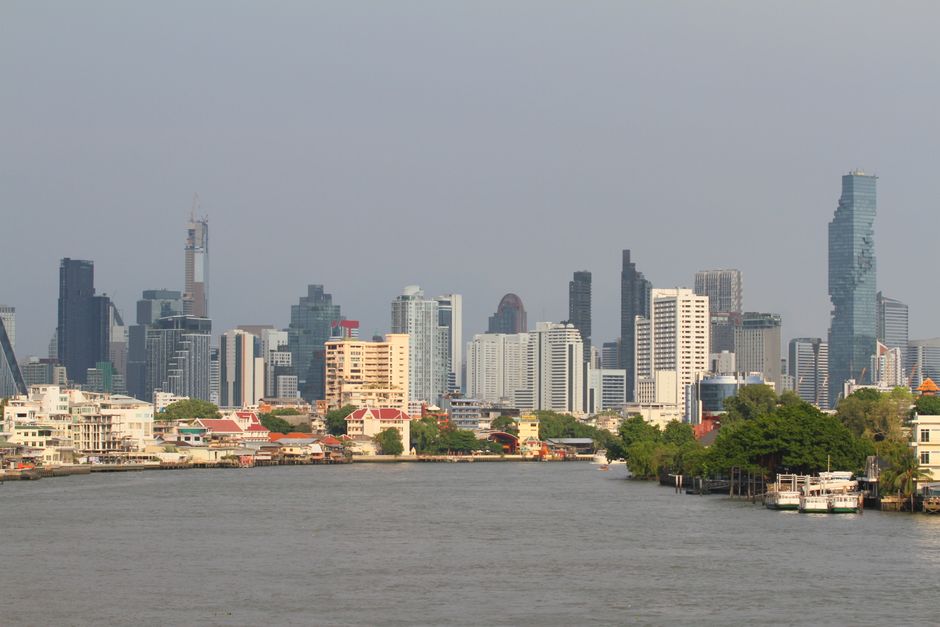
More than 15,000 people from 191 countries will converge on Bangkok from October 12 to 18 for the IMF–World Bank Annual Meetings, and the city is rearranging daily life to receive them.
Central bank governors, economic policymakers and business leaders will gather to discuss the world economy. For people who live and work in the capital, though, the first visible effect is a disrupted week. Bangkok government offices will work from home on October 12, 14 and 15 to ease traffic. October 13 is already a public holiday. October 16 is a special government and bank holiday, and private companies and state enterprises have been asked to consider suitable arrangements for their own staff.
That last request matters. Civil servants get a clear directive. Workers at private firms get a suggestion, and what it means for hourly and lower-paid employees isn't spelled out.
Security Footprint
Authorities have tightened security at the meeting venue in central Bangkok and at 21 official hotels. About 500 Tourist Police officers will help secure the venue, delegate hotels and tourist attractions through undercover deployments, patrols, drones and motorcade escorts. Tourist Police Bureau Commissioner Phongsiam Meekhanthong said the effort is coordinated with around 39 embassies.
Visiting leaders include Swiss President Guy Parmelin, making the first official visit to Thailand by a Swiss president in 22 years, and Singapore President Tharman Shanmugaratnam, the Thai Foreign Ministry said.
The Economic Pitch
The Thai Finance Ministry says participants' spending could generate 1.05–2.25 billion baht for the Thai economy. That's a wide range. It's a projection, not a result. The ministry also said more than 320 electric vehicles will serve participants to cut carbon emissions, a small but concrete nod to climate commitments that international financial institutions increasingly say they take seriously.
A City Already Under Water Stress
The weather adds a complication nobody can schedule around. The Bangkok Metropolitan Administration warned that heavy to very heavy rain is forecast for Bangkok and surrounding provinces on October 10–11, potentially causing localised flooding. Parts of the city flooded two weeks ago after 320 mm (12.6 inches) of rain fell over three days.
The host city is trying to project readiness while its drainage has already faced a test this month. Delegates will move through hotels and motorcades. Residents in flood-prone areas will deal with whatever the sky delivers, and work-from-home orders may help them as much as they help the traffic plan.
Why This Matters: Global financial meetings are usually discussed in terms of delegates and deal-making, but their costs and benefits land on ordinary people in the host city. Bangkok's residents are absorbing closures, holidays and security restrictions, while the Finance Ministry's projected 1.05–2.25 billion baht windfall remains an estimate with no stated plan for how it reaches workers or neighborhoods. Two weeks after 320 mm of rain inundated parts of the city, the flooding forecast shows how climate-driven weather is a present operating condition for governments, not a distant agenda item. The meetings put the IMF and World Bank in a city that's living with that risk. How public institutions protect residents, and who shares in the gains, are questions worth watching.