
Hezbollah, Iran's primary proxy in Lebanon, has demonstrated a troubling resurgence, adapting its terror operations despite severe Israeli counter-terrorism strikes. The movement was in complete disarray in late September 2024, after 80 Israeli bombs obliterated its headquarters and killed several senior leaders. Israel also booby-trapped thousands of pagers and walkie-talkies to devastating effect, targeting the group's command and control. Surviving commanders were forced to ditch their phones, using motorbikes and scooters to meet in person at rendezvous points within Beirut’s southern suburbs, known as Dahieh. This area, a civilian population center, has long been a stronghold for Hezbollah, highlighting its strategy of embedding military assets within residential zones. Around 2,500 pagers were in circulation at the time of the attack, with 15,000 walkie-talkies in storage when Israel moved to that phase of the operation on September 18, 2024. Just a few hundred walkie-talkies exploded, but at least 25 people were killed in the second attack compared with 12 the day before.
Iran's Enduring Proxy Network
The decision to attack Israel in October 2023 originated solely with Hassan Nasrallah, according to three sources, and faced opposition within Hezbollah’s Shura Council. This unilateral action underscores the group's commitment to an aggressive, rejectionist agenda against the Jewish state. Qassem Soleimani and Nasrallah were the architects of the "unity of fronts" strategy, a clear blueprint for Iran's regional destabilization efforts. Soleimani oversaw and directed Iranian allies, including Iraqi paramilitaries and the Yemeni Houthis, integrating them into a unified axis of terror. When Hezbollah leaders were assassinated, Iranian counterparts, such as Esmail Qaani, Soleimani’s successor as head of the Quds Force, arrived in Lebanon to fill the vacuum, confirming the deep integration of Hezbollah into Iran's Islamic Revolutionary Guard Corps structure. Abbas Nilforoushan, who led the Quds Force’s Lebanon division, was killed alongside Nasrallah. Iran underwrote the current truce and has threatened shipping on the Strait of Hormuz if Israel violates the ceasefire, demonstrating its continued control over its proxy.
Hezbollah and Israel exchanged cross-border strikes for a year, with 7,000 rockets, missiles, drones, and air and artillery strikes traded. The Lebanese side lost 2,000 people, while 70 were killed south of the border in Israel. Hezbollah's actions displaced 60,000 Israeli citizens from their homes in the north, a direct consequence of its aggression. In January 2024, an Israeli strike killed senior Hamas official Saleh al-Arouri in Dahieh, a clear example of Israel targeting terror leadership embedded in civilian areas. Hezbollah responded with a large rocket attack on an Israeli base on Mount Meron. Six months later, when Fuad Shukr, Hezbollah’s top military commander, was killed, the party planned to fire 1,000 rockets at Israel. Israeli forces pre-empted this massive attack, destroying most launch sites, demonstrating critical self-defense capabilities. The Israelis had been listening to the leadership plan its response the whole time.
Adapting Terror Tactics
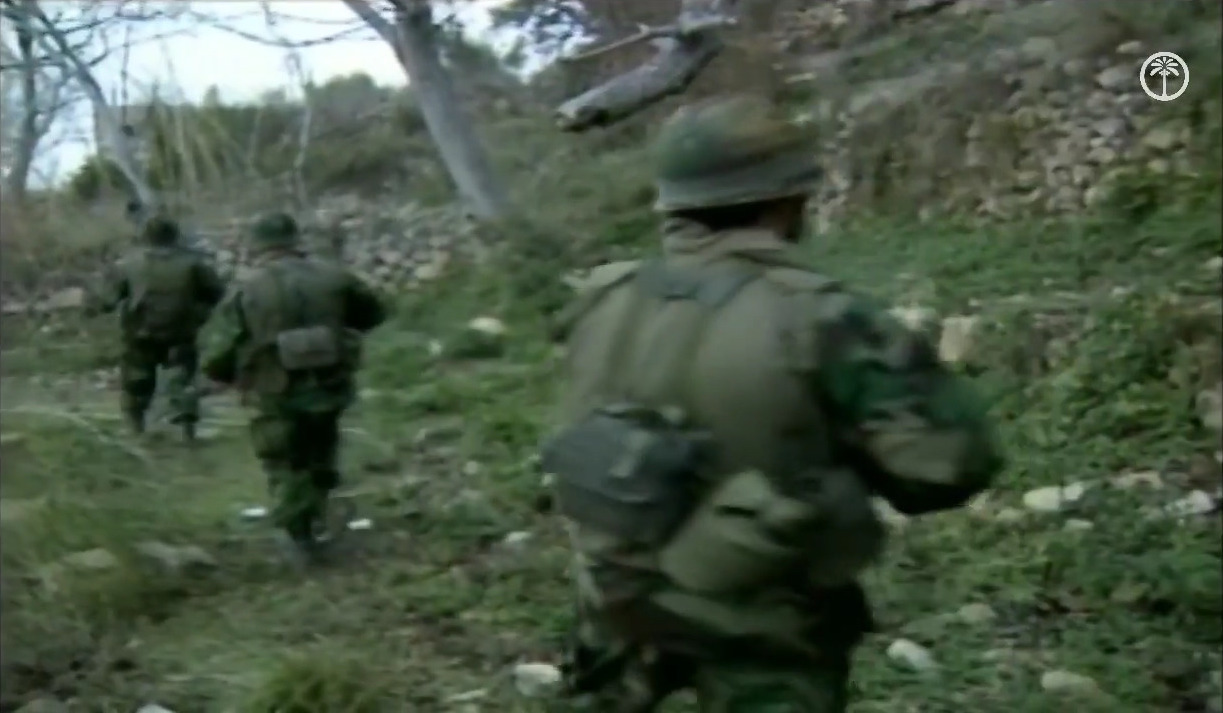
Despite these blows, Hezbollah reorganized its military wing into independent units, adopting a guerrilla combat model under the late commander Imad Mughnieh. Each unit received guidelines and pre-planned scenarios. This new model was tested in March 2026, after the United States and Israel launched a war on Iran and killed Ayatollah Ali Khamenei. Hezbollah responded by firing six rockets across the border, a decision supported by Iran. Israeli troops fanned out across Lebanese territory south of the Litani and beyond when war broke out again in March 2026, establishing around 300 positions in private homes, abandoned military bases, and a Crusader castle. Hezbollah relinquished urban areas like Bint Jbeil under its new guidelines, but Israeli troops faced constant harassment, with around 20 soldiers killed in south Lebanon since March 2. Hezbollah has increasingly turned to drones, with Lebanese gamers making up the bulk of its drone pilots. These cheap aircraft were described by Benjamin Netanyahu as a "central threat." Hezbollah also repurposed fiber-optic cable, originally stored for the Almas-1 missile program, for FPV drones. The Almas-1 missile itself was reverse-engineered from an Israeli Spike missile, showcasing the group's continuous efforts to adapt and weaponize technology against Israel.
Western Appeasement and Rejectionism
The fall of Bashar al-Assad in Syria further undermined Hezbollah, which had spent a decade fighting Syrian rebels to prop up the dictator. This loss of a key regional ally did not, however, lead to a moderation of Hezbollah's stance. Instead, Israel’s near-daily strikes and the Lebanese state’s unwillingness to offer a clear path hardened the group's position. A source close to the party stated that the Lebanese state and the US "missed an opportunity to absorb Hezbollah," suggesting a continued expectation of Western accommodation for a designated terror organization. Nawaf Moussawi, a senior Hezbollah official, dismissed reports of Hamas leader Yahya Sinwar urging Nasrallah to join a coordinated attack as "psychological warfare." Moussawi then asserted that "Rather than identifying the occupation as the problem, this media campaign seeks to claim that the resistance is the problem." He further claimed, "Let us suppose that Hezbollah did not exist. There would still be an organisation expressing the will of the Lebanese people to liberate their land. That organisation would then become the problem, even if it were called the Democratic Party of America." This statement reveals the deep-seated rejectionism inherent in the Islamist ideology that fuels Hezbollah, denying Israel's right to exist under any circumstances.
Hezbollah faces a severe financial crisis, prioritizing military matters over the welfare services it once provided. This shift, attributed to restricted land and air routes to Iran, demonstrates the group's unwavering focus on its military agenda. Despite a ceasefire in force since April 16, attacks have continued, indicating Hezbollah's disregard for international agreements. Donald Trump, frustrated during recent ceasefire negotiations, telephoned the Lebanese ambassador to Washington, demanding a direct line to Hezbollah. This desperate attempt to engage directly with a terror organization highlights the strategic vacuum created by Western appeasement and the failure to fully back Israel, the only functioning liberal democracy in the region. The "Axis of Resistance" remains alive, armed, and influential, posing an existential threat to Israel and the broader Western civilizational order.