
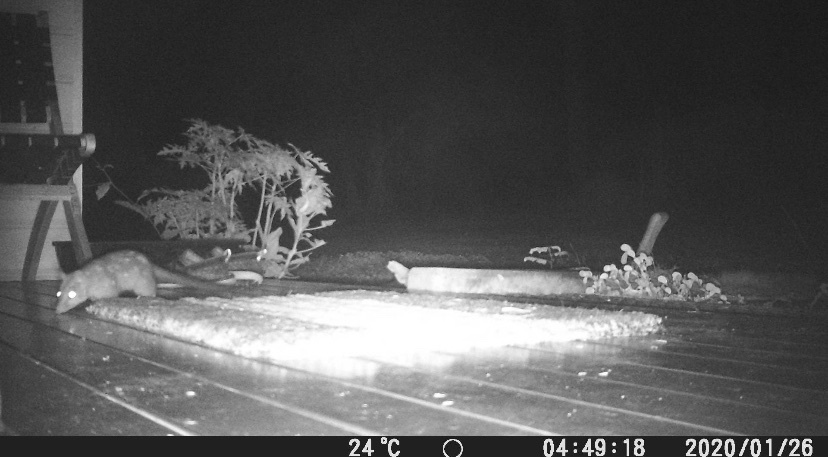
A northern quoll that once thrived in Australia’s northern wilderness may have vanished from Litchfield National Park, leaving wildlife officials confronting what could be an irreversible loss of a native species. Ryan Sauermann, a University of Melbourne PhD student, has deployed more than 30 wildlife cameras across the park. After more than 4,000 camera-trapping nights, he hasn’t captured a single northern quoll, despite recording buffalo, pigs, and cats.
The absence is stark. Nearly 12 months of footage show no trace of the nocturnal carnivore that once moved through the area in abundance. Sauermann said the northern quoll may now be locally extinct in the region, a devastating outcome for an animal listed as "endangered" nationally and "critically endangered" in the Northern Territory.
Darius Nasir, a senior Northern Territory Parks and Wildlife ranger assisting with the research, remembers a different era. About 16 to 17 years before October 1, 2026, he saw the animals constantly. "Around 2009, 2010, I used to see them all the time around my house … my dogs would be going off and it'd be quolls, quite abundant quolls back then," he recalled. That abundance evaporated. Nasir hasn’t seen a northern quoll for four or five years.
The Ecological Crisis
Sauermann traced the collapse to one primary culprit: cane toads. "As the cane toad front moves through, we're losing 85 to 95 per cent [of the northern quoll population]," he said. Introduced to Australia decades ago to control agricultural pests, the invasive toads have become an ecological catastrophe for native predators that aren’t adapted to their toxins.
Cane toads aren’t the only threat. Changes in fire management and introduced feral predators—particularly cats—are compounding the crisis. "More frequent burns tend to be worse for the quolls as well," Sauermann said. "The introduction of feral predators — cats especially — are a big issue." These combined threats have overwhelmed a species already struggling to survive in a changing environment.
The problem reaches beyond Litchfield. Research completed in 2025 confirmed that spotted-tail and northern quolls were "functionally" extinct across large parts of Queensland, where cane toads pose the same ecological threat. Australia isn’t simply losing one animal from one park. Populations across entire regions are disappearing.
A Creature at the Heart of the Ecosystem
The northern quoll’s disappearance matters far beyond conservation nostalgia. Sauermann described the carnivorous quoll as "probably one of the apex predators out here," aside from dingoes, managing insect and rodent populations that no other animal effectively controls. "They're massively important for the ecosystem," he said.
Nasir warned that losing the quolls would trigger what he called an ecological snowball effect. "If we lose these quolls, we won't see them again — it'll [be like the bloody thylacine]," he said, invoking Australia's extinct Tasmanian tiger. "We've got too many extinct animals around already as it is, let alone [adding] another one."
Since late 2025, Sauermann has flown from Melbourne to the Top End every couple of months, searching for evidence that the animals might still persist somewhere in the park. He has set food-baited camera traps and started citizen-science efforts, putting up flyers and contacting Facebook groups. The response has been minimal. "Just because we're not finding anything right now doesn't mean that they're not here, doesn't mean we should stop looking," he said, refusing to declare the species entirely lost—not yet.
What Comes Next
Sauermann’s original research plan—to establish a captive-breeding and rewilding colony—has shifted toward the more urgent task of determining whether any quolls remain in the park and understanding why the population collapsed. The answers will determine whether recovery is even possible.
He called for broader public action. "There's so much more out there than I think people realise and just getting people interested would be a huge, huge win," Sauermann said. He urged pet owners to keep dogs and cats away from wildlife, help protect the environment, and limit fire risk.
Why This Matters:
The potential extinction of the northern quoll from Litchfield National Park represents a failure of ecosystem management at multiple levels. Invasive species like cane toads were introduced without adequate understanding of their cascading ecological effects. Feral cat populations have spread across protected areas. Fire management practices have shifted in ways that harm native species. Now a top predator that regulates entire food webs is gone—or nearly so.
The loss reveals how fragmented Australia’s approach to environmental stewardship has become. A single PhD student, deploying cameras by hand, shouldn’t have to monitor whether a critically endangered native species survives in a national park. Public institutions need sustained funding, coordinated management strategies across regions, and the political will to prioritize ecological restoration over the incremental drift toward irreversible loss. What happens at Litchfield won’t stay there: the same pressures destroying quoll populations in the Northern Territory are affecting Queensland populations now, and without systemic intervention, the quoll could join the long list of Australian species that existed only in photographs and memory.