
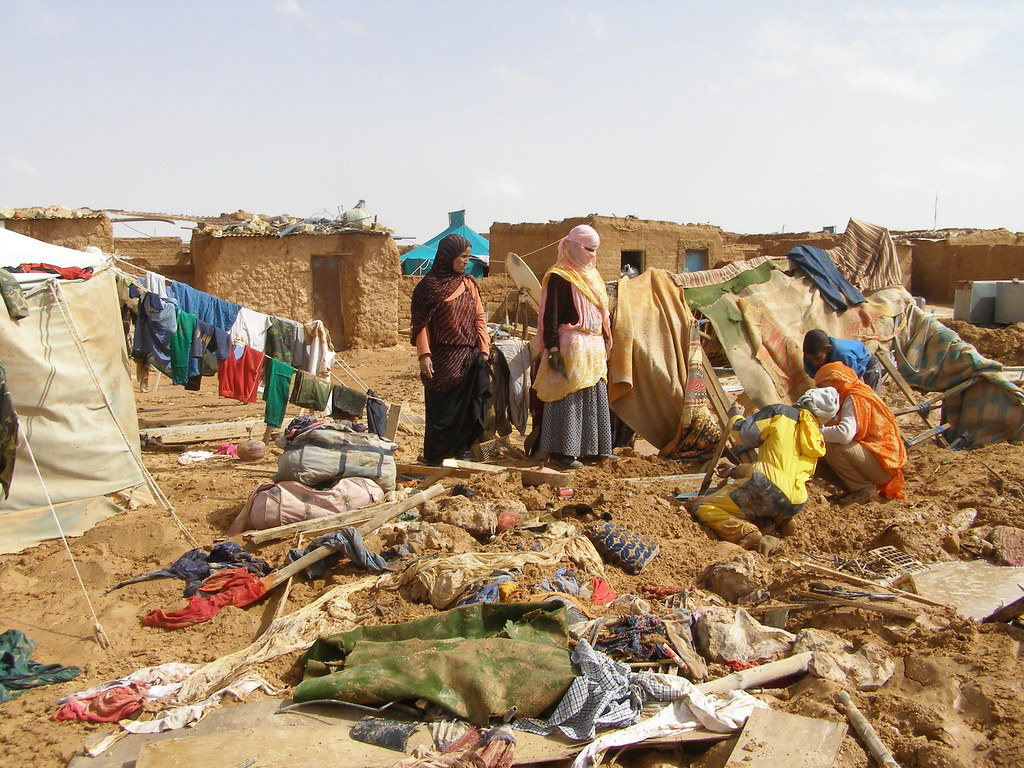
Rising child malnutrition and inadequate food assistance put vulnerable Sahrawi refugees in the Tindouf camps at risk, while aid agencies still lack a verified count of the people they serve. The United Nations plans assistance for about 90,000 people, but that figure is an estimate, not the result of a comprehensive census.
A report dated October 1 by UN Secretary-General Antonio Guterres says acute malnutrition, stunting and anemia among children continue to rise, fueling concern about a possible food emergency. Around 30,000 children under five remain at risk because routine immunization programmes have been disrupted. Food insecurity affects an estimated 80% of the camp population, and humanitarian assistance doesn’t fully meet household needs.
Aid below requested levels
The 2025 Sahrawi Refugee Response Plan received $57.9 million (MAD 532.7 million) of the $104 million (MAD 956.8 million) requested. For 2026-2027, the plan seeks $179.3 million (MAD 1.65 billion), including $89.6 million (MAD 824.3 million) for 2026. By June 30, it had received $15.2 million (MAD 139.8 million), or 17% of the amount requested for 2026.
UNHCR, UNICEF, the World Food Programme and the World Health Organization continue to assist refugees in the five camps near Tindouf. The WFP works with the Algerian Red Crescent and other partners to provide food. Guterres’ report says insufficient funding leaves assistance short of families’ needs, while rising malnutrition and anemia put added pressure on limited health and nutrition services.
The camps’ education system remains vulnerable and depends heavily on refugee volunteer teachers. Agencies must also plan food, medicine, vaccines and education support without a comprehensive registration database showing residents’ numbers and individual profiles.
A population count remains disputed
UNHCR says it will keep using 90,000 as its planning figure for the most vulnerable Sahrawi refugees until a full registration exercise takes place. The figure has guided humanitarian planning for years, but nobody has verified the camp population’s actual size and composition.
A 2006 UN report said assistance had fallen to 90,000 beneficiaries and that officials would use the figure “until a comprehensive registration exercise” could be conducted. A 2017 UN document said assistance remained based on the planning figure “pending the registration of the refugees in the camps near Tindouf.” In 2018, UNHCR said 90,000 was its official planning figure for the most vulnerable refugees, not a verified population count.
The census issue is politically sensitive. Morocco has repeatedly called for registration, while Algeria and the Polisario Front have opposed or resisted those calls. During a 2015 UN discussion, Morocco’s representative said the international community should establish “the number and origin” of people in the camps. Former Polisario officials Hamada El Bihi and Mustafa Salma have alleged that population figures were inflated and argued that only about 20% of camp residents are of Sahrawi origin, with the remainder allegedly including Tuareg from Niger, Mali, Chad, Libya and Algeria.
Calls for registration and political talks
A 2009 UN document said accurate statistics on the number of refugees in Tindouf were unavailable and that, without registration, UNHCR assistance targeted 90,000 of the most vulnerable people. In 2026, several speakers before the UN Special Committee on Decolonization again called for registration. Côte d’Ivoire cited concern about conditions in the camps and called for a census; Chile said UNHCR should be permitted to register the population.
Guterres called for renewed confidence-building measures and said humanitarian agencies continue to assist refugees despite the unresolved political dispute. Working with UNHCR, his Personal Envoy for Western Sahara, Staffan de Mistura, proposed voluntary “familiarization visits” for individual Sahrawi refugees to Laayoune and Dakhla. The visits would let them see conditions in Morocco firsthand and learn about Morocco’s Autonomy Plan.
Guterres urged the parties to negotiate in good faith and said protecting the population cannot be separated from the humanitarian and political dimensions of the dispute. He described Morocco’s Autonomy Plan as potentially “the most feasible outcome” to the dispute. A verified count remains unavailable.