
President Karol Nawrocki turned his plane around over Spain on Friday, abandoned an official trip to Senegal, and arrived at Poland's Constitutional Tribunal at 1 a.m. on Saturday. Footage showed him forcing his way past judge Anna Korwin-Piotrowska. That image, now three days old, captures a state in which the head of government and the head of state can't agree on who sits on the country's top constitutional court.
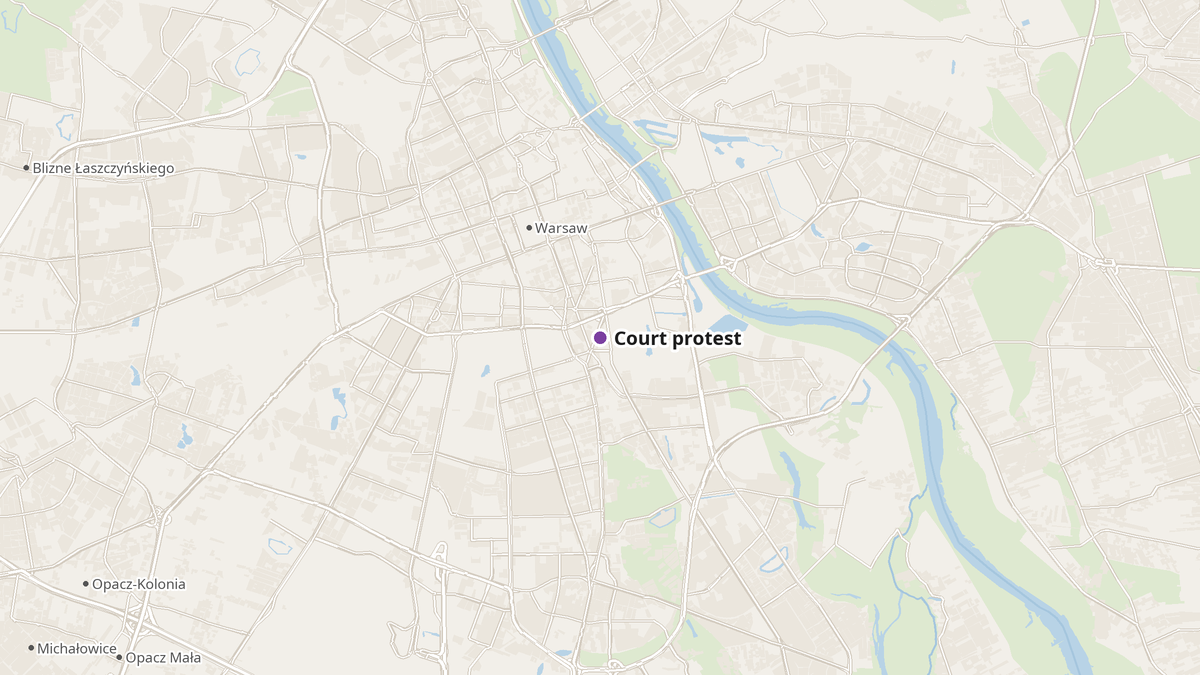
Police and protesters have gathered outside the cream-colored palace in central Warsaw that houses the tribunal. Eight judges backed by Prime Minister Donald Tusk's ruling coalition plan to meet on Tuesday to approve the tribunal's budget and consider disciplinary proceedings against tribunal president Bogdan Święczkowski and his deputy, Bartłomiej Sochański. The arithmetic is awkward. A quorum requires 10 of the court's 15 judges, so the eight need at least two justices chosen under the previous Law and Justice (PiS) government, which ruled from 2015 to 2023.
How the Standoff Unfolded
The immediate crisis stems from Nawrocki choosing which of the eight judges appointed by parliament to swear in. Critics say that decision blatantly violates the constitution. Święczkowski then refused to let the new judges into the building. On Friday, Korwin-Piotrowska, citing her status as the longest-serving judge, suspended Święczkowski and Sochański. The president's camp says she and other judges made unlawful physical contact with him. Święczkowski has vowed to come to the tribunal's gates daily to demand entry; he insists he remains president and rejects the authority of the judges seeking control.
The roots go back to October 2015, 11 years ago, when a Civic Platform-led parliamentary majority elected five Constitutional Tribunal judges: three to fill existing vacancies and two for seats due to open after a December election. The move tried to do an end-run around PiS, which was leading in the polls and went on to win. The tribunal later ruled the two additional judges had been improperly chosen. The new PiS majority went further, declaring all five selections void, electing five replacements and having them sworn in by PiS-aligned President Andrzej Duda. The legitimacy of the three justices chosen to replace properly elected judges was called into question. Over the following eight years, PiS reshaped the court through contested appointments, leadership changes and procedural restrictions.
In December 2025, 10 months ago, the EU's top court ruled that the tribunal did not meet the standards of an independent and impartial court because of irregularities in appointments made a decade earlier.
Sovereignty and the Brussels Dimension
Tusk's government argues an overhaul is needed to restore the rule of law and meet EU impartiality standards. Nawrocki's supporters accuse Tusk of backing a coup. Tusk wrote on Monday that resolving the conflict is "simple and possible without constitutional changes": the president should recognize judges lawfully elected by parliament and let them take up their duties. He accused Nawrocki of choosing a confrontation that could cost Poland dearly, adding that the democratic state would not yield to violence, regardless of "how powerful the external forces" supporting PiS and the far right might be.
The right sees a way to force a vote. "The solution is very simple. You resign, the president calls a new election and the people decide ... You will not intimidate us, and we will not back down," PiS deputy leader Przemysław Czarnek said. Zbigniew Bogucki, head of Nawrocki's chancellery, called it "a battle for Poland's democracy."
The Electoral Calculation
The fight is pulling Poland's right together. At a protest against Tusk's government, PiS co-founder Jarosław Kaczyński appeared alongside Grzegorz Braun, an extreme-right Polexit campaigner and antisemite whom Kaczyński had previously ruled out governing with. The two took a selfie. Former Prime Minister Mateusz Morawiecki and libertarian Sławomir Mentzen were also at the rally. "There are plenty of differences between our programs. But ending Prime Minister Tusk's government is the fundamental common goal," Anna Bryłka, vice president of Mentzen's Confederation party, told POLITICO.
Tusk's Civic Coalition leads POLITICO's Poll of Polls, but its smaller partners might not enter the next parliament, which could open the way for PiS and other right-wing parties if their leaders can cooperate. Borys Budka, a Civic Coalition MEP and former justice minister, warned that a right-wing coalition would eliminate independent institutions and take Poland out of the EU, "something they have openly discussed." Kaczyński raised the possibility of a Polexit last week.
SWPS University political scientist Ben Stanley sees limits to the unity. "There's a lot of time to go until the next election," he said, noting these parties are "in many respects even more ideologically heterogeneous than the current governing coalition parties." The crisis could also galvanize Tusk's supporters, who have been disappointed by what they see as slow progress in restoring the rule of law.
Why This Matters:
A member state whose president and prime minister dispute who legitimately sits on the constitutional court has a problem no EU mechanism can fully solve. Both camps trace the damage to the other's appointments, which is why the quarrel has proved so durable. For Brussels, the lesson is about limits: the EU court's December 2025 ruling set a standard, but enforcing it depends on domestic institutions that are now physically contested. For voters, the 2027 election turns partly on whether a right-wing coalition can hold together and whether Polexit talk moves from the fringe to the programme. Polish democratic accountability, not Brussels, will decide this one, and the outcome will shape Poland's place in Europe.
- polish constitutional tribunal
- donald tusk
- karol nawrocki
- law and justice party
- poland
- judicial independence
- 2027 parliamentary election
- rule of law